
If you are planning a painting project, one of the most important things to understand is how many feet does a gallon of paint cover. This simple knowledge helps you estimate paint quantity correctly, avoid wastage, and complete your project without interruption.
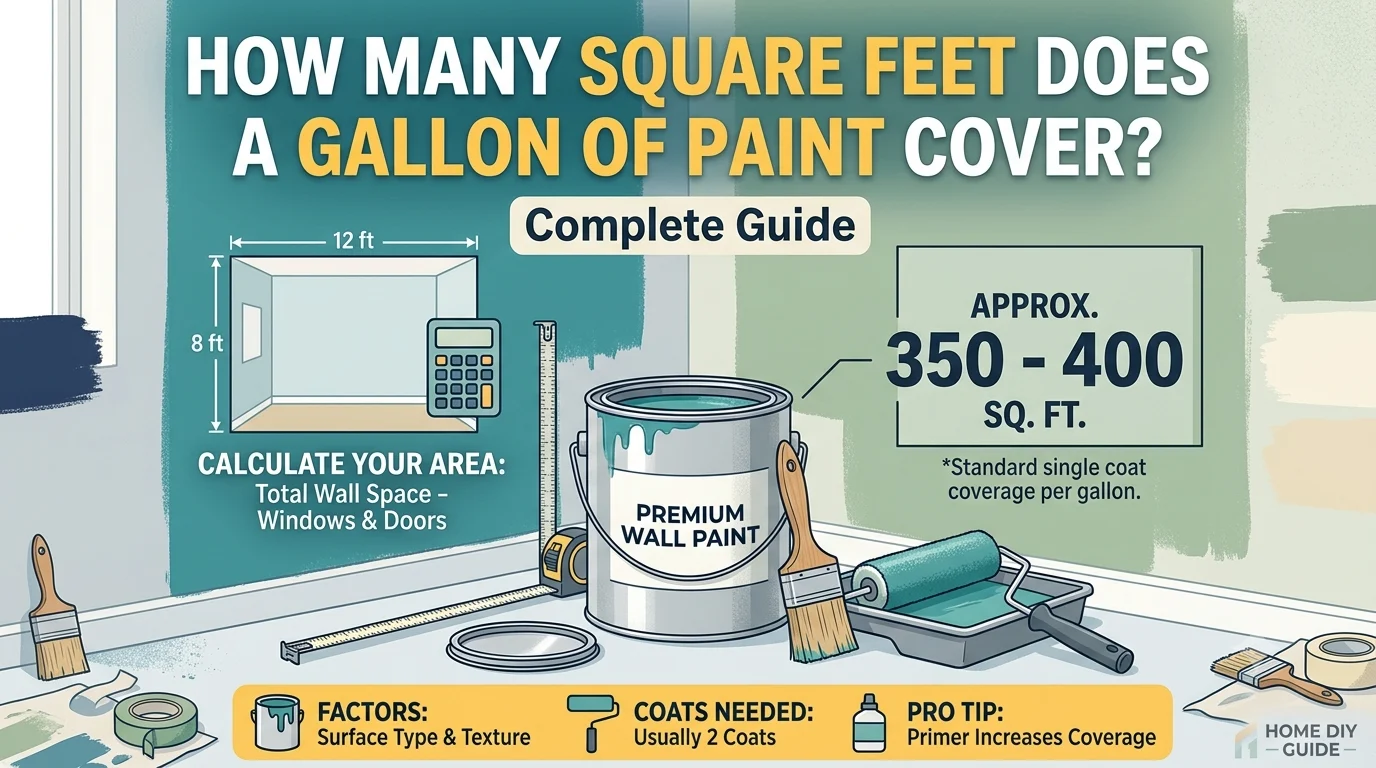
On average, one gallon of paint covers about 350 to 400 square feet of surface area with a single coat. However, this is only a general estimate. The actual coverage can increase or decrease depending on the type of surface, paint quality, and how the paint is applied.
A smooth and well-prepared wall will always use less paint compared to a rough or damaged surface. That is why professionals always check the surface condition before estimating paint requirements.
Understanding Paint Coverage
Paint coverage means the total area that one unit of paint can cover in a single coat. It is usually measured in square feet per gallon.
Manufacturers provide an estimated coverage on paint cans, but real-world results may vary due to different conditions.
The key factors that influence coverage include:
- Surface texture
- Type of paint
- Number of coats
- Application method
- Wall condition
Because of these factors, the same gallon of paint may cover different areas in different projects.
Average Coverage of One Gallon of Paint
In general, a gallon of paint covers:
- Interior walls: 350–400 square feet
- Exterior walls: 250–350 square feet
- Primer: 200–300 square feet
- Rough surfaces: 200–300 square feet
For most standard indoor painting jobs, the most commonly accepted estimate is:
1 gallon = 400 square feet (one coat)
If you apply two coats, the coverage requirement doubles.
Simple Paint Coverage Chart
- 1 quart → 90–100 sq ft
- 1 gallon → 350–400 sq ft
- 2 gallons → 700–800 sq ft
- 5 gallons → 1,750–2,000 sq ft
These values assume normal conditions and smooth surfaces.
Factors That Affect Paint Coverage
Surface Type
Smooth walls require less paint, while rough surfaces like brick, cement, or stucco absorb more paint.
Paint Quality
High-quality paints contain better pigments and provide stronger coverage with fewer coats.
Number of Coats
Most walls require at least two coats for an even finish, which reduces total coverage per gallon.
Application Method
Rollers usually provide better efficiency, while brushes may use more paint. Spray application can lead to some paint loss.
Surface Condition
Clean, primed, and smooth surfaces improve paint coverage significantly.
How to Calculate Paint Needed
You can estimate paint easily using a simple method:
- Measure the height and width of each wall
- Multiply to get square feet
- Add all wall areas together
- Subtract doors and windows
- Divide total area by 350–400
Example: If total paintable area is 400 sq ft, then:
- 400 ÷ 400 = 1 gallon (approx)
Real-Life Examples
Bedroom
A standard bedroom usually requires:
- 1 gallon for one coat
- 2 gallons for two coats
Living Room
A medium living room may need:
- 2 to 3 gallons depending on size and coats
Exterior Walls
Exterior surfaces often require more paint due to rough texture and weather exposure:
- 2 to 3 coats in many cases
Interior vs Exterior Coverage
Interior and exterior paint coverage is not the same.
- Interior paint covers more area due to smooth surfaces
- Exterior paint covers less area due to rough texture
Typical ranges:
- Interior: 350–400 sq ft per gallon
- Exterior: 250–350 sq ft per gallon
Common Mistakes People Make
Many people miscalculate paint needs because they:
- Forget to account for second coats
- Do not measure correctly
- Ignore wall texture
- Do not buy extra paint for touch-ups
Avoiding these mistakes helps you plan better and save money.
Expert Tips for Better Coverage
- Always prepare walls before painting
- Use primer for better adhesion
- Choose high-quality paint
- Use a good roller for even application
- Buy 10–15% extra paint for safety
These small steps can significantly improve results and reduce waste.
Conclusion
So, how many feet does a gallon of paint cover? The simple answer is that one gallon of paint typically covers 350 to 400 square feet per coat. However, real coverage depends on surface type, paint quality, and application method.
By understanding these factors and measuring your space correctly, you can estimate paint needs accurately and complete your project smoothly without shortages or excess waste.