
If you are planning a new home, remodeling your property, or simply measuring parking space, you may be asking: how many feet is a two car garage?
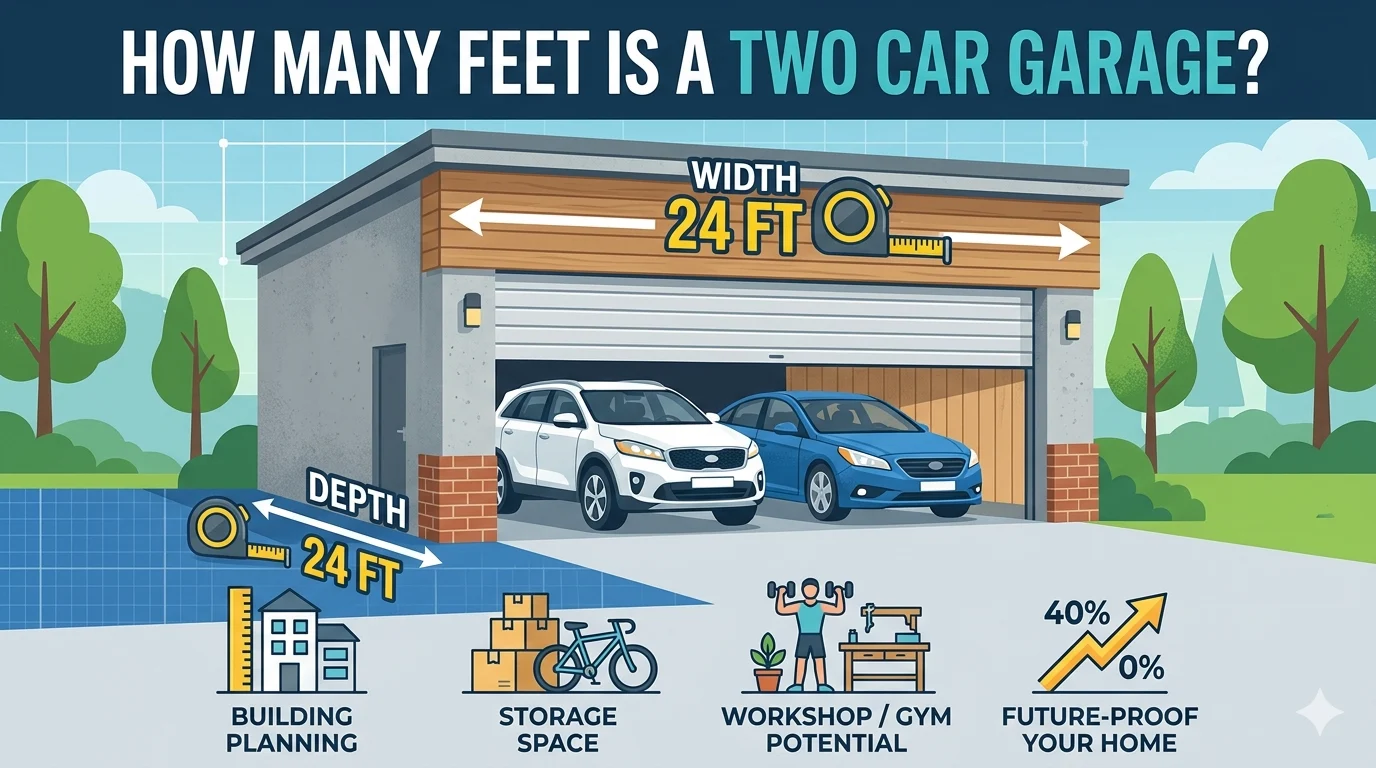
The answer depends on the type of vehicles you own, whether you need storage space, and how much room you want for walking and movement. However, most standard two-car garages are usually between 20 and 24 feet wide and around 20 to 24 feet deep.
While that sounds simple, there is more to consider. Vehicle size has changed over the years. SUVs and trucks are now larger than older sedans. Many homeowners also use garages for tools, bikes, storage bins, gyms, or workshops.
This guide explains standard two-car garage dimensions, ideal measurements, storage recommendations, and practical planning tips to help you choose the right size.
What Is a Standard Two Car Garage?
A two-car garage is designed to fit two average-sized vehicles side by side. It can be attached to a home or built as a detached structure.
The main purpose of a two-car garage is to provide:
- Parking space
- Vehicle protection
- Storage room
- Workspace flexibility
Although there is no single universal size, builders commonly follow standard garage dimensions that comfortably fit two vehicles with enough clearance for doors and movement.
Standard Two Car Garage Dimensions
When people ask how many feet is a two car garage, they are usually referring to the width and depth.
Here are the most common standard measurements.
Typical Width
A standard two-car garage is usually:
- 20 feet wide at minimum
- 22 feet wide for better comfort
- 24 feet wide for larger vehicles and extra storage
Width is important because it affects:
- Door opening space
- Walking room
- Storage placement
- Ease of parking
A 20-foot garage may feel tight if you own SUVs or trucks.
Typical Depth
The average depth is:
- 20 feet deep minimum
- 22 to 24 feet deep for larger vehicles
Depth determines:
- Front and rear clearance
- Storage room
- Workbench space
Long vehicles need more depth to avoid blocking the garage door or interior access.
Typical Height
Most garages are:
- 8 feet high minimum
- 9 to 12 feet high for trucks or storage lifts
Ceiling height matters if you plan to:
- Install shelving
- Add overhead storage
- Park taller vehicles
- Use a car lift
Common Two Car Garage Sizes Chart
Here is a quick comparison of popular garage dimensions.
| Garage Size | Width | Depth | Best For | |—|—|—| | Compact | 20 ft | 20 ft | Small cars | | Standard | 22 ft | 22 ft | Sedans and crossovers | | Spacious | 24 ft | 24 ft | SUVs and storage | | Oversized | 28 ft | 24 ft | Trucks and workshops |
These measurements may vary slightly depending on local building codes and builder preferences.
Minimum Size for a Two Car Garage
The minimum practical size for two vehicles is usually 20 feet by 20 feet.
However, this size can feel cramped if:
- Vehicles are large
- Drivers need wide door clearance
- Storage is required
- Multiple people enter and exit frequently
A compact garage may work temporarily, but many homeowners later wish they had built larger.
Why Minimum Sizes Can Be Problematic
Smaller garages often create:
- Tight parking conditions
- Difficulty opening car doors
- Limited storage options
- Higher risk of scratches and dents
If space and budget allow, increasing dimensions by even 2 to 4 feet can make a major difference.
Ideal Garage Size for SUVs and Trucks
Modern vehicles continue getting larger. Full-size SUVs and pickup trucks require additional room.
Recommended dimensions for larger vehicles:
- 24 feet wide
- 24 feet deep
- 9-foot garage doors
This provides:
- Easier parking
- Better walking space
- Safer door clearance
- Extra storage flexibility
Vehicle Size Comparison
| Vehicle Type | Recommended Garage Width |
|---|---|
| Compact Cars | 20 ft |
| Sedans | 22 ft |
| SUVs | 24 ft |
| Pickup Trucks | 24–28 ft |
If you plan to buy a larger vehicle in the future, building slightly bigger now can save money later.
Two Car Garage With Storage Space
Many people use garages for more than parking.
Common storage items include:
- Lawn equipment
- Bicycles
- Holiday decorations
- Tool cabinets
- Sports gear
- Freezers
- Shelving units
For combined parking and storage, experts often recommend:
- 24×24 feet minimum
- 26×24 feet for added comfort
- 28×24 feet for workshops or hobby areas
Smart Storage Tips
To maximize garage space:
- Use wall-mounted shelves
- Install overhead racks
- Keep seasonal items elevated
- Use narrow cabinets along walls
- Leave enough walking room
Planning storage early prevents clutter later.
Attached vs Detached Two Car Garage Dimensions
Garage dimensions can differ depending on whether the structure is attached or detached.
Attached Garage
Attached garages are connected directly to the house.
Common features:
- Convenient access
- Shared utilities
- Smaller overall footprint
Typical sizes:
- 20×20 feet
- 22×22 feet
- 24×24 feet
Detached Garage
Detached garages stand separately from the home.
Advantages:
- More design flexibility
- Better workshop potential
- Reduced house noise
Common detached sizes:
- 24×24 feet
- 24×30 feet
- 28×28 feet
Detached garages are often built larger because they may include:
- Storage lofts
- Workshops
- Home gyms
- Utility areas
How to Measure a Two Car Garage
Understanding garage dimensions properly helps avoid planning mistakes.
Width Measurement
Measure from one inside wall to the opposite inside wall.
Do not measure exterior siding because interior clearance matters most for vehicles.
Depth Measurement
Measure from the garage door wall to the back wall.
Be sure to account for:
- Shelving
- Cabinets
- Water heaters
- Freezers
Door Clearance
Standard two-car garage doors are usually:
- 16 feet wide
- 7 to 8 feet high
Some homeowners prefer two single doors instead of one double door.
Benefits of separate doors:
- Easier operation
- Better insulation
- Reduced maintenance costs
Common Mistakes When Planning Garage Size
Many homeowners underestimate the amount of space they actually need.
Here are the most common mistakes.
Choosing the Absolute Minimum
A 20×20 garage may technically fit two vehicles, but comfort becomes limited quickly.
Ignoring Future Vehicle Changes
Families often upgrade to larger SUVs or trucks later.
Forgetting Storage Needs
Without planned storage, garages become crowded fast.
Poor Door Clearance Planning
Tight spacing can make entering and exiting vehicles frustrating.
Overlooking Ceiling Height
Low ceilings limit:
- Overhead storage
- Vehicle lifts
- Tall vehicle access
Benefits of Choosing a Larger Garage
A slightly larger garage can improve convenience significantly.
Better Parking Comfort
More room reduces stress and accidental scratches.
Increased Home Value
Spacious garages are attractive to buyers.
Flexible Storage
Extra space keeps tools and equipment organized.
Multi-Purpose Functionality
Larger garages can become:
- Workshops
- Fitness areas
- Hobby rooms
- Utility spaces
Easier Daily Use
Extra walking room improves overall convenience.
Real World Garage Size Examples
Here are practical examples to help visualize common garage dimensions.
Example 1: Compact Family Garage
Size:
- 20×20 feet
Works well for:
- Two compact sedans
- Minimal storage
Limitations:
- Tight spacing
- Limited movement room
Example 2: Standard Modern Garage
Size:
- 24×24 feet
Ideal for:
- SUVs
- Bikes
- Shelving
- Family storage
Benefits:
- Comfortable parking
- Flexible storage options
Example 3: Oversized Garage
Size:
- 28×24 feet
Best for:
- Trucks
- Workshops
- Home gyms
- Large storage systems
Advantages:
- Maximum flexibility
- Future-proof design
FAQs
How many feet wide is a standard two car garage?
Most standard two-car garages are between 20 and 24 feet wide. A 24-foot width offers more comfort and storage flexibility.
Is 20×20 big enough for a two car garage?
Yes, a 20×20 garage can fit two small vehicles, but it may feel cramped with larger SUVs or storage needs.
What is the best size for a two car garage?
A 24×24-foot garage is often considered ideal because it balances parking comfort, storage, and accessibility.
How deep should a two car garage be?
Most garages are between 20 and 24 feet deep. Larger vehicles typically require deeper spaces.
Can a pickup truck fit in a standard two car garage?
Yes, but full-size pickup trucks usually fit better in garages that are at least 24 feet deep and wide.
Conclusion
If you are wondering how many feet is a two car garage, the most common answer is between 20 and 24 feet wide and about 20 to 24 feet deep. The right dimensions depend on your vehicle size, storage needs, and future plans.
For compact vehicles, a 20×20 garage may work. However, many homeowners prefer a 24×24-foot garage because it provides better parking comfort, extra storage space, and flexibility for larger vehicles.
Before building or remodeling, think carefully about how you will use the garage in daily life. A slightly larger garage often provides long-term convenience, improved organization, and higher property value.