

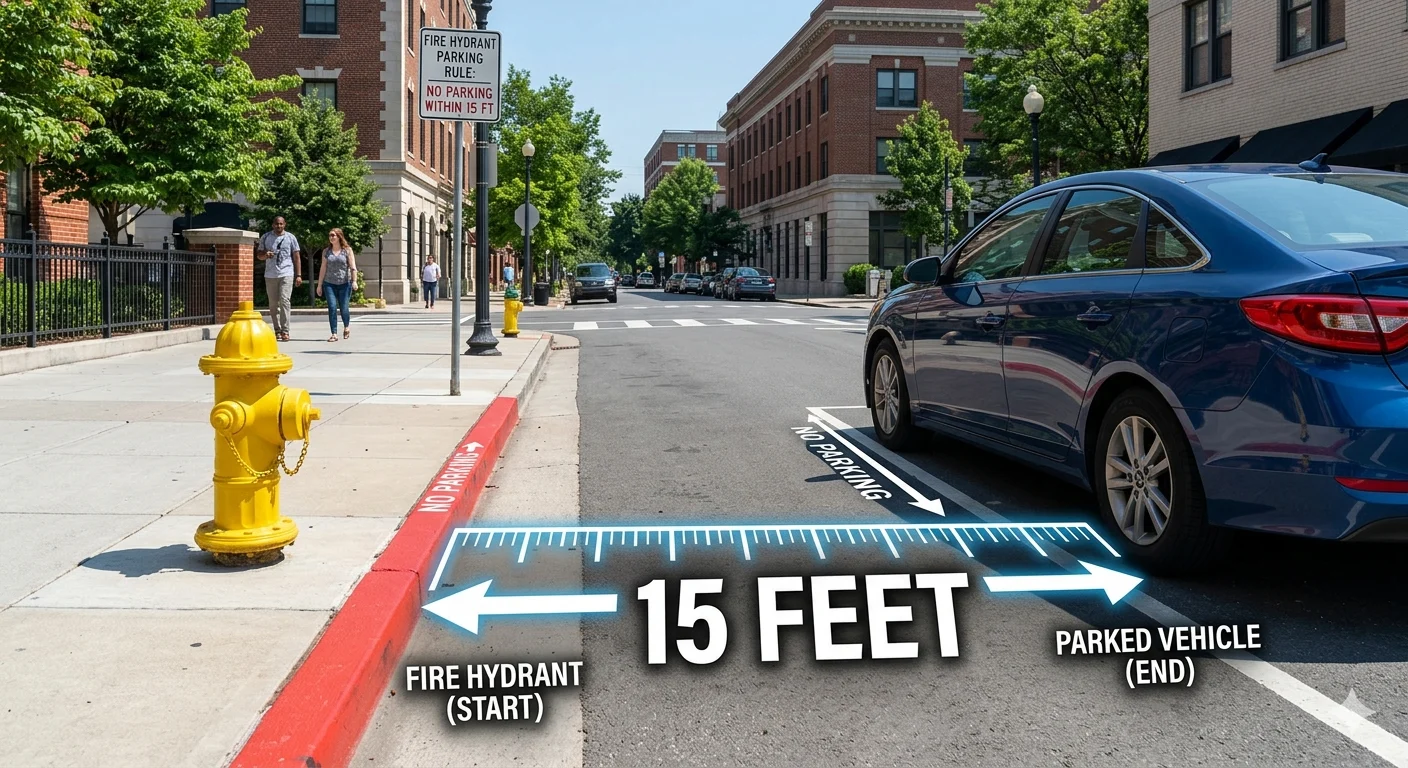
Parking regulations exist to keep roads safe and ensure emergency services can do their jobs effectively. One of the most commonly misunderstood parking rules involves fire hydrants. Many drivers know they should not park directly next to a hydrant, but they are often unsure about the exact distance required.
If you have ever wondered how many feet must you park from a fire hydrant, the answer is typically 15 feet in most areas of the United States. However, parking laws can vary by state and municipality, making it important to understand local regulations before leaving your vehicle near a hydrant.
This guide explains the standard parking distance, why the rule exists, common mistakes drivers make, and practical tips to avoid parking tickets and towing fees.
Understanding Fire Hydrant Parking Rules
Fire hydrants are a critical part of public safety infrastructure. During a fire emergency, firefighters rely on hydrants to access a large supply of water quickly. If a vehicle blocks or restricts access to a hydrant, valuable time can be lost.
For this reason, cities and states enforce strict parking regulations around fire hydrants. These laws are designed to ensure emergency responders can reach hydrants without obstacles.
Parking restrictions near hydrants are enforced regardless of whether a fire emergency is occurring. Even if a hydrant appears unused, the parking rules still apply.
How Many Feet Must You Park From a Fire Hydrant?
In most jurisdictions, drivers must park at least 15 feet away from a fire hydrant.
This means the closest part of your vehicle should be no less than 15 feet from the hydrant. Parking any closer may result in a citation or towing.
To visualize 15 feet:
- It is approximately the length of a standard sedan.
- It equals about five adult walking steps.
- It is roughly 4.6 meters.
Because local regulations vary, drivers should always check local traffic laws and posted parking signs.
Why the Distance Requirement Exists
Many people assume the rule is simply another parking restriction. In reality, it serves an important public safety purpose.
Quick Access During Emergencies
Firefighters need immediate access to hydrants when responding to fires. Even a small obstruction can delay hose connections and water supply.
Improved Public Safety
Every second matters during an emergency. A blocked hydrant can slow down firefighting efforts and increase the risk of injury or property damage.
Space for Equipment
Fire crews often need room around a hydrant to connect hoses and operate equipment safely. Vehicles parked too close can interfere with these operations.
Reduced Property Damage
Faster access to water helps firefighters control fires more quickly, potentially saving homes, businesses, and vehicles from extensive damage.
Fire Hydrant Parking Laws Can Vary
Although the 15-foot rule is common, parking laws are not identical everywhere.
Some municipalities may require:
- 10 feet of clearance
- 15 feet of clearance
- 20 feet or more in certain situations
The exact requirement depends on local laws. Drivers should never assume that every city follows the same standard.
When parking near a hydrant, check:
- Street signs
- Painted curb markings
- Municipal parking regulations
- State driver’s handbook
Following local rules is the best way to avoid fines.
What Happens If You Park Too Close to a Fire Hydrant?
Parking too close to a hydrant can lead to several consequences.
Parking Tickets
The most common penalty is a parking citation. Depending on the city, fines can range from modest amounts to several hundred dollars.
Vehicle Towing
In many areas, authorities have the right to tow vehicles parked illegally near hydrants. Towing fees can quickly exceed the cost of the original ticket.
Additional Fees
Drivers may also be responsible for:
- Storage charges
- Administrative fees
- Court costs if violations are contested
Emergency Access Measures
During a fire emergency, firefighters may take whatever actions are necessary to gain access to the hydrant. Public safety always takes priority over a vehicle blocking emergency equipment.
How to Estimate Fifteen Feet
One reason drivers receive hydrant parking tickets is that they misjudge distance.
Here are a few simple ways to estimate the required clearance.
Use Your Vehicle Length
Most passenger cars are approximately 14 to 16 feet long. If a full car length could fit between your vehicle and the hydrant, you are likely close to the required distance.
Count Walking Steps
Five average adult steps are roughly equal to 15 feet.
Look for Painted Curbs
Many cities paint curbs near hydrants red or use other markings to indicate restricted parking zones.
Leave Extra Space
If you are uncertain about the exact distance, park farther away than necessary. A few additional feet can help prevent costly mistakes.
Common Fire Hydrant Parking Mistakes
Drivers often make avoidable errors when parking near hydrants.
Assuming Every State Has the Same Rule
Local regulations differ. A legal parking spot in one city may be illegal in another.
Ignoring Signs
Some drivers rely on memory instead of checking nearby signs. Parking signs often provide important restrictions.
Parking at Night
Parking laws apply twenty-four hours a day unless otherwise stated.
Following Another Vehicle
Just because another car is parked near a hydrant does not mean it is parked legally.
Measuring Incorrectly
Distance should generally be measured from the hydrant to the nearest part of your vehicle, not to the center of the vehicle.
Real-World Parking Examples
Understanding practical scenarios can help drivers apply the rule correctly.
Example 1: Safe Parking
A driver parks approximately 18 feet from a hydrant.
Result:
- Generally compliant with most regulations
- Provides sufficient emergency access
Example 2: Questionable Parking
A vehicle is parked 12 feet away.
Result:
- May violate local laws
- Could result in a ticket
Example 3: Obvious Violation
A vehicle is parked directly beside the hydrant.
Result:
- High likelihood of enforcement action
- Possible towing
Fire Hydrant Parking Distance Guide
| Distance From Hydrant | Typical Status |
|---|---|
| 0–5 feet | Illegal |
| 5–10 feet | Usually illegal |
| 10–14 feet | Often illegal |
| 15 feet | Meets many regulations |
| 20+ feet | Generally safe |
Always remember that local laws take precedence over general guidelines.
Benefits of Following Fire Hydrant Parking Rules
Observing proper parking distances offers several advantages.
Avoid Expensive Fines
Parking tickets can be costly and inconvenient.
Prevent Vehicle Towing
Towing often results in additional expenses and wasted time.
Support Emergency Responders
Proper parking helps firefighters perform their duties efficiently.
Improve Community Safety
Following parking regulations contributes to safer neighborhoods and faster emergency response times.
Tips for Avoiding Fire Hydrant Parking Violations
Use these simple strategies whenever you park on city streets.
- Check nearby parking signs.
- Look for curb markings.
- Leave more than the minimum required distance.
- Review local parking regulations.
- Avoid guessing measurements.
- Recheck your position before leaving the vehicle.
- When uncertain, choose another parking spot.
These habits can save money and prevent unnecessary stress.
Frequently Asked Questions
How many feet must you park from a fire hydrant in most states?
Most jurisdictions require drivers to park at least 15 feet away from a fire hydrant.
Can I stop briefly next to a fire hydrant?
In many locations, stopping or parking next to a hydrant is prohibited unless specifically permitted by law.
Can my vehicle be towed for parking too close to a hydrant?
Yes. Many municipalities authorize towing for hydrant parking violations.
How can I estimate 15 feet quickly?
A standard car length or about five walking steps can help estimate the distance.
Are fire hydrant parking laws the same everywhere?
No. Local and state regulations can vary, so always verify the rules in your area.
Conclusion
Understanding how many feet must you park from a fire hydrant is an important part of responsible driving. While the most common rule requires at least 15 feet of clearance, local laws may vary. Parking too close can lead to fines, towing, and complications during emergencies.
The safest approach is to check local regulations, watch for signs and curb markings, and leave extra room whenever possible. By following these guidelines, drivers can avoid costly penalties while helping ensure firefighters have the access they need when every second counts.