
Tiny homes have become increasingly popular as more people look for affordable housing, a simpler lifestyle, and lower living expenses. Whether you are planning to build one, buy one, or are simply curious, one of the first questions you may ask is: how many square feet is a tiny home?
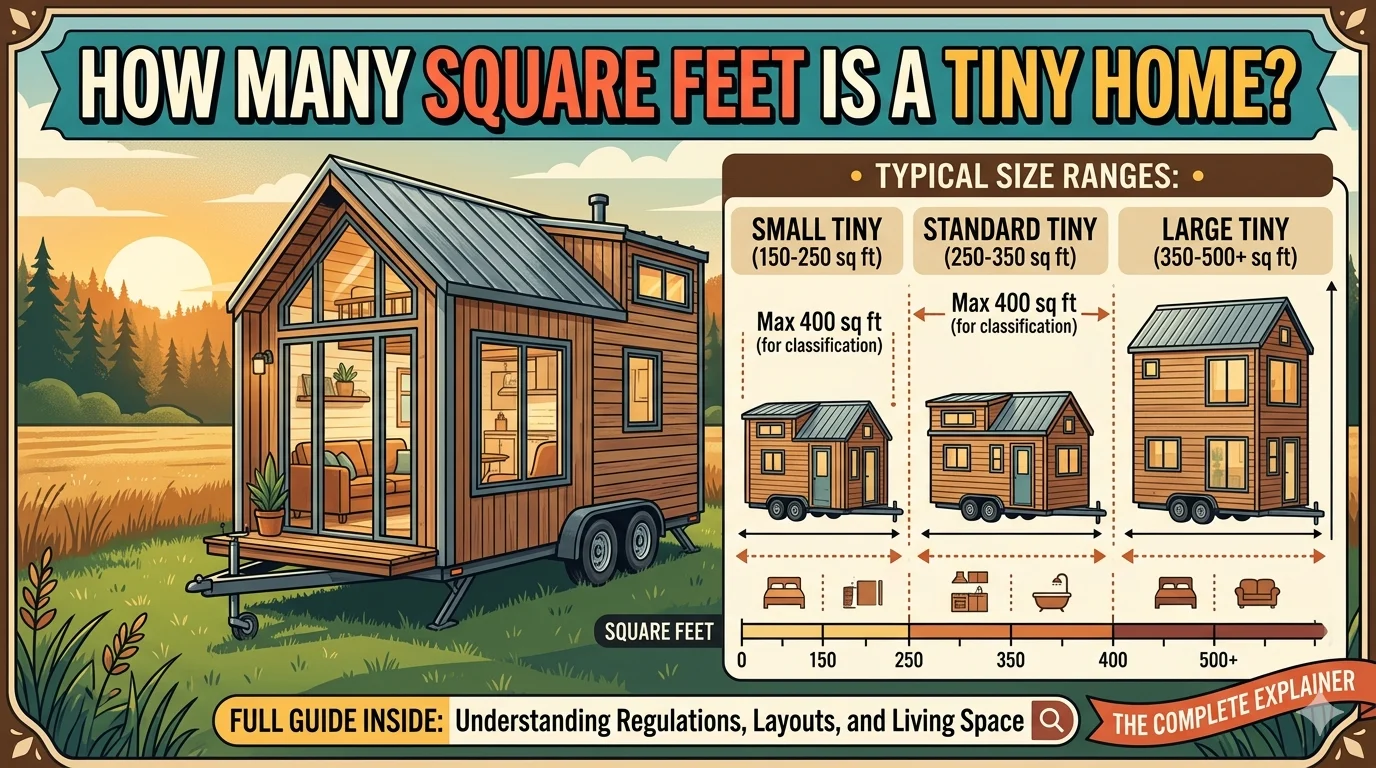
In most cases, a tiny home ranges from 100 to 400 square feet. The average tiny house measures around 225 to 300 square feet, providing enough space for essential living areas while keeping the footprint small and efficient. Although there is no universal legal definition, homes under 400 square feet are generally considered tiny homes by builders and housing experts.
This guide explores the average size of a tiny home, what affects its square footage, and how much space you really need for comfortable tiny living.
What Is Considered a Tiny Home?
A tiny home is a compact residential structure designed to maximize functionality while minimizing wasted space. Unlike traditional houses, which often exceed 1,500 square feet, tiny homes focus on efficient layouts and multi-purpose features.
Most tiny homes include:
- A living area
- A small kitchen
- A bathroom
- A sleeping space, often in a loft
- Creative storage solutions
Tiny homes can be built on a permanent foundation or on a trailer. A tiny house on wheels offers mobility, while a foundation-based tiny home functions more like a traditional house.
How Many Square Feet Is a Tiny Home on Average?
The answer to how many square feet is a tiny home depends on its design and purpose, but the majority fall within a predictable range.
| Tiny Home Type | Average Square Footage |
|---|---|
| Extra Small Tiny Home | 100–150 sq ft |
| Compact Tiny Home | 150–225 sq ft |
| Standard Tiny Home | 225–300 sq ft |
| Large Tiny Home | 300–400 sq ft |
| Expanded Tiny Home | 400–500 sq ft |
The average tiny house in North America is approximately 250 square feet, making it significantly smaller than a standard apartment or family home.
Typical Tiny Home Dimensions
Many tiny homes on wheels are built to meet road transportation regulations. Common dimensions include:
- Width: 8 to 8.5 feet
- Length: 20 to 40 feet
For example:
- An 8-foot by 20-foot tiny house offers around 160 square feet.
- An 8.5-foot by 24-foot model provides approximately 204 square feet.
- An 8.5-foot by 32-foot design gives about 272 square feet.
These dimensions can vary depending on local laws and the builder’s design preferences.
Tiny Home Size Comparison
To better understand how small a tiny home really is, compare it with other common living spaces.
| Type of Home or Room | Average Square Feet |
|---|---|
| Tiny Home | 100–400 sq ft |
| Hotel Room | 300–400 sq ft |
| Studio Apartment | 400–600 sq ft |
| One-Bedroom Apartment | 600–900 sq ft |
| Average Family Home | 1,800–2,500 sq ft |
A tiny home may be about the size of a large hotel suite, but it is carefully designed to include everything needed for day-to-day living.
Why Are Tiny Homes Usually Under 400 Square Feet?
The 400-square-foot benchmark is widely accepted for practical and legal reasons.
Transportation Requirements
Many tiny homes are built on trailers, and road regulations limit the maximum width and height without requiring special permits. Keeping the house compact makes transportation easier and more affordable.
Lower Construction Costs
Smaller homes require fewer materials and less labor to build. This helps reduce the overall cost and allows many people to become homeowners with a smaller budget.
Minimalist Lifestyle
Tiny living encourages people to own fewer possessions and focus on what truly matters. The limited space naturally supports a simpler, clutter-free lifestyle.
Reduced Utility and Maintenance Costs
Heating, cooling, cleaning, and maintaining a tiny home costs much less than maintaining a traditional house. This is one of the biggest reasons people choose to downsize.
How Space Is Used Inside a Tiny Home
Even though tiny homes are small, thoughtful planning allows them to include all the essentials.
Living Room
The living area often measures between 40 and 70 square feet. Many homeowners use convertible sofas, foldable tables, and built-in seating with storage underneath.
Kitchen
Tiny home kitchens usually occupy around 30 to 50 square feet. They often feature compact appliances, open shelving, and vertical storage cabinets to save space.
Bathroom
A tiny home bathroom generally ranges from 20 to 35 square feet and includes a shower, toilet, and small vanity. Some models also include combination washer-dryer units.
Sleeping Loft
Many tiny homes use a loft for the bedroom. A loft can range from 40 to 80 square feet and often accommodates a queen-size mattress while freeing up valuable floor space below.
Factors That Affect Tiny Home Square Footage
Not all tiny homes are the same. Several factors determine how much space a tiny house will have.
Number of Occupants
A single person may be comfortable in a 150-square-foot home, while a couple or small family may need 300 to 400 square feet for comfortable living.
Mobility
Tiny homes on wheels are generally smaller due to transportation restrictions. Foundation-based tiny homes can often be built larger because they are not limited by road regulations.
Local Building Codes
Some cities and counties have minimum dwelling size requirements or zoning regulations that affect tiny home dimensions. It is always important to check local laws before building or purchasing.
Lifestyle and Storage Needs
People who work remotely, enjoy hobbies, or own a large number of personal belongings may need a larger tiny home with dedicated storage and workspace.
Tiny Home vs. Small House
Many people confuse tiny homes with small houses, but there is a difference.
| Feature | Tiny Home | Small House |
|---|---|---|
| Typical Size | 100–400 sq ft | 400–1,000 sq ft |
| Mobility | Often portable | Usually fixed |
| Lifestyle | Minimalist | Traditional but compact |
| Utility Costs | Very low | Moderate |
| Maintenance | Minimal | Lower than average home |
A 600-square-foot residence is generally considered a small house rather than a true tiny home.
Is a Tiny Home Big Enough?
Whether a tiny home is the right size depends on your personal needs and goals. For many people, living in 250 square feet is more than enough when the layout is designed efficiently.
A tiny home may be a great option if you:
- Want to reduce housing costs
- Prefer a minimalist lifestyle
- Travel frequently
- Want lower utility bills
- Value sustainability and environmental responsibility
However, tiny living may be less suitable if you have a large family, need extensive storage, or require separate workspaces for remote jobs.
Common Mistakes When Choosing a Tiny Home Size
Selecting the wrong size can make tiny living less enjoyable. Here are some common mistakes to avoid:
- Underestimating storage requirements
- Ignoring future lifestyle changes
- Choosing aesthetics over functionality
- Buying oversized furniture
- Forgetting to check local building regulations
- Not planning for guests or home office needs
Careful planning helps ensure that your tiny home remains comfortable for years to come.
Expert Tips for Maximizing Tiny Home Space
A well-designed tiny home often feels larger than its actual square footage. Here are a few expert tips to make the most of your space:
- Use furniture with hidden storage compartments.
- Install wall-mounted shelves and cabinets.
- Choose sliding or pocket doors instead of traditional doors.
- Make use of vertical space with lofts and tall storage units.
- Keep the interior color scheme light and simple.
- Select multi-purpose furniture, such as sofa beds and fold-away tables.
- Reduce clutter by keeping only items you use regularly.
Smart design is often more important than adding extra square footage.
Frequently Asked Questions
Is 400 square feet considered a tiny home?
Yes. Most builders and housing organizations consider any home under 400 square feet to be a tiny home.
What is the average size of a tiny home?
The average tiny home measures approximately 225 to 300 square feet, with many popular models around 250 square feet.
Can a family live in a tiny home?
Yes, some families live comfortably in tiny homes by choosing larger layouts and using creative storage and sleeping solutions.
How many square feet is a tiny home on wheels?
Most tiny homes on wheels range from 150 to 300 square feet, depending on the trailer size and floor plan.
What is the smallest tiny home you can build?
Some tiny homes are as small as 100 square feet, although local building codes may require a larger minimum size depending on your location.
Conclusion
If you have been wondering how many square feet is a tiny home, the simple answer is that most tiny homes range from 100 to 400 square feet, with the average falling between 225 and 300 square feet. While these homes are much smaller than traditional houses, they are designed to make every inch count through smart layouts and efficient storage solutions.
The ideal tiny home size depends on your lifestyle, budget, and personal preferences. Whether you choose a 150-square-foot portable cabin or a 350-square-foot foundation home, thoughtful design can provide all the comfort and functionality you need. As more people embrace minimalist living and affordable housing options, tiny homes continue to prove that bigger is not always better.