

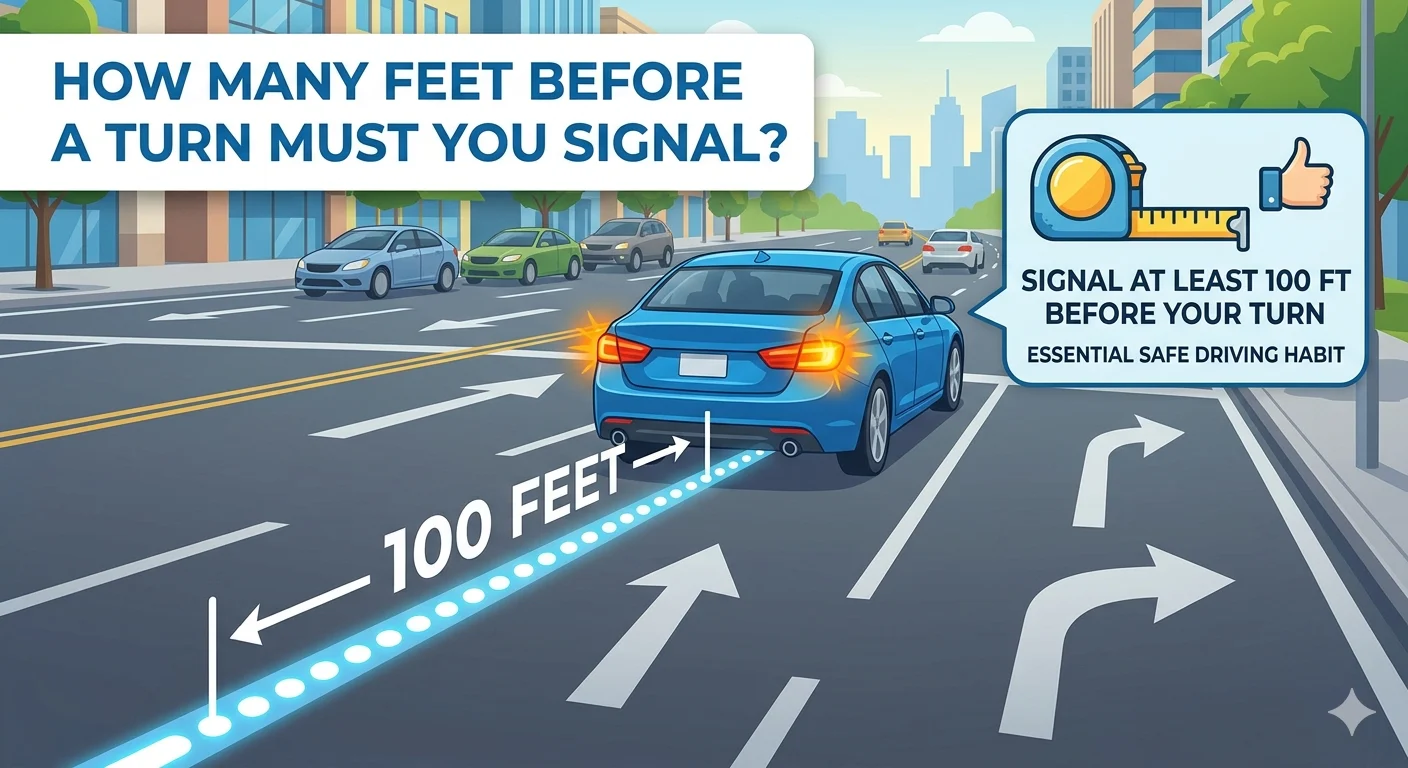
Turn signals are one of the most important safety features on any vehicle. They help drivers communicate their intentions clearly and reduce confusion on the road. A common question many new drivers ask is: how many feet before a turn must you signal?
In most U.S. states, the standard rule is to signal at least 100 feet before making a turn. This gives nearby drivers, cyclists, and pedestrians enough time to react safely. Whether you are preparing for a driving test or simply improving your driving habits, understanding proper signaling rules is essential.
Using turn signals correctly may seem simple, but failing to do so can lead to accidents, traffic tickets, and dangerous driving situations. In this guide, you will learn the correct signaling distance, why it matters, common mistakes to avoid, and practical tips for safer driving.
Why Turn Signals Are Important
Turn signals act as a communication tool between drivers. They tell others what you plan to do before you actually do it. Without signals, other drivers must guess your next move, which can create confusion and increase the risk of crashes.
Proper signaling helps:
- Prevent accidents
- Improve traffic flow
- Protect pedestrians
- Reduce sudden braking
- Help drivers maintain safe distances
- Improve defensive driving
Safe driving depends heavily on predictability. Drivers who signal early make the road safer for everyone.
Standard Rule for Signaling Before a Turn
In most states, drivers must signal at least 100 feet before turning. This applies to:
- Left turns
- Right turns
- Entering another roadway
- Some lane changes
To better understand 100 feet, think of it as roughly:
| Example | Approximate Distance |
|---|---|
| About 5 to 6 car lengths | 100 feet |
| Around one-third of a football field | 100 feet |
| A short city block section | Roughly 100 feet |
The goal of this rule is simple: provide enough warning for surrounding traffic.
When driving at higher speeds, such as on highways, signaling even earlier is safer because vehicles require more stopping distance.
State Laws May Be Different
Although the 100-foot rule is common across the United States, traffic laws vary by state. Some states may require longer signaling distances under certain conditions.
Here is a general comparison:
| State | Common Signal Requirement |
|---|---|
| California | 100 feet |
| Florida | 100 feet |
| Texas | 100 feet |
| New York | 100 feet |
| Some highway situations | More than 100 feet recommended |
Always check your local DMV handbook to understand the exact laws in your state.
How Signaling Improves Road Safety
Turn signals help reduce uncertainty on the road. When drivers know what others plan to do, they can react more safely and smoothly.
Gives Drivers More Reaction Time
Early signaling allows nearby vehicles to:
- Slow down safely
- Change lanes if needed
- Maintain safe following distances
Helps Pedestrians Cross Safely
Pedestrians rely on turn signals to predict vehicle movement at intersections and crosswalks.
Protects Cyclists and Motorcyclists
Cyclists and motorcyclists are more vulnerable in traffic. Proper signaling helps them anticipate your actions.
Reduces Road Rage
Unexpected turns often frustrate other drivers. Clear communication helps reduce aggressive driving situations.
Turn Signal Rules for Lane Changes
Many drivers forget that turn signals are also required before changing lanes.
Before changing lanes, follow these steps:
- Check mirrors
- Check blind spots
- Turn on your signal
- Move smoothly into the lane
Experts recommend signaling for at least 3 to 5 seconds before changing lanes on highways.
At higher speeds, signaling early becomes even more important because traffic moves quickly.
Common Mistakes Drivers Make
Even experienced drivers sometimes misuse turn signals. Avoiding these mistakes can make you a safer driver.
Signaling Too Late
Turning on the signal right before the turn gives other drivers very little time to react.
Forgetting to Turn Off the Signal
Leaving your signal on accidentally may confuse nearby drivers.
Signaling During the Turn
Signals should come before the action, not while already turning.
Not Signaling in Parking Lots
Parking lots still contain pedestrians and moving vehicles. Signaling remains important.
Assuming Nobody Is Around
Even on empty roads, signaling should become a consistent habit.
Tips to Remember Proper Signal Distance
Building strong driving habits takes practice. These tips can help.
Remember the 100-Foot Rule
A simple reminder:
- Signal early
- Turn smoothly
- Stay predictable
Think Ahead
Prepare for turns before reaching intersections.
Practice Defensive Driving
Good drivers expect unexpected behavior from others. Clear signaling helps avoid confusion.
Focus During Driving Tests
Driving examiners carefully watch signal usage. Missing signals can lead to deductions or failure.
What Happens If You Fail to Signal?
Not using turn signals properly can have serious consequences.
Traffic Tickets
Police officers may issue fines for failing to signal.
Increased Accident Risk
Drivers who fail to signal are more likely to cause collisions.
Insurance Problems
Failure to signal can affect liability decisions after accidents.
Driving Test Failure
Improper signaling is one of the most common mistakes made during road tests.
Signal Rules in Different Driving Situations
Different road environments may require slightly different signaling habits.
City Driving
In busy urban areas:
- Signal early
- Watch for pedestrians
- Expect sudden stops
Highway Driving
On highways:
- Signal longer
- Check blind spots carefully
- Avoid sudden lane changes
Roundabouts
Drivers should signal when exiting a roundabout.
Parking Situations
Use signals when:
- Pulling out of parking spaces
- Parallel parking
- Entering traffic
Defensive Driving and Turn Signals
Defensive driving means reducing risks before problems happen. Turn signals are a major part of defensive driving because they improve communication and predictability.
Drivers who signal properly are generally considered:
- Safer
- More responsible
- Easier to predict
- Less likely to cause accidents
One good driving habit can improve overall road safety significantly.
Real-World Example
Imagine driving during heavy traffic. A car suddenly slows down and turns without signaling.
What happens?
- Drivers brake suddenly
- Traffic slows down
- Accident risk increases
- Frustration builds among drivers
Now imagine the same situation with proper signaling 100 feet before the turn.
Other drivers can:
- Slow gradually
- Change lanes safely
- Maintain smoother traffic flow
This simple action helps prevent confusion and keeps roads safer.
Benefits of Proper Signaling
| Benefit | Why It Matters |
|---|---|
| Prevents crashes | Warns nearby drivers |
| Improves traffic flow | Reduces sudden braking |
| Helps pass driving tests | Required by law |
| Avoids tickets | Supports legal compliance |
| Protects pedestrians | Improves awareness |
| Encourages defensive driving | Makes driving predictable |
Expert Driving Tips
Signal Before Braking
If possible, activate your signal before slowing down heavily.
Avoid Distracted Driving
Phones and distractions often lead to missed signals and unsafe turns.
Watch Weather Conditions
Rain, fog, and darkness make signals even more important because visibility decreases.
Stay Consistent
The safest drivers use signals every single time, even on quiet roads.
Frequently Asked Questions
How many feet before a turn must you signal?
In most states, drivers must signal at least 100 feet before turning.
Do you need to signal before changing lanes?
Yes. Drivers should always signal before changing lanes.
Can you get pulled over for not signaling?
Yes. Failure to signal is a traffic violation in many states.
Why is signaling important?
Signaling improves communication, reduces accidents, and keeps traffic flowing safely.
Is the rule the same in every state?
No. Most states use the 100-foot rule, but some laws may vary slightly.
Conclusion
Understanding how many feet before a turn must you signal is a basic but essential part of safe driving. In most states, the correct distance is at least 100 feet before making a turn. This allows other drivers enough time to react safely and helps reduce confusion on the road.
Using turn signals properly is not just about avoiding tickets. It protects pedestrians, improves defensive driving, reduces accidents, and creates safer traffic conditions for everyone.
Whether you are preparing for a driving test or improving your daily driving habits, signaling early and consistently is one of the easiest ways to become a safer and more responsible driver.