
The human body is full of amazing systems, but one of the most fascinating is the digestive system. Many people are surprised to learn how long the intestines really are. If you have ever wondered how many feet of intestines do you have, the answer is more impressive than most people expect.
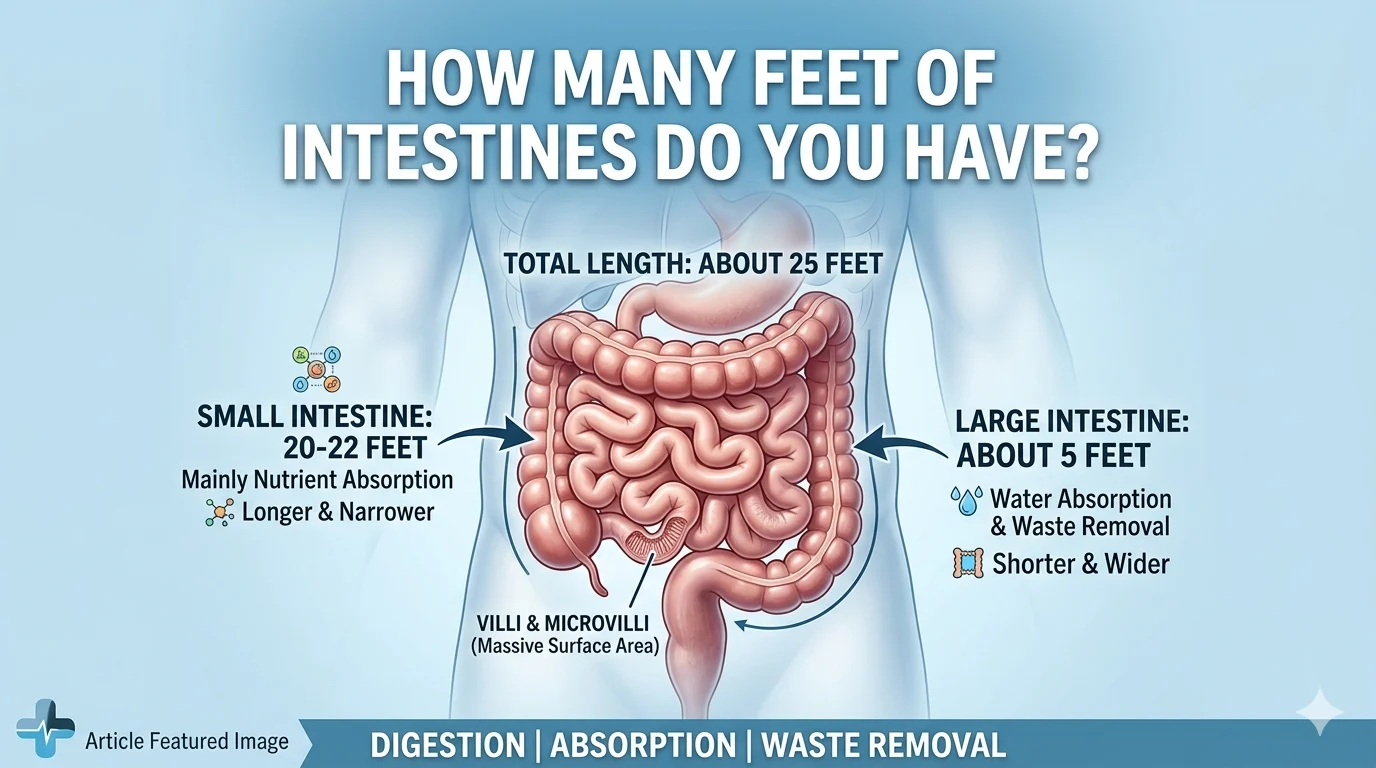
An average adult human has about 25 feet of intestines in total. This includes both the small intestine and the large intestine. Even though they fit inside the abdomen, the intestines are tightly folded and coiled, allowing them to occupy a relatively small space.
In this article, you will learn the exact length of human intestines, how they work, why they are so long, and how to keep them healthy.
Understanding the Human Intestinal System
The intestines are part of the digestive tract. They begin after the stomach and continue all the way to the rectum. Their main purpose is to digest food, absorb nutrients, and remove waste from the body.
The intestinal system has two main sections:
- Small intestine
- Large intestine
Each section performs a unique job in the digestion process.
What Are Intestines?
Intestines are long muscular tubes located inside the abdomen. Food travels through them after leaving the stomach.
Their functions include:
- Breaking down food further
- Absorbing nutrients
- Absorbing water
- Moving waste through the body
Without healthy intestines, the body would struggle to get nutrients from food.
How Many Feet of Intestines Do You Have in Total?
The average adult has approximately 25 feet of intestines combined.
Here is the typical breakdown:
| Intestinal Part | Average Length |
|---|---|
| Small Intestine | 20–22 feet |
| Large Intestine | Around 5 feet |
| Total Length | About 25 feet |
The exact length can vary slightly from person to person.
Small Intestine Length
The small intestine is the longest section of the digestive tract. It usually measures between 20 and 22 feet long in adults.
Despite the name “small intestine,” it is actually very long. The word “small” refers to its narrower width compared to the large intestine.
The small intestine is divided into three sections:
- Duodenum
- Jejunum
- Ileum
This organ is responsible for absorbing most nutrients from food.
Large Intestine Length
The large intestine is much shorter, measuring about 5 feet long. However, it is wider than the small intestine.
The large intestine includes:
- Colon
- Cecum
- Rectum
Its primary job is to absorb water and prepare waste for removal from the body.
Why Are Human Intestines So Long?
Many people wonder why the intestines need to be so lengthy. The answer lies in digestion and nutrient absorption.
Better Nutrient Absorption
The small intestine absorbs:
- Proteins
- Carbohydrates
- Fats
- Vitamins
- Minerals
A longer intestine creates more surface area, giving the body enough time and space to absorb nutrients efficiently.
Efficient Digestion
Food digestion is a complex process. Long intestines allow food to move slowly through the digestive tract, helping enzymes break it down properly.
Water Absorption
The large intestine absorbs water and electrolytes from undigested food. This process helps maintain hydration and forms solid waste.
Without this function, the body could lose too much water.
How Do 25 Feet of Intestines Fit Inside the Body?
It may seem impossible for 25 feet of intestines to fit inside the human abdomen, but the body has an efficient design.
The intestines are:
- Folded
- Twisted
- Coiled tightly
This compact arrangement allows them to fit comfortably inside the abdominal cavity.
Special connective tissues hold the intestines in place while still allowing movement during digestion.
Small Intestine vs Large Intestine
Although they work together, the small and large intestines have very different functions.
| Feature | Small Intestine | Large Intestine |
|---|---|---|
| Length | 20–22 feet | About 5 feet |
| Width | Narrow | Wider |
| Main Function | Nutrient absorption | Water absorption |
| Digestion | Major digestion occurs | Minimal digestion |
| Surface | Contains villi | Smoother lining |
The small intestine handles most digestion, while the large intestine focuses mainly on water absorption and waste storage.
The Role of the Small Intestine
The small intestine is one of the hardest-working organs in the body.
Nutrient Processing
After food leaves the stomach, it enters the small intestine. Digestive enzymes and bile continue breaking down food particles.
The body then absorbs nutrients into the bloodstream.
Villi and Microvilli
The inner lining of the small intestine contains tiny structures called villi and microvilli.
These structures:
- Increase surface area
- Improve nutrient absorption
- Help maximize digestion efficiency
Without them, nutrient absorption would be far less effective.
The Role of the Large Intestine
The large intestine performs the final stages of digestion.
Water Recovery
One of its main tasks is to absorb water from waste material.
This helps:
- Prevent dehydration
- Maintain electrolyte balance
- Form stool properly
Gut Bacteria
The large intestine contains trillions of bacteria known as the gut microbiome.
These bacteria help:
- Digest certain foods
- Produce vitamins
- Support the immune system
- Protect against harmful microbes
A healthy microbiome is essential for overall health.
Interesting Facts About Human Intestines
The intestines are full of surprising features.
Your Intestines Constantly Move
The intestines use wave-like muscle contractions called peristalsis to move food through the digestive tract.
This process happens automatically.
The Surface Area Is Huge
Because of villi and microvilli, the small intestine has a massive surface area designed for nutrient absorption.
Intestines Start Working Before Birth
The digestive system begins developing early in pregnancy and continues growing throughout childhood.
Common Intestinal Problems
Digestive issues are common and can affect people of all ages.
Constipation
Constipation occurs when waste moves too slowly through the intestines.
Common causes include:
- Low fiber intake
- Dehydration
- Lack of physical activity
Irritable Bowel Syndrome (IBS)
IBS is a common digestive condition that may cause:
- Stomach pain
- Bloating
- Diarrhea
- Constipation
Symptoms often vary from person to person.
Crohn’s Disease
Crohn’s disease is an inflammatory bowel disease that can affect different parts of the digestive tract.
It may cause:
- Pain
- Fatigue
- Weight loss
- Chronic diarrhea
Medical care is important for managing symptoms.
How to Keep Your Intestines Healthy
Healthy intestines support digestion, immunity, and overall wellness.
Eat More Fiber
Fiber helps food and waste move smoothly through the digestive tract.
Good fiber sources include:
- Fruits
- Vegetables
- Whole grains
- Beans
Drink Enough Water
Hydration helps the intestines function properly and may reduce constipation.
Exercise Regularly
Physical activity supports healthy digestion and bowel movement.
Even walking daily can help.
Include Probiotic Foods
Probiotic-rich foods may support healthy gut bacteria.
Examples include:
- Yogurt
- Kefir
- Fermented vegetables
Reduce Processed Foods
Highly processed foods may negatively affect digestion and gut health.
A balanced diet usually supports healthier intestines.
FAQs
How many feet of intestines does an adult have?
Most adults have about 25 feet of intestines combined.
Which intestine is longer?
The small intestine is much longer than the large intestine.
Why are intestines folded?
They are folded and coiled to fit inside the abdomen efficiently.
Can intestine length vary?
Yes. Intestinal length can differ slightly between individuals.
What is the main job of the intestines?
The intestines digest food, absorb nutrients and water, and remove waste from the body.
Conclusion
If you have ever asked yourself how many feet of intestines do you have, the answer is around 25 feet in total. The small intestine accounts for most of that length, while the large intestine handles water absorption and waste removal.
Although the intestines are incredibly long, their folded structure allows them to fit neatly inside the body. These organs play a major role in digestion, nutrient absorption, hydration, and overall health.
Understanding how the intestines work can help you appreciate the complexity of the human body and encourage healthier lifestyle habits for better digestive health.