

Driving safely is not only about controlling your car. It is also about communicating your intentions clearly to other drivers, cyclists, and pedestrians. One of the easiest ways to do that is by using your turn signal correctly.
Many drivers ask, “how many feet before turning should you signal?” This is one of the most common questions on driving tests and DMV exams because signaling plays a major role in road safety.
In most states across the United States, drivers are required to signal at least 100 feet before making a turn. However, laws can vary slightly depending on the state and driving conditions. Understanding the correct signaling distance can help you avoid accidents, pass your driving test, and become a safer driver overall.
Why Turn Signals Matter
Turn signals are one of the most basic yet important safety tools in any vehicle. They tell others what you plan to do before you do it.
Preventing Accidents
Many accidents happen because drivers change direction without warning. A turn signal gives nearby drivers enough time to react safely.
For example:
- Drivers behind you can slow down
- Pedestrians know when it is safe to cross
- Cyclists can adjust their position
- Other vehicles can avoid sudden braking
Without signaling, your actions become unpredictable.
Communicating With Other Drivers
Driving is all about communication. Since drivers cannot speak to each other directly, they rely on signals, brake lights, and road positioning.
Using your signal properly helps:
- Reduce confusion
- Improve traffic flow
- Lower accident risk
- Build safer driving habits
How Many Feet Before Turning Should You Signal?
The standard rule in most states is simple:
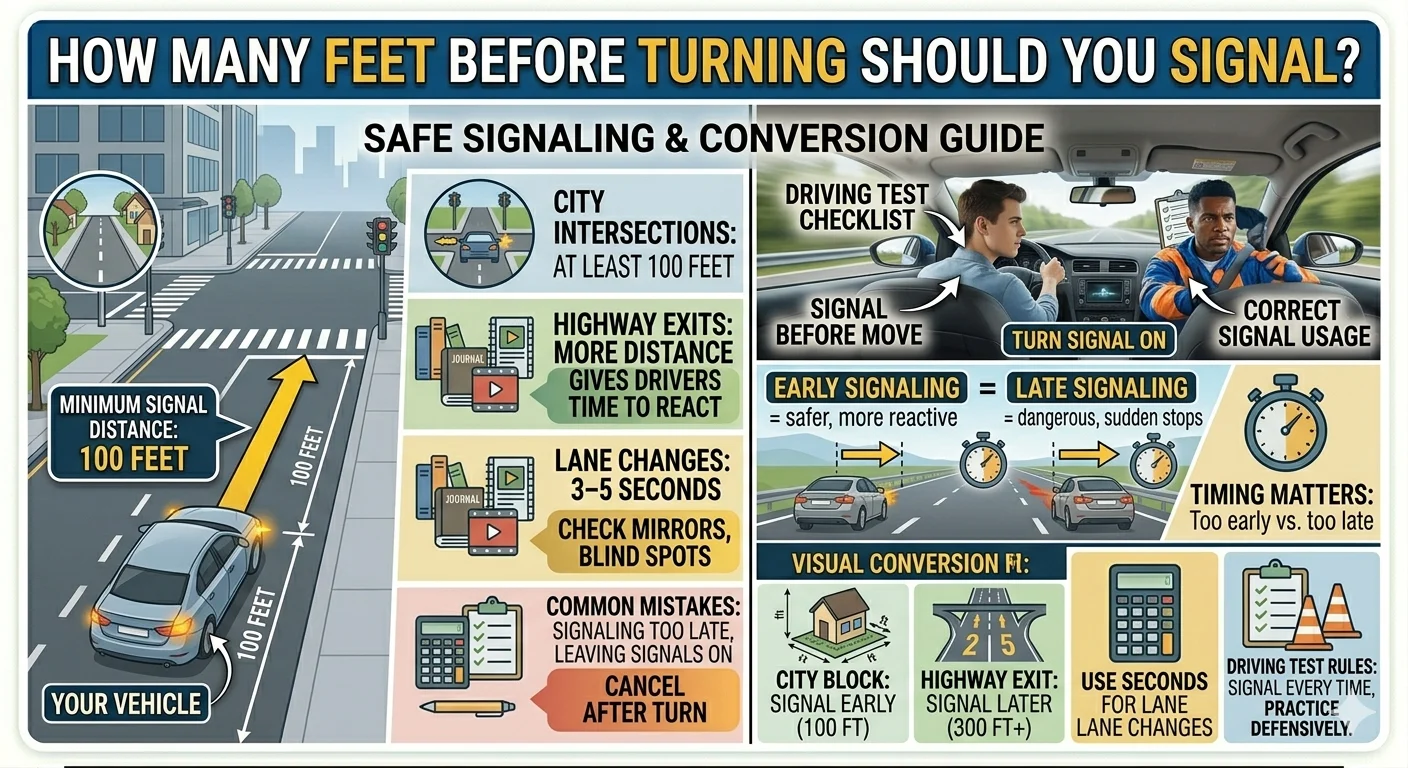
You should activate your turn signal at least 100 feet before making a turn.
This gives other road users enough warning to react safely.
Standard Rule in Most States
Most DMV manuals and traffic laws require signaling:
- At least 100 feet before turning
- Before changing lanes
- Before merging into traffic
Although 100 feet is common, some states may require more distance in high-speed zones.
Situations Where More Distance Helps
Sometimes signaling earlier than 100 feet is even safer.
Examples include:
- Heavy traffic
- Bad weather
- Highway driving
- Night driving
- Large intersections
Early signaling gives drivers more time to react calmly.
Understanding Turn Signal Laws
Traffic laws can differ slightly depending on where you live.
State-by-State Differences
While many states use the 100-foot rule, some areas may have additional requirements.
For example:
- Highway signaling distances may be longer
- Commercial drivers may follow stricter rules
- Urban areas may require extra caution
Always check your local DMV handbook for exact regulations.
Common DMV Rules
Most DMV driving tests check whether you:
- Signal before every turn
- Signal before lane changes
- Cancel the signal after turning
- Signal early enough
Failing to signal properly can cost points on your driving exam.
When to Signal for Different Driving Situations
Different driving situations may require slightly different timing.
Turning at Intersections
At intersections, use your turn signal at least 100 feet before turning.
This helps:
- Drivers behind you slow down
- Cross traffic prepare
- Pedestrians stay alert
Do not wait until the last second.
Changing Lanes
For lane changes, signal several seconds before moving.
A good rule is:
- Signal
- Check mirrors
- Check blind spots
- Change lanes smoothly
Never signal and move at the same time.
Entering Highways
When merging onto highways:
- Signal early
- Match traffic speed
- Merge smoothly
Highway traffic moves quickly, so communication is critical.
Exiting Parking Spaces
Even when leaving a parking space, signaling is important.
It warns:
- Passing vehicles
- Cyclists
- Pedestrians
Many small parking lot accidents happen because drivers forget this step.
Why Drivers Forget to Signal
Despite its importance, many drivers fail to signal consistently.
Common Mistakes
Drivers often:
- Forget to signal entirely
- Signal too late
- Leave signals on accidentally
- Assume nobody is nearby
These habits increase accident risk.
Dangerous Habits
Some experienced drivers become overconfident and stop signaling regularly.
Unfortunately, this creates:
- Sudden lane changes
- Rear-end collisions
- Confusion at intersections
- Aggressive driving situations
Safe drivers signal every time, even on quiet roads.
Proper Way to Use Turn Signals
Using turn signals correctly is easy once it becomes a habit.
Step-by-Step Guide
Follow these steps:
- Decide where you want to turn
- Turn on your signal early
- Check mirrors
- Watch traffic around you
- Slow down gradually
- Complete the turn safely
- Turn off the signal if needed
Timing Your Signal Correctly
Timing matters just as much as using the signal itself.
Too early:
- Drivers may think you are turning somewhere else
Too late:
- Drivers have no time to react
The goal is clear communication.
Turn Signal Distance Chart
| Driving Situation | Recommended Signal Distance |
|---|---|
| Standard city turn | 100 feet |
| Highway exit | 300 feet or more |
| Lane change | 3–5 seconds before moving |
| Parking lot exit | Before moving |
| Residential streets | At least 100 feet |
This chart provides general guidance, but always follow local traffic laws.
Benefits of Signaling Early
Proper signaling offers several advantages.
Better Traffic Flow
When drivers know your intentions:
- Traffic moves more smoothly
- Fewer sudden stops occur
- Intersections stay organized
Improved Safety
Early signaling helps reduce:
- Side-swipe accidents
- Rear-end collisions
- Pedestrian accidents
Safe communication saves lives.
Reduced Road Rage
Unexpected turns frustrate other drivers.
Using signals properly:
- Shows courtesy
- Reduces aggressive reactions
- Creates calmer traffic conditions
Common Signal Mistakes to Avoid
Many drivers use signals incorrectly without realizing it.
Signaling Too Late
Late signaling is one of the biggest mistakes.
If you signal while already turning, other drivers gain almost no warning.
Leaving Signals On
Forgetting to turn off your signal confuses nearby drivers.
This may cause:
- Unsafe passing
- Incorrect assumptions
- Traffic delays
Always check your dashboard indicators.
Misleading Other Drivers
Do not signal if you do not actually plan to turn yet.
False signals confuse traffic and can create dangerous situations.
Tips for Passing Your Driving Test
Turn signal usage is heavily tested during driving exams.
What Examiners Watch For
Driving examiners usually check whether you:
- Signal early enough
- Signal before lane changes
- Use the correct signal
- Cancel signals after turning
Missing signals repeatedly may result in failure.
Easy Habits to Build
To improve quickly:
- Signal every time you move
- Practice in empty parking lots
- Say “mirror, signal, move” mentally
- Build muscle memory
Consistency is the key to safe driving.
Defensive Driving and Turn Signals
Defensive driving means anticipating risks before they happen.
Turn signals are a major part of defensive driving because they:
- Reduce surprises
- Help drivers react early
- Improve awareness
- Encourage smoother traffic movement
Professional drivers and driving instructors strongly emphasize signaling because it protects everyone on the road.
Even if roads seem empty, signaling should still be automatic.
FAQs
Is it always 100 feet before turning?
In most states, yes. However, some highways or special situations may require longer distances.
How many feet before a lane change should you signal?
Instead of feet, lane changes are usually measured in seconds. Signal about 3–5 seconds before changing lanes.
Can you get a ticket for not signaling?
Yes. Failing to signal properly can lead to traffic tickets and fines in many areas.
Do motorcycles need turn signals too?
Yes. Motorcyclists must also signal turns and lane changes according to local traffic laws.
Should you signal in empty parking lots?
Yes. Building consistent habits improves overall driving safety and awareness.
Conclusion
Understanding how many feet before turning should you signal is an essential part of safe driving. In most cases, drivers should signal at least 100 feet before making a turn to give others enough time to react safely.
Proper signaling helps prevent accidents, improves traffic flow, and makes roads safer for everyone. Whether you are preparing for a driving test or simply improving your driving habits, using turn signals correctly is one of the easiest ways to become a more responsible driver.
Remember to signal early, check your surroundings, and stay predictable on the road. Small habits like these can make a huge difference in overall driving safety.