
Whether you’re setting up a dart board in your home, garage, game room, basement, or sports bar, one of the first questions you’ll ask is: how many feet from a dart board should you stand?
Using the correct dart throwing distance is essential for fair gameplay, skill development, and an authentic playing experience. Even a small error in measurement can affect accuracy and make practice less effective.
In this guide, you’ll learn the official dart board distance, proper setup measurements, height requirements, common mistakes to avoid, and practical tips for creating a professional dart-playing area.
Official Distance From a Dart Board
The official distance from a dart board depends on the type of darts being used.
Steel Tip Dart Distance
For traditional steel tip darts, the official throwing distance is:
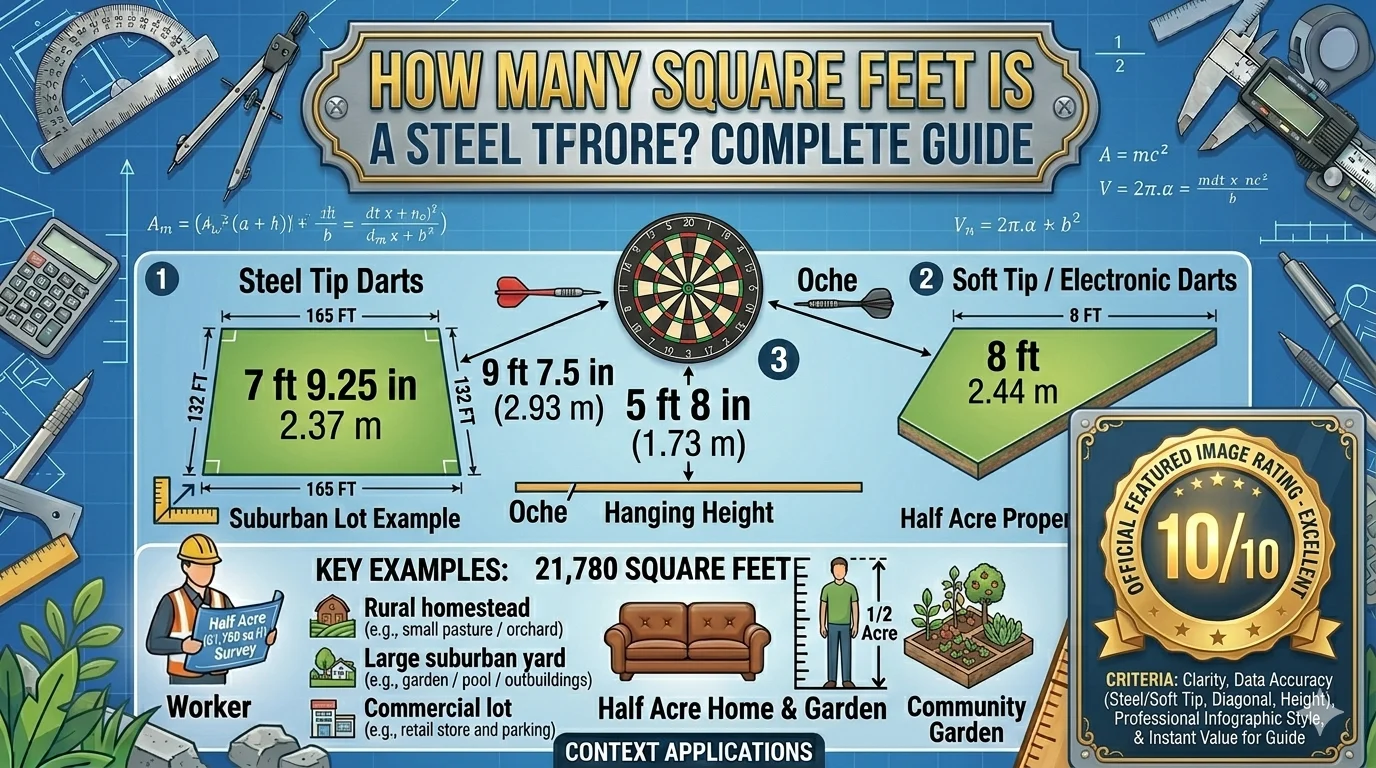
7 feet 9.25 inches (2.37 meters)
This distance is measured from the face of the dart board to the throw line, also known as the oche.
Professional tournaments and most dart leagues around the world use this standard measurement.
Soft Tip Dart Distance
Electronic dart boards that use soft tip darts generally require a slightly longer throwing distance:
8 feet (2.44 meters)
Most electronic dart systems are designed around this measurement to ensure balanced gameplay.
Why Dart Board Distance Matters
Many beginners assume that standing a few inches closer or farther away won’t affect their game. In reality, proper distance plays a major role in performance.
Benefits of using the correct dart board distance include:
- Improved throwing consistency
- More accurate scoring
- Better practice sessions
- Fair competition among players
- Easier transition to league or tournament play
- More realistic playing conditions
Practicing from the wrong distance can lead to bad habits that become difficult to correct later.
Standard Dart Board Measurements
A regulation dart setup requires both proper distance and proper board height.
The standard measurements are:
| Measurement | Official Standard |
|---|---|
| Bullseye Height | 5 feet 8 inches (1.73 m) |
| Steel Tip Distance | 7 feet 9.25 inches (2.37 m) |
| Soft Tip Distance | 8 feet (2.44 m) |
| Diagonal Distance | 9 feet 7.5 inches (2.93 m) |
The bullseye height is measured from the floor to the exact center of the bullseye.
Dart Board Distance Chart
The following chart provides a quick reference for dart board setup.
| Dart Type | Distance in Feet | Distance in Inches | Distance in Meters |
|---|---|---|---|
| Steel Tip | 7.77 Feet | 93.25 Inches | 2.37 m |
| Soft Tip | 8 Feet | 96 Inches | 2.44 m |
Keeping these measurements handy makes installation much easier.
How to Measure the Correct Distance
Setting up a dart board accurately requires only a tape measure and a few minutes of work.
Step 1: Mount the Dart Board
Secure the dart board firmly to the wall.
The center of the bullseye should be exactly:
5 feet 8 inches above the floor
Double-check this measurement before proceeding.
Step 2: Measure From the Face of the Board
A common mistake is measuring from the wall behind the board.
The official measurement starts from the front face of the dart board.
This is important because dart boards have thickness that can affect accuracy.
Step 3: Mark the Throw Line
For steel tip darts, measure:
7 feet 9.25 inches
For soft tip darts, measure:
8 feet
Mark this location on the floor using tape, paint, or an oche.
Step 4: Install an Oche
An oche is the official throw line that players stand behind.
Popular options include:
- Floor tape
- Wooden oche
- Rubber oche
- Commercial dart mats
An oche helps maintain consistent gameplay and prevents accidental foot faults.
Understanding the Oche
The oche is an important part of every dart setup.
Players must keep their feet behind the oche while throwing.
Stepping over the line during a throw is considered a foot fault in competitive play.
Benefits of using an oche include:
- Consistent positioning
- Professional playing conditions
- Better practice habits
- Tournament-style gameplay
Many serious players install a raised oche to create a more authentic experience.
Dart Board Height Requirements
Distance is only one part of a regulation setup.
The dart board must also be mounted at the proper height.
The official height requirement is:
5 feet 8 inches (68 inches or 1.73 meters)
This measurement is taken from the floor to the center of the bullseye.
Why Height Is Important
A dart board mounted too high or too low changes the throwing angle.
This can affect:
- Accuracy
- Muscle memory
- Scoring consistency
- Tournament preparation
Following official standards helps ensure your practice translates directly to competitive play.
Steel Tip vs Soft Tip Dart Distances
Many players wonder why steel tip and soft tip dart boards use different measurements.
Steel Tip Darts
Steel tip darts are typically heavier and are used on bristle dart boards.
Advantages include:
- Traditional gameplay
- Professional tournament use
- Greater durability
- More competitive environment
Official distance:
7 feet 9.25 inches
Soft Tip Darts
Soft tip darts are lighter and designed for electronic dart boards.
Advantages include:
- Safer for families
- Automatic scoring
- Easier for beginners
- Popular in arcades and entertainment venues
Official distance:
8 feet
The slightly longer distance helps compensate for differences in dart weight and board design.
Common Mistakes When Setting Up a Dart Board
Avoiding setup mistakes can save time and improve gameplay.
Measuring From the Wrong Location
Always measure from the face of the board, not the wall.
Ignoring Board Height
Many people focus on throwing distance and forget to check bullseye height.
Using Approximate Measurements
Guessing distances can create an inaccurate setup.
Always use a tape measure.
Insufficient Playing Space
Players need room to stand comfortably and retrieve darts safely.
Poor Lighting
Dark or uneven lighting makes it difficult to see scoring sections clearly.
Tips for Creating the Perfect Dart Area
A properly designed dart area can dramatically improve the playing experience.
Install Quality Lighting
Good lighting reduces shadows and improves visibility.
Consider:
- LED ring lights
- Overhead fixtures
- Dedicated dart board lighting systems
Protect Your Walls
Missed throws happen, especially for beginners.
Protect your walls with:
- Dart board surrounds
- Cork backing
- Foam protection panels
- Wooden backboards
Use a Dart Mat
A dart mat provides several benefits:
- Floor protection
- Accurate throw line markings
- Reduced wear and tear
- Professional appearance
Keep the Area Clear
Avoid placing furniture, decorations, or fragile items near the playing zone.
This creates a safer environment for everyone.
Practical Examples of Dart Board Setup
Home Recreation Room
A traditional bristle dart board setup should use:
- Bullseye height: 5 feet 8 inches
- Throw distance: 7 feet 9.25 inches
Garage Setup
Measure carefully and install a dart mat to protect the concrete floor.
Use the same regulation measurements.
Sports Bar Installation
Most sports bars use regulation distances to provide customers with an authentic playing experience.
Tournament Practice Area
Competitive players should always practice using official measurements to replicate league conditions.
Benefits of Using Official Dart Measurements
Following regulation measurements provides several advantages.
Improved Accuracy
Consistent distance leads to more consistent throws.
Better Skill Development
Players develop proper muscle memory and technique.
Easier Transition to Competition
Tournament environments feel familiar.
Fair Gameplay
Every player competes under the same conditions.
Enhanced Enjoyment
Games feel more authentic and professional.
Frequently Asked Questions
How many feet from a dart board should you stand?
For steel tip darts, stand 7 feet 9.25 inches away from the face of the dart board. For soft tip darts, stand 8 feet away.
What is the official dart board height?
The center of the bullseye should be 5 feet 8 inches above the floor.
What is an oche?
An oche is the throw line that marks where players stand when throwing darts.
Do professional players use the same distance?
Yes. Professional steel tip tournaments use the official distance of 7 feet 9.25 inches.
Can I place my dart board at a different distance?
You can, but practicing at regulation distance is recommended if you want to improve your skills and play competitively.
Conclusion
If you’re wondering how many feet from a dart board you should stand, the answer depends on the type of darts you use. Steel tip darts require a distance of 7 feet 9.25 inches, while soft tip dart boards use a distance of 8 feet. In addition, the center of the bullseye should always be mounted 5 feet 8 inches above the floor.
Using official dart board measurements helps improve accuracy, develop proper technique, and create a professional playing experience. Whether you’re setting up a casual game room or preparing for tournament competition, following these standards ensures that every game is played as intended.