
If you’re planning a patio, driveway, walkway, pool deck, or other hardscaping project, one of the most common questions is: how many square feet in a pallet of pavers? Understanding paver coverage is essential for budgeting, ordering materials, and avoiding costly delays during installation.
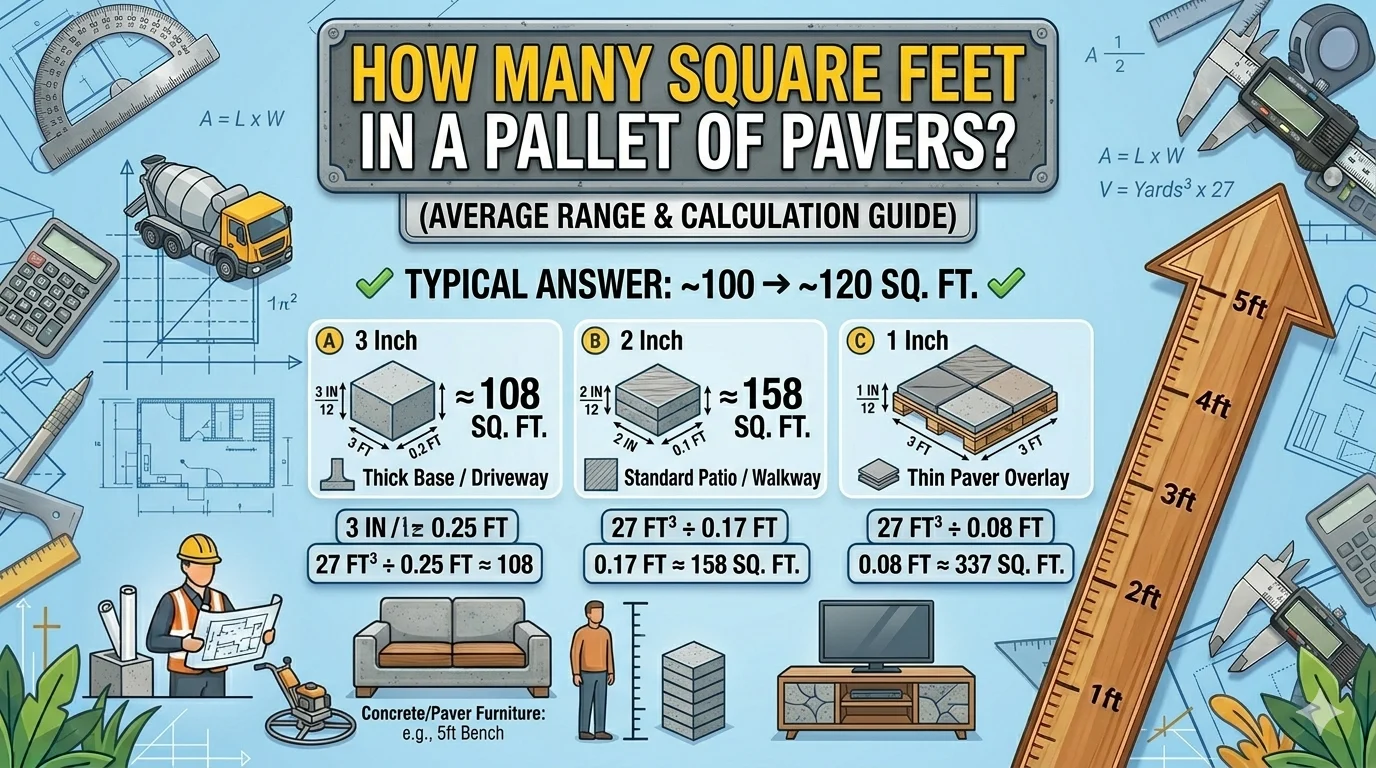
The short answer is that a pallet of pavers typically covers 80 to 160 square feet, with most standard concrete paver pallets covering around 100 to 120 square feet. However, the exact coverage depends on the paver size, thickness, manufacturer packaging, and the type of project you’re completing.
This guide explains everything you need to know about paver pallet coverage, including calculation methods, coverage charts, factors that affect square footage, and practical examples for homeowners and contractors.
Understanding Paver Pallets
A pallet of pavers is a bundled quantity of paving stones packaged together for shipping and storage. Manufacturers stack pavers on wooden or plastic pallets and secure them with wrapping or straps to prevent damage during transportation.
Unlike bags of concrete or mulch, paver pallets do not all contain the same amount of material. The square footage covered by a pallet depends on several factors, including:
- Paver dimensions
- Paver thickness
- Material type
- Weight limitations
- Packaging methods
- Manufacturer specifications
Because of these variables, one pallet may cover significantly more or less area than another.
How Many Square Feet Does a Pallet of Pavers Cover?
Most homeowners can expect a standard pallet of pavers to cover approximately 100 to 120 square feet. However, coverage ranges vary based on product type.
Here is a general overview:
| Paver Type | Average Coverage Per Pallet |
|---|---|
| Brick Pavers | 80–110 sq ft |
| Concrete Pavers | 100–120 sq ft |
| Driveway Pavers | 90–130 sq ft |
| Large Format Pavers | 120–160 sq ft |
| Natural Stone Pavers | 70–120 sq ft |
While these numbers provide a useful estimate, always review the manufacturer’s product sheet before purchasing.
Why Paver Coverage Varies
Many people assume every pallet covers the same amount of area. In reality, coverage varies because of differences in paver size and weight.
Paver Dimensions
Larger pavers cover more surface area with fewer pieces. A pallet of large-format pavers generally covers more square footage than a pallet of small brick pavers.
Paver Thickness
Thicker pavers weigh more. Since pallets have maximum weight limits, manufacturers typically package fewer thick pavers per pallet, reducing total coverage.
Packaging Methods
Different manufacturers package products differently. One company may package 100 square feet per pallet, while another may package 120 or even 150 square feet.
Material Type
Concrete, clay brick, and natural stone pavers all have different weights and dimensions, which directly affect pallet coverage.
Typical Paver Coverage Chart
The following chart provides a quick estimate of pallet requirements based on project size.
| Project Size | Approximate Pallets Needed |
|---|---|
| 100 sq ft | 1 pallet |
| 200 sq ft | 2 pallets |
| 300 sq ft | 3 pallets |
| 400 sq ft | 4 pallets |
| 500 sq ft | 5 pallets |
| 600 sq ft | 6 pallets |
| 800 sq ft | 8 pallets |
| 1,000 sq ft | 10 pallets |
These estimates assume approximately 100 square feet of coverage per pallet.
How to Calculate Paver Coverage
Calculating paver coverage is relatively simple and helps ensure you order the correct amount of material.
Step 1: Measure the Area
Measure the length and width of your project area in feet.
For example:
- Length: 20 feet
- Width: 15 feet
Step 2: Calculate Square Footage
Multiply length by width.
20 × 15 = 300 square feet
Your patio requires 300 square feet of pavers.
Step 3: Add Waste Allowance
Professional installers recommend adding extra material for cuts, breakage, and future repairs.
Typical waste factors include:
- 5% for simple layouts
- 10% for standard projects
- 15% for complex patterns
For a 300-square-foot patio:
300 × 10% = 30 square feet
Total material needed:
300 + 30 = 330 square feet
Step 4: Determine Number of Pallets
If one pallet covers 110 square feet:
330 ÷ 110 = 3 pallets
You would need approximately three pallets.
Common Residential Projects and Coverage Requirements
Different outdoor projects require different amounts of pavers.
Small Patio
A small backyard patio may measure:
- 10 ft × 10 ft
Coverage:
100 square feet
Materials required:
Approximately one pallet
Medium Patio
A medium-sized patio may measure:
- 15 ft × 20 ft
Coverage:
300 square feet
Materials required:
Three pallets
Large Patio
A large entertaining space may measure:
- 20 ft × 30 ft
Coverage:
600 square feet
Materials required:
Six pallets
Walkways
Most residential walkways range from:
- 3–4 feet wide
- 20–40 feet long
Coverage required:
60–160 square feet
Materials required:
One to two pallets
Driveways
Residential driveways commonly range between:
400 and 800 square feet
Materials required:
Four to eight pallets
Driveway pavers are usually thicker than patio pavers, so pallet coverage may be slightly lower.
Comparing Different Paver Sizes
Paver size significantly affects overall coverage.
| Paver Size | Typical Use | Coverage Efficiency |
|---|---|---|
| 4″ × 8″ | Walkways | Moderate |
| 6″ × 9″ | Patios | Good |
| 12″ × 12″ | Outdoor Living Areas | High |
| 16″ × 16″ | Modern Designs | Very High |
| 24″ × 24″ | Large Spaces | Excellent |
Larger pavers generally require fewer joints and fewer individual pieces, which can speed up installation.
Factors That Increase Material Requirements
Several factors can increase the number of pavers needed for a project.
Complex Patterns
Patterns such as:
- Herringbone
- Basket weave
- Circular layouts
- Random designs
often require more cuts and create additional waste.
Curved Edges
Curves typically generate more offcuts than straight edges.
Decorative Borders
Adding contrasting borders can increase total paver requirements.
Slopes and Obstacles
Projects involving trees, drainage systems, or retaining walls often require additional cutting and material.
Common Mistakes When Estimating Paver Coverage
Accurate planning can save time and money. Avoid these common mistakes.
Not Adding Waste
Many DIY installers calculate only the exact square footage and forget to account for breakage and cuts.
Assuming Every Pallet Covers the Same Area
Coverage varies by product and manufacturer.
Ignoring Future Repairs
Keeping extra pavers allows you to replace damaged pieces later without worrying about color differences.
Ordering Too Little Material
Running short can delay projects and may result in mismatched colors if additional pavers come from a different production batch.
Benefits of Buying Full Pallets
Purchasing full pallets often provides advantages over buying loose pavers.
Better Pricing
Many suppliers offer discounts for pallet quantities.
Consistent Color
Full pallets usually come from the same production run, reducing color variation.
Easier Delivery
Transporting palletized materials is more efficient and safer.
Spare Materials
Extra pavers can be stored for future repairs.
Expert Tips for Ordering Pavers
Before placing your order, keep these professional recommendations in mind.
Measure Twice
Always verify project dimensions before ordering.
Order Extra Material
Plan for at least 5–15% additional coverage.
Check Manufacturer Specifications
Review the exact square footage listed on the product sheet.
Consider Future Repairs
Store several extra pavers in a dry location.
Confirm Delivery Access
Pallets can weigh several thousand pounds. Make sure delivery trucks can access your property safely.
How Weight Affects Pallet Coverage
Many homeowners focus only on square footage, but pallet weight is equally important.
A typical pallet of concrete pavers may weigh:
- 2,500 to 4,000 pounds
Manufacturers must stay within safe shipping limits. As pavers become thicker and heavier, fewer pieces fit on each pallet, reducing coverage.
This is why driveway pavers often cover fewer square feet than thinner patio pavers.
Choosing the Right Pavers for Your Project
The ideal paver depends on your goals.
For patios:
- Standard concrete pavers
- Decorative pavers
- Large-format slabs
For driveways:
- Thick interlocking pavers
- Heavy-duty concrete pavers
For walkways:
- Brick pavers
- Concrete pavers
- Natural stone pavers
Selecting the correct product helps ensure durability and long-term performance.
Frequently Asked Questions
How many square feet are in a pallet of pavers?
Most pallets cover between 80 and 160 square feet, with 100–120 square feet being the most common range.
How many pallets do I need for a 500-square-foot patio?
If each pallet covers approximately 100 square feet, you will need around five pallets, plus extra material for waste.
Do all paver pallets have the same coverage?
No. Coverage varies based on paver size, thickness, material type, and manufacturer packaging.
Should I buy extra pavers?
Yes. Most professionals recommend ordering 5–15% extra to account for cuts, breakage, and future repairs.
How can I estimate the number of pallets I need?
Calculate your total square footage, add a waste allowance, and divide by the coverage listed for your chosen paver pallet.
Conclusion
When determining how many square feet in a pallet of pavers, the answer depends on the specific product you choose. Most pallets cover between 80 and 160 square feet, while standard concrete pavers typically provide around 100 to 120 square feet of coverage per pallet.
To avoid shortages, carefully measure your project area, include a waste factor, and verify coverage information provided by the manufacturer. Whether you’re building a patio, driveway, walkway, or outdoor living space, understanding pallet coverage helps you plan accurately, stay within budget, and complete your project with confidence.