

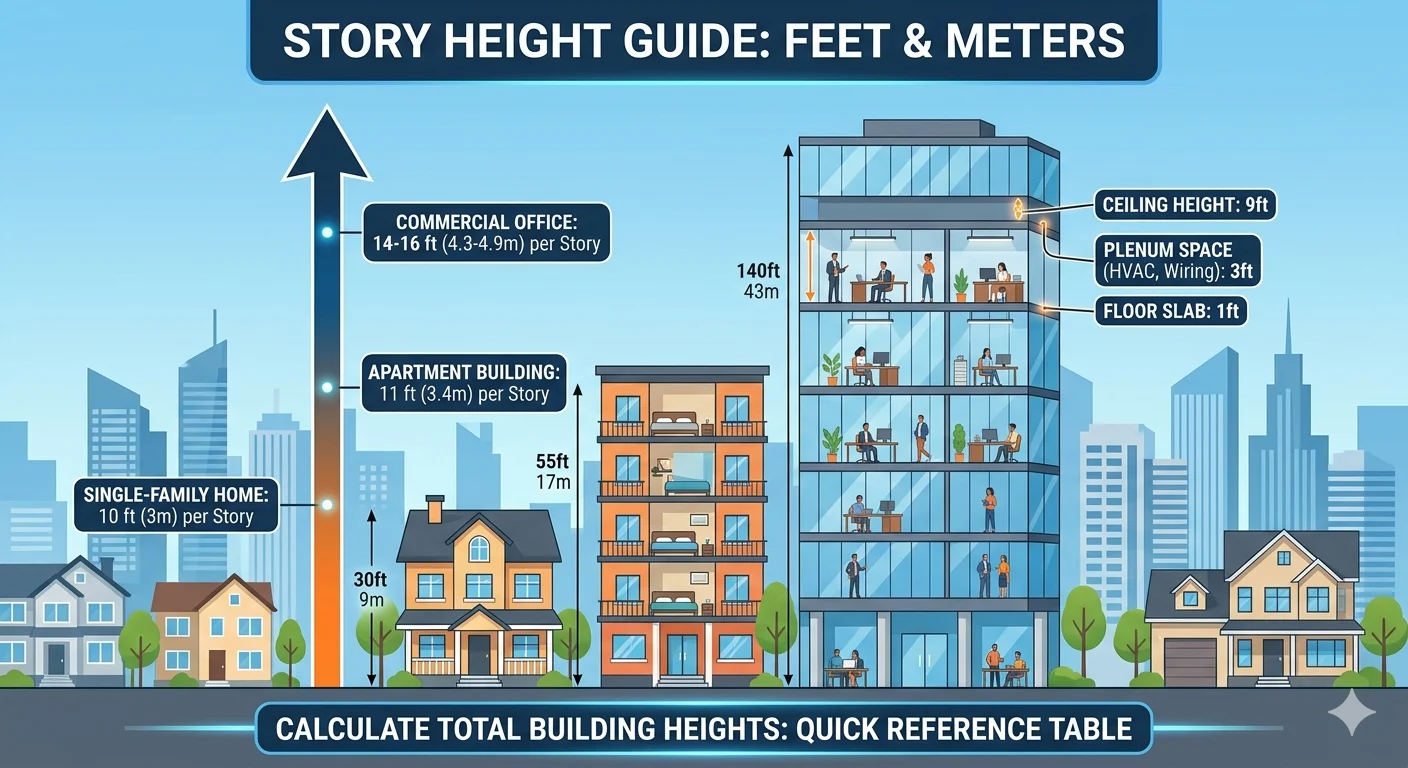
Understanding how many feet is in a story is important when dealing with buildings, real estate, construction, or general measurement knowledge. A “story” (or “storey” in British English) refers to one level of a building, but its height in feet is not always fixed. It changes based on building type, design, and purpose.
Most people use an average value, but real-world construction shows that story height can vary more than expected. In this guide, you’ll learn the standard range, real examples, and how to estimate building height accurately.
What Does “One Story” Mean in Construction?
A story is one complete level of a building that can be used or occupied. It includes:
- The floor you walk on
- The ceiling above
- Structural space between floors
In simple terms, one story equals one full usable level of a building.
Story vs Floor vs Storey
These terms are often confused:
- Story: A full level of a building
- Storey: British spelling of story
- Floor: The surface you walk on inside a story
Even though the terms differ in writing, they describe the same building concept.
How Many Feet Is in a Story on Average?
The most common question is: how many feet is in a story?
On average:
- Residential buildings: 8–10 feet per story
- Modern homes: 9–12 feet per story
- Commercial buildings: 10–14 feet per story
- Luxury buildings: 12–20 feet per story
Standard Rule of Thumb
A widely accepted estimate is:
1 story ≈ 10 feet
This is the simplest average used in real estate and general construction estimates.
Residential vs Commercial Story Height
Residential Buildings
In homes and apartments:
- Ceiling height is usually 8–9 feet
- Structural slab adds extra space
- Total story height becomes 9–10 feet
This keeps rooms comfortable and energy-efficient.
Commercial Buildings
Offices, malls, and hospitals require more space:
- Higher ceilings for ventilation
- Room for lighting, ducts, and wiring
- More open interior space
So one story can range from 10 to 14 feet or more.
Story to Feet Conversion Table
Here is a simple reference for estimating building height:
| Stories | Approximate Height (Feet) |
|---|---|
| 1 | 9–12 ft |
| 2 | 18–24 ft |
| 3 | 27–36 ft |
| 5 | 45–60 ft |
| 10 | 90–120 ft |
| 20 | 180–240 ft |
This table uses an average of 10–12 feet per story.
Factors That Affect Story Height
1. Ceiling Height
Higher ceilings increase total story height.
2. Structural Slabs
Concrete slabs between floors add 1–2 feet.
3. Building Purpose
- Homes = shorter stories
- Offices = taller stories
- Industrial buildings = very tall stories
4. Design and Architecture
Modern designs often use open and spacious layouts, increasing height.
Real-World Examples
Houses
- 1 story home ≈ 9–10 feet
- 2 story home ≈ 18–20 feet
Apartments
- Usually uniform at 10 feet per story
- Efficient vertical stacking
Offices and Malls
- 12–15 feet per story
- Designed for openness and ventilation
How to Estimate Building Height
You can estimate height using this simple formula:
Total Height = Number of Stories × Average Height per Story
Example:
- 5 stories × 10 feet = 50 feet
- 8 stories × 12 feet = 96 feet
Quick Tip
If unsure, always use 10 feet per story as a safe estimate.
Common Mistakes People Make
- Assuming every story is exactly 10 feet
- Ignoring slab thickness
- Mixing residential and commercial standards
- Overestimating or underestimating building height
Expert Tips
- Always consider building type before estimating
- Commercial buildings are usually taller per story
- Luxury homes often exceed standard height
- Use architectural drawings for accuracy when possible
Benefits of Knowing Story Height
Understanding how many feet is in a story helps in:
- Real estate estimation
- Construction planning
- Interior design decisions
- Property comparison
- Quick height calculations
Limitations
While useful, story-based measurement has limits:
- Not globally standardized
- Varies by country and design
- Not suitable for precise engineering work
For accuracy, actual measurements in feet or meters are preferred.
Conclusion
So, how many feet is in a story? The simple answer is that one story is usually around 10 feet on average, but it can range from 8 to 14 feet depending on the building type. Residential buildings tend to be shorter, while commercial and luxury buildings are taller.
Understanding this variation helps you estimate building height more accurately in real estate, construction, and everyday situations.