
If you’re filling a garden bed, mixing potting soil, or estimating container size, you may wonder how many gallons 2 cubic feet of soil equals. Knowing this conversion helps you buy the right amount of soil and avoid waste.
The simple answer is:
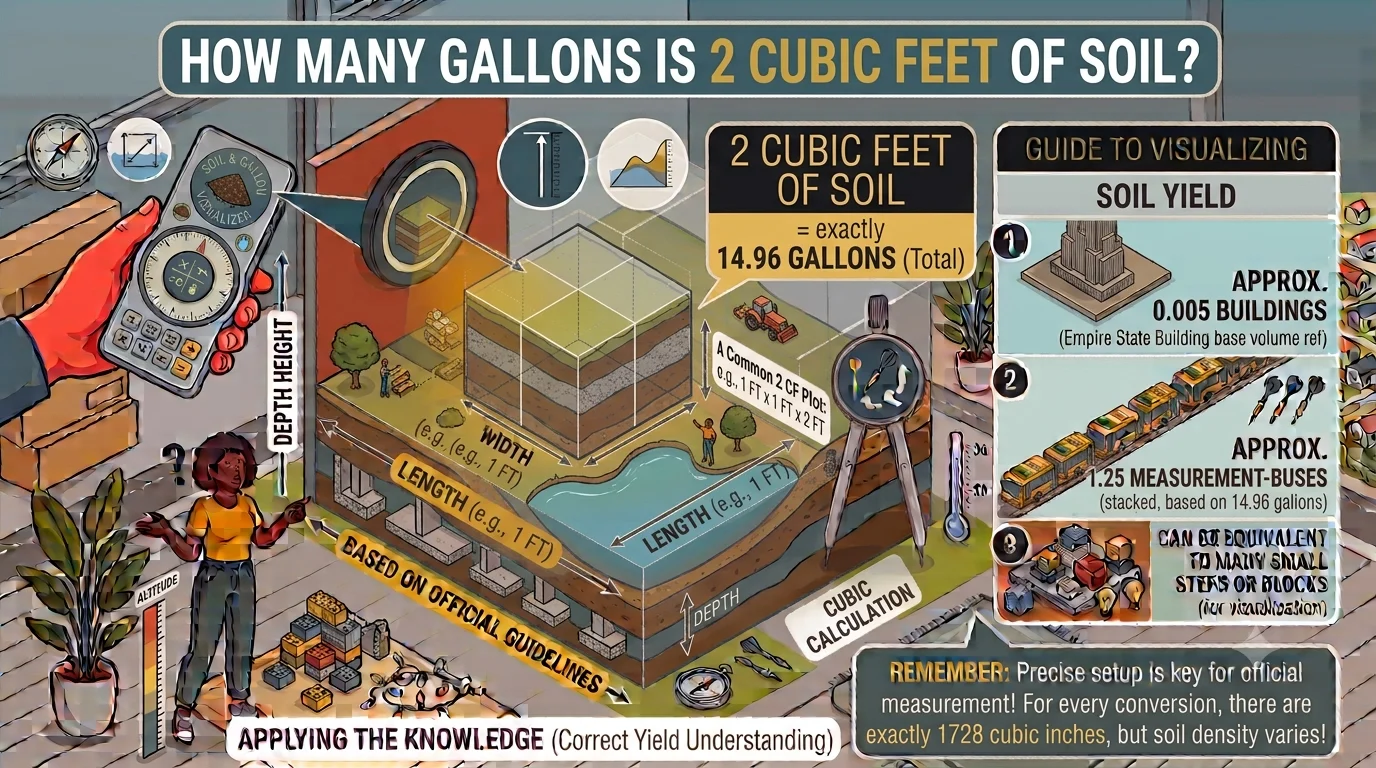
2 cubic feet of soil equals approximately 14.96 gallons, which is commonly rounded to 15 gallons.
This guide explains the conversion, shows the math, provides a quick reference chart, and shares practical examples for gardening and landscaping.
Understanding Cubic Feet and Gallons
Before converting, it’s helpful to understand what these measurements represent.
- Cubic feet (ft³) measure volume.
- Gallons also measure volume, but they’re commonly used for liquids and container capacities.
Even though soil is a solid material, it occupies space, so it can be converted between cubic feet and gallons.
How Many Gallons Is 2 Cubic Feet of Soil?
The standard conversion is:
| Cubic Feet | Gallons |
|---|---|
| 1 cubic foot | 7.48 gallons |
| 2 cubic feet | 14.96 gallons |
So:
2 cubic feet × 7.48 = 14.96 gallons
For everyday gardening, you can safely round this to:
2 cubic feet of soil ≈ 15 gallons
Conversion Formula
Use this simple formula:
Gallons = Cubic Feet × 7.48
Example:
- 2 × 7.48 = 14.96 gallons
This formula works for soil, compost, mulch, sand, and other materials measured by volume.
2 Cubic Feet to Gallons Conversion Chart
| Cubic Feet | Gallons |
|---|---|
| 0.5 | 3.74 |
| 1 | 7.48 |
| 1.5 | 11.22 |
| 2 | 14.96 |
| 2.5 | 18.70 |
| 3 | 22.44 |
| 4 | 29.92 |
| 5 | 37.40 |
| 10 | 74.80 |
Why This Conversion Matters
Knowing how many gallons are in 2 cubic feet of soil helps when:
- Filling raised garden beds
- Choosing planter sizes
- Estimating potting soil
- Buying bulk soil
- Calculating compost needs
- Planning landscaping projects
Instead of guessing, you can purchase the correct amount the first time.
Real-World Example
Imagine you have a bag labeled 2 cubic feet of potting soil.
You want to fill several 5-gallon containers.
Since the bag contains about 15 gallons, you can fill:
- Three 5-gallon containers
- Five 3-gallon pots
- One 10-gallon planter plus one 5-gallon planter
Keep in mind that the actual amount of soil needed may vary slightly because roots, drainage layers, and air pockets take up space.
Does Soil Type Change the Number of Gallons?
No.
Whether you’re using:
- Garden soil
- Potting soil
- Compost
- Topsoil
- Raised bed mix
- Peat moss
2 cubic feet still equals approximately 15 gallons.
The volume stays the same.
However, the weight changes because different materials have different densities.
Soil Volume vs. Soil Weight
Many gardeners confuse volume with weight.
Here’s the difference:
| Volume | Weight |
|---|---|
| Measured in cubic feet or gallons | Measured in pounds or kilograms |
| Always the same conversion | Changes with moisture and soil type |
For example:
- Dry potting soil weighs much less than wet garden soil.
- Both can still occupy 2 cubic feet, or about 15 gallons.
Common Gardening Uses for 2 Cubic Feet of Soil
A 2-cubic-foot bag is commonly used for:
- Raised vegetable beds
- Flower beds
- Large decorative planters
- Container gardens
- Indoor plant collections
- Tree and shrub planting
- Soil amendments
Many garden centers sell potting mix and topsoil in 2-cubic-foot bags because they’re easy to transport and suitable for most home projects.
How Many Pots Can 2 Cubic Feet Fill?
Here are rough estimates.
| Pot Size | Approximate Number Filled |
|---|---|
| 1 gallon | 15 pots |
| 2 gallon | 7 pots |
| 3 gallon | 5 pots |
| 5 gallon | 3 pots |
| 7 gallon | 2 pots |
| 10 gallon | 1 full + half of another |
| 15 gallon | 1 pot |
Actual results vary depending on the shape of the container.
Quick Reference Conversions
Here are some useful soil conversions.
| Cubic Feet | Gallons |
|---|---|
| 0.25 | 1.87 |
| 0.5 | 3.74 |
| 0.75 | 5.61 |
| 1 | 7.48 |
| 1.25 | 9.35 |
| 1.5 | 11.22 |
| 1.75 | 13.09 |
| 2 | 14.96 |
| 2.25 | 16.83 |
| 2.5 | 18.70 |
| 3 | 22.44 |
Tips for Buying Soil
To get the best results:
- Measure your containers before buying soil.
- Purchase a little extra for settling.
- Check whether the bag lists volume or weight.
- Use high-quality soil for vegetables and flowers.
- Mix compost with garden soil for improved drainage and nutrients.
Common Mistakes to Avoid
Confusing gallons with pounds
Gallons measure volume, not weight.
Ignoring soil settling
Fresh soil settles after watering, so you may need to top it off later.
Assuming every bag fills exactly the same
Different soil blends contain different amounts of organic matter and air, affecting how tightly they pack.
Buying too little soil
Always round up when estimating your project.
Expert Tips
- Keep a simple conversion in mind: 1 cubic foot = about 7.5 gallons.
- For quick estimates, round 2 cubic feet to 15 gallons.
- When filling containers, leave 1–2 inches of space below the rim for watering.
- Mix slow-release fertilizer into fresh soil before planting for healthier growth.
- Store leftover soil in a sealed container or bag to keep it dry and usable.
Frequently Asked Questions
Is 2 cubic feet exactly 15 gallons?
Not exactly. It equals 14.96 gallons, but most people round it to 15 gallons for convenience.
How many 5-gallon buckets can 2 cubic feet fill?
About three 5-gallon buckets, assuming they’re filled close to the top.
Does wet soil have more gallons than dry soil?
No. Wet soil weighs more, but 2 cubic feet still equals about 15 gallons in volume.
How much soil do I need for a 15-gallon planter?
Approximately 2 cubic feet of soil.
Can I use this conversion for compost or mulch?
Yes. Any material measured by volume follows the same conversion: 1 cubic foot = 7.48 gallons.
Conclusion
So, how many gallons is 2 cubic feet of soil? The answer is approximately 14.96 gallons, or about 15 gallons when rounded. This simple conversion is useful for filling pots, raised beds, garden containers, and landscaping projects.
Remember the easy rule: 1 cubic foot equals 7.48 gallons, so doubling it gives you 14.96 gallons. Keeping this conversion handy makes planning your gardening projects faster, more accurate, and more cost-effective.