
If you are planning a painting project, one of the first questions you may ask is: how many square feet can a quart of paint cover?
Understanding paint coverage helps you avoid buying too much or too little paint. It also saves money, reduces waste, and makes your project easier to plan.
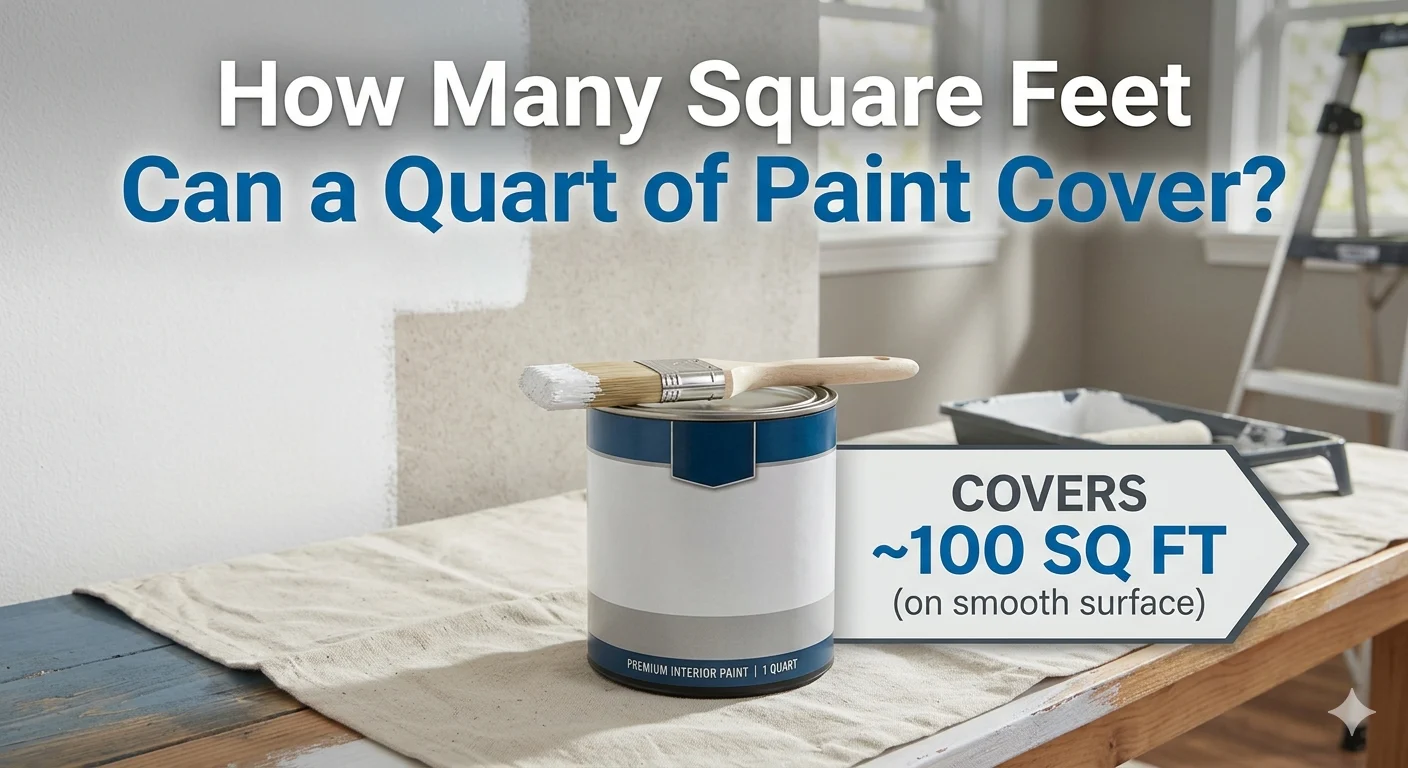
In most cases, a quart of paint covers around 90 to 100 square feet with one coat on a smooth surface. However, the actual coverage depends on several factors such as wall texture, paint type, surface condition, and whether you use primer.
This guide explains everything you need to know about quart paint coverage, including charts, examples, calculations, and expert tips.
Understanding Paint Coverage Basics
Paint manufacturers usually list estimated coverage on the paint can. These estimates are based on ideal conditions.
Standard Paint Coverage Per Quart
A standard quart of paint typically covers:
| Paint Amount | Approximate Coverage |
|---|---|
| 1 Quart | 90–100 square feet |
| 1 Gallon | 350–400 square feet |
Since one gallon equals four quarts, the math makes sense.
For example:
- 1 gallon covers about 400 sq ft
- Divide by 4
- Each quart covers around 100 sq ft
However, real-world coverage is often lower because surfaces absorb paint differently.
Why Coverage Can Vary
Several conditions affect how far paint spreads:
- Rough surfaces absorb more paint
- Dark walls may require extra coats
- Cheap paint often covers less
- Brushes and rollers use paint differently
- Exterior surfaces usually need more paint
Because of this, it is smart to buy slightly more paint than your estimate.
How Many Square Feet Can a Quart of Paint Cover on Different Surfaces?
Different materials absorb paint differently. Here is a closer look.
Smooth Walls
Smooth drywall or finished plaster provides the best coverage.
Typical Coverage:
- 95–100 square feet per quart
Examples:
- Bedrooms
- Living rooms
- Hallways
Smooth walls require less paint because there are fewer pores and cracks.
Textured Walls
Textured walls soak up more paint because of uneven surfaces.
Typical Coverage:
- 70–90 square feet per quart
Examples:
- Popcorn walls
- Orange peel texture
- Stucco
Textured surfaces also need thicker roller application.
Wood Surfaces
Bare wood absorbs paint quickly.
Typical Coverage:
- 60–90 square feet per quart
Coverage depends on:
- Sanding quality
- Wood grain
- Primer use
Using primer can greatly improve paint efficiency.
Concrete and Brick
Concrete, brick, and masonry are highly porous.
Typical Coverage:
- 50–80 square feet per quart
Exterior concrete often needs:
- Primer
- Multiple coats
- Thick application
Paint Coverage Chart by Paint Size
Here is a quick paint coverage chart for common paint container sizes.
| Paint Size | Approximate Coverage |
|---|---|
| Sample Size (8 oz) | 20–25 sq ft |
| Pint | 45–50 sq ft |
| Quart | 90–100 sq ft |
| Half Gallon | 175–200 sq ft |
| Gallon | 350–400 sq ft |
| 5 Gallons | 1,750–2,000 sq ft |
This chart assumes:
- One coat
- Smooth surface
- Standard roller application
Factors That Affect Paint Coverage
Many people underestimate paint needs because they ignore important factors.
Surface Texture
Rough textures require more paint because they create additional surface area.
For example:
- Smooth drywall uses less paint
- Brick absorbs much more
Textured walls can reduce coverage by 20% to 30%.
Paint Quality
Higher-quality paints usually contain:
- More pigment
- Better binders
- Improved coverage formulas
Cheap paint may require:
- Extra coats
- More labor
- More total paint
Sometimes premium paint actually saves money.
Number of Coats
Coverage estimates usually apply to one coat only.
If you apply:
- Two coats
- Primer plus paint
- Color changes
You will need significantly more paint.
Example:
A wall requiring 100 sq ft coverage may need:
- 1 quart for one coat
- 2 quarts for two coats
Paint Color Changes
Painting dark colors over light walls—or the reverse—often requires multiple coats.
Examples:
- White over red
- Navy blue over beige
- Yellow over gray
Bold colors usually need extra paint for proper coverage.
Primer Usage
Primer seals porous surfaces and improves paint performance.
Benefits include:
- Better adhesion
- Fewer paint coats
- Smoother finish
- Improved durability
Using primer can actually reduce overall paint usage.
How to Calculate Paint Coverage
Calculating paint needs is easier than most people think.
Step-by-Step Formula
Step 1: Measure the Wall
Multiply:
- Width × Height
Example:
- 10 ft × 8 ft wall
- Total = 80 sq ft
Step 2: Subtract Doors and Windows
A standard door is about:
- 20 sq ft
A standard window is about:
- 15 sq ft
Step 3: Estimate Coverage
If one quart covers 100 sq ft:
- 80 sq ft wall = less than 1 quart
If applying two coats:
- You may need 2 quarts
Example Calculations
Example 1: Accent Wall
Wall dimensions:
- 12 ft × 8 ft
- Total = 96 sq ft
Result:
- One quart is usually enough for one coat
Example 2: Small Bathroom
Bathroom wall area:
- 180 sq ft
Two coats needed:
- Total coverage needed = 360 sq ft
Result:
- About 1 gallon required
Example 3: Furniture Painting
A dresser may only require:
- 40–60 sq ft coverage
Result:
- One quart is more than enough
Room Examples for Quart Paint Coverage
People often wonder what a quart can realistically paint.
Here are practical examples.
Small Bathroom
A quart may cover:
- One small bathroom wall
- Partial ceiling
- Touch-ups
However, full bathrooms often need:
- More than one quart
- Especially with two coats
Accent Wall
A quart is commonly used for:
- Accent walls
- Decorative sections
- Feature walls
Most accent walls fit within 100 sq ft.
Furniture Projects
Quarts are excellent for:
- Cabinets
- Chairs
- Tables
- Dressers
- Shelves
Furniture projects rarely need gallons.
Interior vs Exterior Paint Coverage
Exterior paint generally covers less area because outdoor surfaces are rougher.
| Paint Type | Typical Quart Coverage |
|---|---|
| Interior Paint | 90–100 sq ft |
| Exterior Paint | 70–90 sq ft |
Exterior conditions such as:
- Heat
- Moisture
- Dust
- Surface wear
can reduce efficiency.
Common Paint Coverage Mistakes to Avoid
Many DIY painters make avoidable mistakes.
Buying Too Little Paint
Running out mid-project can create:
- Color inconsistencies
- Finish differences
- Extra trips to the store
Always buy slightly extra.
Ignoring Surface Preparation
Dirty or damaged walls absorb more paint.
Always:
- Clean surfaces
- Patch holes
- Sand rough areas
- Prime when necessary
Skipping Primer
Skipping primer may seem cheaper initially, but it often increases paint usage later.
Using Cheap Rollers
Low-quality rollers:
- Waste paint
- Leave streaks
- Cause uneven coverage
Good tools improve efficiency.
Expert Tips to Make Paint Go Further
Professional painters use several techniques to maximize coverage.
Use Primer First
Primer creates a sealed surface that requires less paint.
Buy High-Quality Paint
Premium paint often provides:
- Better coverage
- Better durability
- Fewer coats
Use the Right Roller Nap
Different textures need different roller thicknesses.
Examples:
- Smooth walls = short nap
- Rough walls = thick nap
Avoid Overloading the Roller
Too much paint causes:
- Drips
- Uneven finish
- Wasted paint
Apply thin, even coats.
Paint in Good Conditions
Extreme temperatures affect paint performance.
Ideal conditions:
- Moderate temperature
- Low humidity
- Good airflow
When a Quart of Paint Is Enough
A quart works well for small projects.
Examples include:
- Accent walls
- Small bathrooms
- Furniture
- Cabinets
- Doors
- Touch-ups
A quart may not be enough for:
- Entire rooms
- Ceilings
- Exterior walls
- Large textured surfaces
For bigger jobs, gallons are more practical.
FAQs
How many square feet does 1 quart of paint cover?
A quart of paint usually covers about 90 to 100 square feet with one coat on a smooth surface.
Is one quart of paint enough for a room?
Usually not. Most full rooms require at least one gallon of paint, especially for two coats.
How much paint do I need for a 10×10 room?
A standard 10×10 room generally needs 1 to 2 gallons depending on wall height, texture, and number of coats.
Does textured wall use more paint?
Yes. Textured walls absorb more paint and reduce coverage significantly.
Can a quart of paint cover an accent wall?
Yes. Most accent walls are small enough for one quart if only one coat is needed.
Conclusion
So, how many square feet can a quart of paint cover? In most situations, a quart covers around 90 to 100 square feet with one coat on smooth surfaces. However, actual coverage depends on wall texture, paint quality, surface condition, and the number of coats required.
For small projects like accent walls, furniture, cabinets, or touch-ups, a quart is often the perfect size. But for larger rooms or textured surfaces, you may need significantly more paint.
Before starting your project:
- Measure carefully
- Consider surface texture
- Plan for extra coats
- Use primer when needed
Accurate planning helps you save money, avoid waste, and achieve a professional-looking finish.