

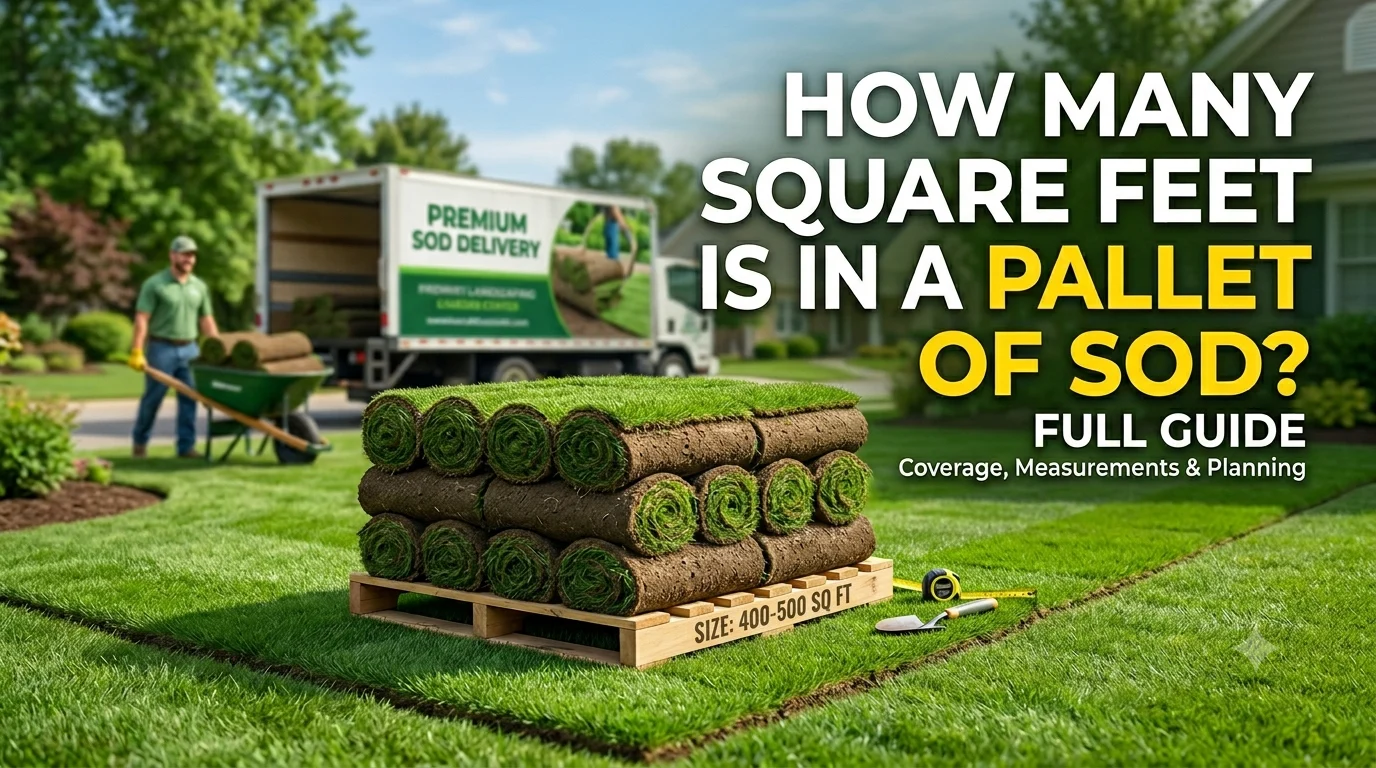
Understanding how many square feet is in a pallet of sod is one of the first and most important steps before starting any lawn or landscaping project. Whether you are building a new lawn, replacing damaged grass, or working on a full yard renovation, knowing the correct sod coverage helps you plan better, avoid waste, and control your budget.
A sod pallet is the standard way grass is sold and delivered. But the exact coverage is not always the same for every supplier or grass type. That’s why many homeowners get confused when trying to estimate how much sod they actually need.
In this guide, you’ll learn everything in simple terms: average pallet coverage, variations, calculation methods, cost factors, and practical examples you can apply immediately.
What Is a Pallet of Sod?
A pallet of sod is a packaged bundle of pre-grown grass that is harvested from a farm and delivered ready for installation.
Each piece of sod includes:
- Grass blades
- Roots
- Thin layer of soil
These strips are stacked tightly on a wooden pallet for transport and sale.
Sod is commonly used for:
- Instant lawns
- Landscaping projects
- Sports fields
- Commercial properties
Unlike grass seed, sod provides an immediate green surface once installed.
How Many Square Feet Is in a Pallet of Sod?
On average, a standard pallet of sod covers:
👉 400 to 600 square feet
However, the most common residential standard is:
- Typical pallet: 450–500 sq ft
- Small roll sod: 400–450 sq ft
- High-density sod: 500–700 sq ft
So when people ask how many square feet is in a pallet of sod, the most accurate general answer is around 450–500 square feet per pallet.
Why Sod Coverage per Pallet Varies
Not all sod pallets are identical. Several factors affect coverage:
1. Grass Type
Different grasses have different density levels:
- Bermuda grass (dense and strong)
- Zoysia grass (thick and slow-growing)
- Fescue grass (lighter texture)
2. Soil Thickness
Thicker soil means heavier sod and slightly lower coverage per pallet.
3. Cutting Style
- Small rolls = easier handling but lower coverage
- Large rolls = higher coverage but heavier weight
4. Regional Standards
Different farms and regions follow different sizing standards.
Standard Sod Pallet Coverage Comparison
| Grass Type | Coverage per Pallet | Best For |
|---|---|---|
| Bermuda Grass | 450–500 sq ft | Warm climates, lawns |
| Zoysia Grass | 400–450 sq ft | Dense residential lawns |
| Fescue Grass | 500–600 sq ft | Cool climates |
| St. Augustine Grass | 400–500 sq ft | Coastal areas |
This variation explains why there is no single fixed answer to sod coverage.
How to Calculate How Much Sod You Need
To avoid buying too much or too little sod, follow this simple method:
Step 1: Measure your lawn
Multiply: Length × Width = Total square feet
Example:
- 50 ft × 40 ft = 2,000 sq ft
Step 2: Divide by pallet coverage
If one pallet covers 500 sq ft:
2,000 ÷ 500 = 4 pallets
So you need 4 pallets of sod.
Step 3: Add extra allowance
Always add 5–10% extra for:
- Cutting edges
- Installation errors
- Irregular shapes
Real Example Calculation
Let’s say your lawn size is:
- 1,200 sq ft total area
- Sod coverage per pallet: 450 sq ft
Calculation:
1,200 ÷ 450 = 2.66 pallets
Final order:
- Round up to 3 pallets
- Add buffer if needed → still 3 pallets is safe
This method ensures you don’t run short during installation.
Cost of a Pallet of Sod
The price of sod depends on grass type, region, and quality.
Average cost range:
- $100 to $400 per pallet (global estimate)
Factors affecting price:
- Grass variety
- Season and demand
- Delivery distance
- Farm quality
Even if you understand how many square feet is in a pallet of sod, cost planning is equally important.
Types of Sod and Their Performance
Bermuda Grass
- Fast-growing
- Durable
- Ideal for warm climates
Zoysia Grass
- Thick and soft
- Low maintenance
- Premium appearance
Fescue Grass
- Cool-season grass
- Soft texture
- Higher coverage per pallet
Each type affects both coverage and long-term maintenance.
Benefits of Using Sod
Sod offers several advantages over grass seed:
Instant results
You get a green lawn immediately after installation.
Soil protection
Prevents erosion on slopes or loose soil.
Weed resistance
Dense sod reduces weed growth.
Strong roots
Established root system grows faster and stabilizes soil.
Common Mistakes When Buying Sod
1. Incorrect measurement
This leads to under-ordering or overspending.
2. Assuming all pallets are the same
Coverage varies by supplier and grass type.
3. Not ordering extra sod
Always include 5–10% buffer.
4. Delayed installation
Sod should be installed quickly after delivery.
Expert Tips for Best Results
- Confirm pallet coverage before ordering
- Measure your lawn twice for accuracy
- Install sod within 24 hours of delivery
- Water immediately after installation
- Keep soil level smooth before laying sod
These steps improve survival rate and lawn quality.
Sod Coverage Quick Reference
- Minimum: 400 sq ft per pallet
- Average: 450–500 sq ft per pallet
- Maximum: 600–700 sq ft per pallet
This is the simplest answer to how many square feet is in a pallet of sod.
When to Choose Sod Instead of Seed
Choose sod when:
- You want an instant lawn
- You need erosion control
- You want professional landscaping results
Choose seed when:
- You have a limited budget
- You can wait several weeks for growth
- You are covering large rural land
Lawn Care After Installing Sod
First 7 days:
- Water 2–3 times daily
- Avoid heavy walking
First month:
- Reduce watering gradually
- Start light mowing after 2–3 weeks
Long-term care:
- Fertilize every 6–8 weeks
- Maintain regular mowing schedule
- Monitor soil moisture
Final Conclusion
Knowing how many square feet is in a pallet of sod is essential for accurate lawn planning and budgeting. Most sod pallets cover between 400 and 600 square feet, with the common standard being around 450–500 square feet.
When you measure your lawn correctly, divide by pallet coverage, and add a small buffer, you can avoid shortages, reduce waste, and complete your landscaping project smoothly.
Sod is one of the fastest ways to achieve a beautiful green lawn, and proper planning ensures long-lasting results with minimal effort.