
Choosing the correct BTU size is one of the most important steps when buying an air conditioner or heater. If the unit is too small, it will struggle to keep the room comfortable. If it is too large, it may waste energy, increase utility bills, and cycle on and off too often.
So, how many BTUs for 500 square feet do you actually need?
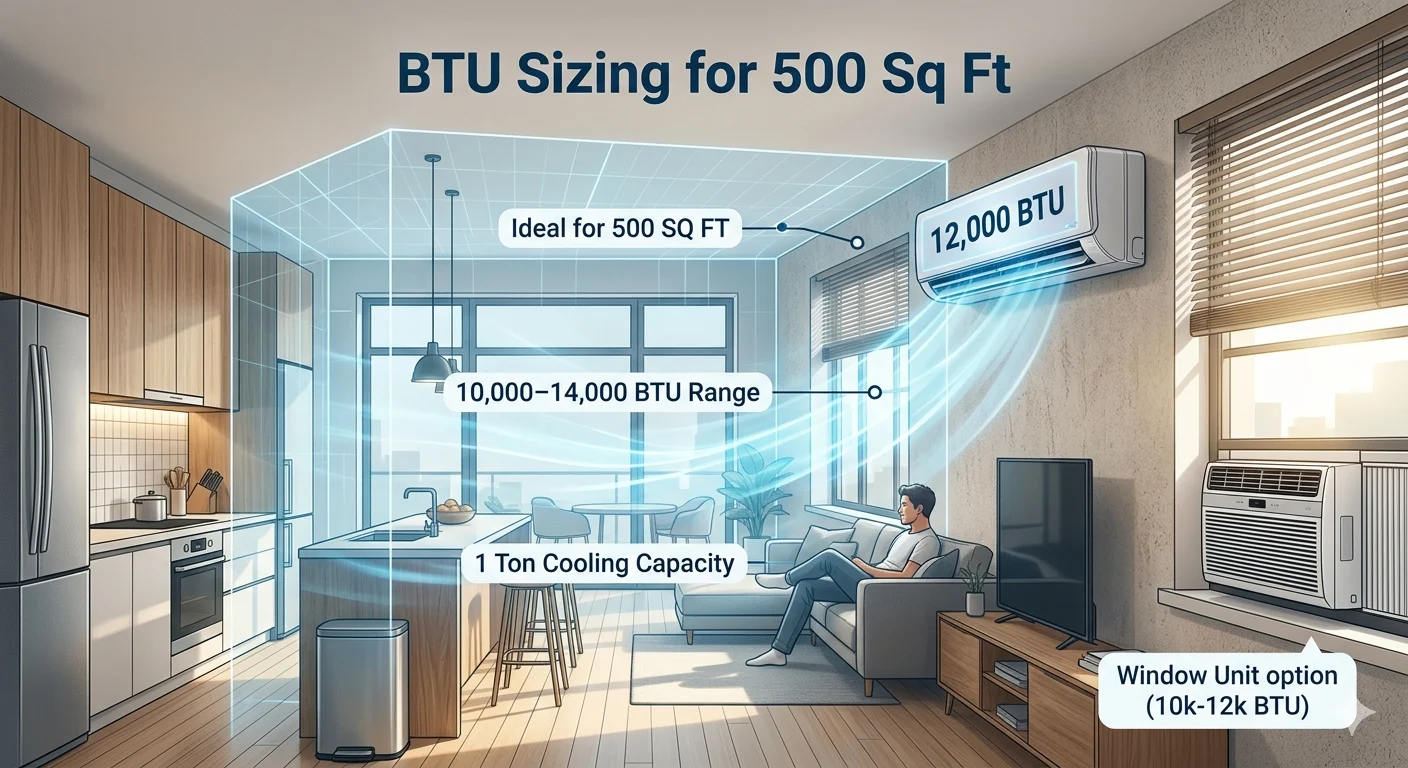
In most cases, a room or area measuring 500 square feet requires around 10,000 to 14,000 BTUs for cooling. However, the exact number depends on several factors such as climate, ceiling height, insulation, sunlight, and room usage.
This guide explains everything in simple terms. You will learn how BTUs work, how to calculate the right size, and how to choose the best air conditioner or heating system for a 500-square-foot space.
What Does BTU Mean?
BTU stands for British Thermal Unit. It measures how much heat an air conditioner can remove from a room or how much heat a heater can produce.
In HVAC systems, BTUs help determine the cooling or heating capacity of a unit.
A higher BTU number means:
- More cooling power
- Faster temperature control
- Better performance in larger spaces
A lower BTU number means:
- Less cooling or heating power
- Better for small rooms
Why BTUs Matter for Cooling and Heating
Correct BTU sizing affects:
- Comfort levels
- Energy efficiency
- Monthly electricity bills
- Lifespan of the HVAC unit
An undersized AC runs continuously without properly cooling the space. An oversized unit cools too quickly without removing enough humidity.
That is why accurate BTU sizing is essential.
How Many BTUs for 500 Square Feet?
For most homes, the recommended cooling capacity for 500 square feet is:
The average recommendation is around 12,000 BTUs for standard conditions.
Here is a quick breakdown:
| Square Feet | Recommended BTUs |
|---|---|
| 400 sq ft | 8,000–10,000 BTUs |
| 500 sq ft | 10,000–14,000 BTUs |
| 600 sq ft | 12,000–16,000 BTUs |
| 700 sq ft | 14,000–18,000 BTUs |
These numbers are general estimates. Real-world conditions may require adjustments.
Standard BTU Recommendation
A commonly used HVAC formula is:
For 500 square feet:
This calculation provides a baseline estimate. Additional environmental factors can increase or decrease the required BTUs.
Factors That Change BTU Requirements
Not every 500-square-foot room needs the same cooling power. Several conditions affect HVAC sizing.
Climate and Temperature
Hot climates require more BTUs.
For example:
- Arizona or Texas homes may need 12,000–14,000 BTUs
- Cooler northern climates may only need 10,000 BTUs
High humidity also increases cooling demand.
Ceiling Height
Rooms with high ceilings contain more air volume.
A standard ceiling is around 8 feet. If your ceiling is:
- 10 feet or higher
- Vaulted or cathedral style
You may need additional cooling capacity.
Sunlight Exposure
Rooms with large windows or direct sunlight heat up faster.
Add extra BTUs for:
- South-facing windows
- Glass doors
- Sunrooms
- Poor window coverings
Shaded rooms usually require fewer BTUs.
Number of Occupants
People generate heat naturally.
Add roughly 600 BTUs for each additional person regularly occupying the room.
For example:
- A living room with 5 people may need more cooling than a bedroom with 1 person
Kitchen Appliances and Electronics
Kitchens create extra heat from:
- Ovens
- Refrigerators
- Microwaves
- Dishwashers
Gaming setups, computers, and TVs also increase room temperature.
Insulation Quality
Well-insulated homes stay cooler longer.
Poor insulation causes:
- Air leaks
- Heat gain
- Increased energy usage
Older homes may need larger HVAC systems.
BTU Chart by Room Type
Different room types often need different cooling capacities, even with the same square footage.
| Room Type | Recommended BTUs |
|---|---|
| Bedroom | 10,000–12,000 |
| Living Room | 12,000–14,000 |
| Studio Apartment | 12,000–14,000 |
| Home Office | 10,000–12,000 |
| Kitchen Area | 12,000–15,000 |
Bedroom
Bedrooms usually generate less heat and have fewer occupants.
A 10,000–12,000 BTU unit is often enough for comfort and quiet operation.
Living Room
Living rooms typically have:
- More people
- More electronics
- Larger windows
That increases the cooling requirement.
Studio Apartment
A studio apartment may require higher BTUs because:
- Cooking areas are included
- Multiple activities happen in one space
- Heat spreads throughout the apartment
Office Space
Computers and monitors generate heat continuously.
If you work from home with multiple screens, slightly increase the BTU estimate.
Choosing the Right AC for 500 Square Feet
There are several air conditioning options available for a 500-square-foot space.
Window AC Units
Window air conditioners are:
- Affordable
- Easy to install
- Energy efficient
For 500 square feet, look for:
- 10,000–12,000 BTUs
Best for:
- Bedrooms
- Apartments
- Small living rooms
Portable AC Units
Portable ACs are flexible and movable.
However:
- They are usually less efficient than window units
- Some lose cooling through exhaust hoses
For 500 square feet:
- Choose 12,000–14,000 BTUs
Mini Split Systems
Mini splits are highly efficient and quiet.
Benefits include:
- Zoned cooling
- Better energy savings
- No ductwork required
A 12,000 BTU mini split is often ideal for 500 square feet.
Central Air Systems
Central air works best for whole-home cooling.
HVAC professionals typically size central systems using:
- Manual J load calculations
- Climate analysis
- Insulation evaluation
For comparison:
- 12,000 BTUs equals roughly 1 ton of cooling
Heating BTUs for 500 Square Feet
Heating calculations differ slightly from cooling estimates.
A 500-square-foot room generally requires:
The colder the climate, the more heating power you need.
Cold Climate Considerations
Cold regions often need:
- Better insulation
- Higher furnace output
- More powerful space heaters
Basements and drafty homes may require additional heating capacity.
Electric vs Gas Heating
Electric heaters:
- Easier to install
- Good for small spaces
- Often cost more to operate
Gas heating:
- More efficient for larger homes
- Faster heating performance
- Lower operating cost in many areas
Common BTU Sizing Mistakes
Many people buy HVAC units without proper sizing.
Here are common mistakes to avoid.
Choosing a Unit That Is Too Small
Undersized systems:
- Run constantly
- Struggle in hot weather
- Increase energy bills
- Wear out faster
Buying an Oversized Unit
Oversized systems:
- Short cycle frequently
- Waste electricity
- Create humidity problems
- Reduce comfort
Ignoring Insulation
Insulation dramatically affects cooling and heating performance.
Even the best AC cannot compensate for severe air leaks.
Forgetting About Sunlight
Rooms exposed to direct afternoon sun may need significantly more cooling power.
Expert Tips for Better Energy Efficiency
Choosing the right BTUs is only one part of efficient cooling.
Here are practical ways to improve efficiency.
Use Ceiling Fans
Fans help circulate cool air and reduce HVAC workload.
Seal Air Leaks
Check:
- Doors
- Windows
- Attics
- Ductwork
Small leaks can increase energy costs.
Install Blackout Curtains
Curtains block solar heat and help rooms stay cooler.
Maintain Your HVAC System
Regular maintenance includes:
- Cleaning filters
- Checking refrigerant levels
- Inspecting coils
- Clearing vents
Dirty systems lose efficiency quickly.
Upgrade Insulation
Good insulation reduces both cooling and heating costs year-round.
FAQs
Is 12,000 BTUs enough for 500 square feet?
Yes, 12,000 BTUs is usually enough for a standard 500-square-foot room with average insulation and ceiling height.
What size portable AC do I need for 500 square feet?
Most portable air conditioners for 500 square feet range from 12,000 to 14,000 BTUs.
Can I use a 8,000 BTU AC for 500 square feet?
An 8,000 BTU unit is generally too small for 500 square feet unless the room is heavily shaded and very well insulated.
How many tons of AC is 12,000 BTUs?
12,000 BTUs equals 1 ton of air conditioning capacity.
Does ceiling height affect BTU requirements?
Yes. Higher ceilings increase room volume and usually require more BTUs for effective cooling.
Conclusion
Understanding how many BTUs for 500 square feet can help you choose the right heating or cooling system while avoiding wasted energy and unnecessary costs.
In most situations, a 500-square-foot room needs:
- 10,000–14,000 BTUs for cooling
- 20,000–30,000 BTUs for heating
However, room conditions matter. Climate, insulation, sunlight, ceiling height, and occupancy all affect the final BTU requirement.
Choosing the correct BTU size improves:
- Comfort
- Energy efficiency
- HVAC lifespan
- Indoor air quality
Before purchasing an AC or heater, evaluate your room carefully and consider professional HVAC sizing for the best long-term results.