
If you are planning a landscaping or gardening project, one of the first questions you may ask is: how many cubic feet is in a yard of mulch?
The answer is simple:
This conversion is important because mulch is often sold in cubic yards at garden centers, while bagged mulch is usually labeled in cubic feet. Knowing the difference helps you buy the right amount, avoid waste, and save money.
Whether you are covering flower beds, trees, pathways, or a large lawn area, understanding mulch measurements makes your landscaping project much easier.
In this guide, you will learn:
- How mulch measurements work
- How to convert yards to cubic feet
- Coverage estimates
- Bag conversion charts
- Practical examples for landscaping projects
What Is a Cubic Yard of Mulch?
A cubic yard is a unit of volume. It measures space in three dimensions:
- Length
- Width
- Height
In landscaping, mulch is usually measured by volume instead of weight because different mulch materials have different densities.
For example:
- Wet mulch weighs more than dry mulch
- Bark mulch weighs less than rubber mulch
- Fine mulch packs tighter than chunky mulch
Understanding Cubic Measurements
A cubic foot is a cube that measures:
- 1 foot long
- 1 foot wide
- 1 foot high
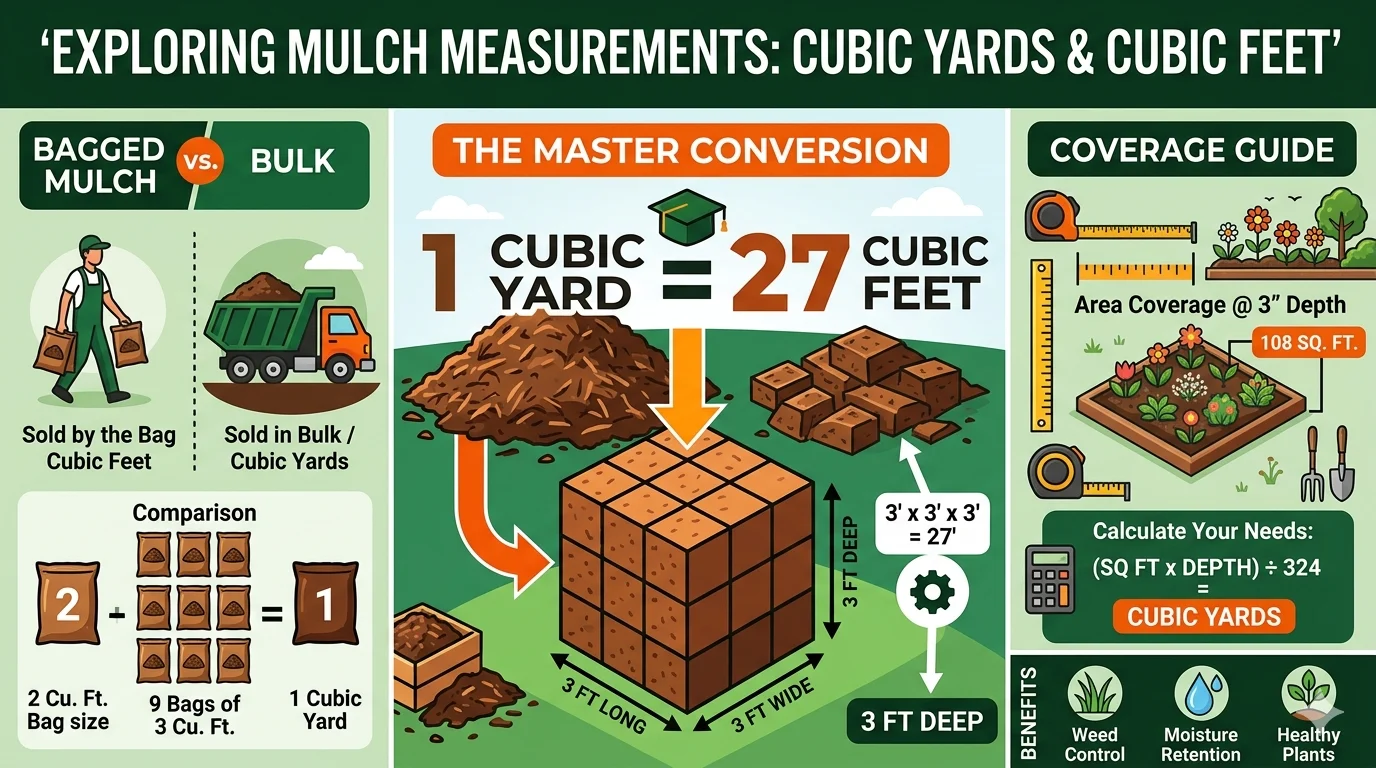
A cubic yard is larger. It measures:
- 3 feet long
- 3 feet wide
- 3 feet high
Since:
- 3 × 3 × 3 = 27
That means one cubic yard equals 27 cubic feet.
How Many Cubic Feet Is in a Yard of Mulch?
The direct conversion is:
This applies to all mulch types, including:
- Hardwood mulch
- Cedar mulch
- Pine bark mulch
- Rubber mulch
- Compost mulch
The material type may affect weight, but the volume remains the same.
Quick Conversion Chart
| Cubic Yards | Cubic Feet |
|---|---|
| 1 yard | 27 cubic feet |
| 2 yards | 54 cubic feet |
| 3 yards | 81 cubic feet |
| 4 yards | 108 cubic feet |
| 5 yards | 135 cubic feet |
This chart is useful when ordering bulk mulch for larger landscaping jobs.
Why Mulch Is Measured in Cubic Yards
Bulk mulch suppliers usually sell mulch by the cubic yard because it is easier for:
- Delivery trucks
- Landscape companies
- Large projects
Bagged mulch is more convenient for small projects, but buying in cubic yards is usually cheaper for larger spaces.
For example:
- Small flower bed → bagged mulch
- Large backyard → bulk mulch by the yard
Understanding cubic feet and cubic yards helps compare prices accurately.
How Much Area Does One Yard of Mulch Cover?
Coverage depends on mulch depth.
A single cubic yard of mulch covers different square footage areas depending on how thick you spread it.
Standard Mulch Depths
Most landscaping experts recommend:
- 2 inches for light coverage
- 3 inches for normal weed control
- 4 inches for moisture retention and heavy weed prevention
Mulch Coverage Table
| Mulch Depth | Coverage Per Cubic Yard |
|---|---|
| 1 inch | 324 square feet |
| 2 inches | 162 square feet |
| 3 inches | 108 square feet |
| 4 inches | 81 square feet |
A depth of 2–3 inches is ideal for most gardens and flower beds.
Too little mulch may not stop weeds, while too much mulch can trap moisture and harm plants.
How to Calculate the Amount of Mulch You Need
Calculating mulch is easier than most people think.
Step 1: Measure the Area
Measure:
- Length
- Width
Then multiply them.
Example:
- 20 feet long
- 10 feet wide
The area equals 200 square feet.
Step 2: Choose Your Mulch Depth
Most homeowners use:
- 2 inches
- 3 inches
For this example, use 3 inches.
Step 3: Use the Mulch Formula
The standard mulch formula is:
Example:
So you would need about:
- 1.85 cubic yards
- Or approximately 50 cubic feet of mulch
Always round up slightly to avoid running short.
How Many Bags of Mulch Equal One Yard?
Many people buy mulch in bags instead of bulk deliveries.
To compare prices, you should know how many bags equal one cubic yard.
Common Bag Sizes
Most mulch bags are:
- 1 cubic foot
- 1.5 cubic feet
- 2 cubic feet
- 3 cubic feet
Since one yard equals 27 cubic feet, the bag count changes depending on bag size.
Bag-to-Yard Conversion Table
| Bag Size | Bags Per Cubic Yard |
|---|---|
| 1 cubic foot | 27 bags |
| 1.5 cubic feet | 18 bags |
| 2 cubic feet | 13.5 bags |
| 3 cubic feet | 9 bags |
If you buy 2-cubic-foot bags, you need about 14 bags for one yard.
Types of Mulch and Their Coverage
Different mulch materials have slightly different textures and settling behavior.
Wood Mulch
Wood mulch is one of the most common choices.
Benefits:
- Affordable
- Natural appearance
- Good moisture retention
Best for:
- Flower beds
- Trees
- Walkways
Bark Mulch
Bark mulch is decorative and long-lasting.
Benefits:
- Attractive look
- Slower decomposition
- Good weed suppression
Best for:
- Decorative landscaping
- Front yards
Rubber Mulch
Rubber mulch is made from recycled tires.
Benefits:
- Very durable
- Does not decompose
- Long lifespan
Drawbacks:
- More expensive
- Less natural appearance
Best for:
- Playgrounds
- Permanent landscaping
Compost Mulch
Compost mulch improves soil quality.
Benefits:
- Adds nutrients
- Improves soil structure
- Encourages healthy plants
Best for:
- Vegetable gardens
- Organic gardening
Bulk Mulch vs Bagged Mulch
Choosing between bulk mulch and bagged mulch depends on project size.
| Bulk Mulch | Bagged Mulch |
|---|---|
| Cheaper for large areas | Easier for small projects |
| Delivered by truck | Easy to transport |
| Sold by cubic yard | Sold by cubic foot |
| Less packaging waste | Cleaner storage |
For large landscaping projects, bulk mulch is usually more cost-effective.
Common Mulch Buying Mistakes
Many homeowners buy too much or too little mulch because they skip measurements.
Here are common mistakes to avoid.
Guessing the Area Size
Always measure the area before purchasing mulch.
Using Too Much Mulch
Too much mulch can:
- Suffocate roots
- Trap excess moisture
- Cause fungal growth
Avoid piling mulch against tree trunks.
Ignoring Mulch Depth
Thin mulch may not:
- Stop weeds
- Hold moisture
- Protect roots
Aim for 2–4 inches depending on your needs.
Forgetting Settling
Fresh mulch settles over time. It is smart to order slightly more than your exact calculation.
Expert Tips for Mulching
Professional landscapers follow a few simple rules for better results.
Mulch at the Right Time
The best seasons are:
- Spring
- Early summer
This helps soil retain moisture during warmer weather.
Keep Mulch Away From Plant Stems
Leave a small gap around:
- Trees
- Shrubs
- Flowers
This prevents rot and pest problems.
Refresh Mulch Annually
Organic mulch decomposes over time.
Add a fresh layer every year to maintain:
- Appearance
- Weed control
- Moisture retention
Choose Quality Mulch
Cheap mulch may contain:
- Debris
- Weed seeds
- Poor-quality wood
High-quality mulch lasts longer and looks better.
Practical Example of Mulch Calculation
Imagine you have a garden bed measuring:
- 30 feet long
- 12 feet wide
The total area is:
If you want 3 inches of mulch:
You would need:
- About 3.5 cubic yards
- Or roughly 90 cubic feet of mulch
This simple process helps avoid overspending.
FAQs
How many cubic feet are in 2 yards of mulch?
Two cubic yards equal 54 cubic feet.
How many 2-cubic-foot bags make one yard?
You need about 13.5 bags, so most people buy 14 bags.
How much does one yard of mulch cover?
At 3 inches deep, one yard covers approximately 108 square feet.
Is bulk mulch cheaper than bagged mulch?
Yes. Bulk mulch is usually more affordable for large landscaping projects.
What mulch depth is best?
Most experts recommend 2–3 inches for normal landscaping and weed control.
Conclusion
Understanding how many cubic feet is in a yard of mulch helps you plan landscaping projects with confidence.
The key conversion to remember is:
Once you know this basic measurement, it becomes much easier to:
- Estimate mulch needs
- Compare prices
- Buy the correct amount
- Avoid waste
Whether you purchase bulk mulch or bagged mulch, accurate calculations can save time, money, and effort.
For most gardens, using 2–3 inches of mulch provides the best balance of moisture retention, weed control, and healthy plant growth.