

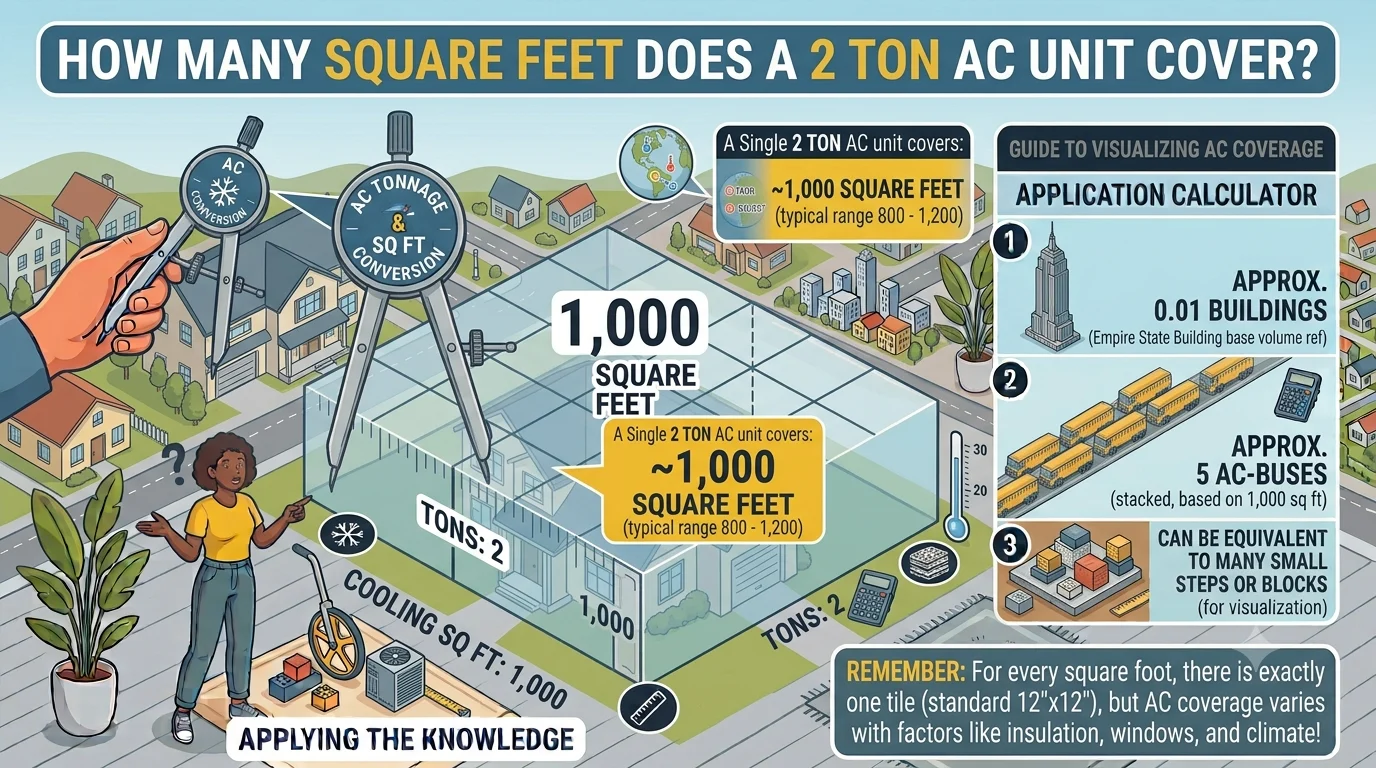
Choosing the right air conditioner size is one of the most important decisions when cooling your home. Many homeowners ask, how many square feet does a 2 ton AC unit cover? While there is a general guideline, the real answer depends on several factors beyond square footage.
A 2-ton air conditioner typically cools 900 to 1,200 square feet under average conditions. However, your home’s insulation, climate, ceiling height, sun exposure, window size, and occupancy can all affect how much space a 2-ton AC can cool efficiently.
This guide explains how AC sizing works, what “2 tons” really means, and how to determine whether a 2-ton unit is the right choice for your home.
What Does a 2 Ton AC Unit Mean?
Many people think a 2-ton air conditioner weighs two tons, but that is not what the term means.
In HVAC, a “ton” measures cooling capacity rather than weight. One ton of cooling equals 12,000 BTUs (British Thermal Units) per hour.
A 2-ton AC unit provides:
- 24,000 BTUs of cooling per hour
- Suitable cooling for many small and medium-sized homes
- Efficient temperature control when properly sized
The cooling capacity should always match the home’s requirements rather than simply choosing the biggest unit available.
How Many Square Feet Does a 2 Ton AC Unit Cover?
Under standard residential conditions, a 2-ton AC unit covers approximately 900 to 1,200 square feet.
The following table provides a general estimate.
| AC Size | Cooling Capacity | Estimated Coverage |
|---|---|---|
| 1.5 Ton | 18,000 BTU | 600–900 sq ft |
| 2 Ton | 24,000 BTU | 900–1,200 sq ft |
| 2.5 Ton | 30,000 BTU | 1,200–1,500 sq ft |
| 3 Ton | 36,000 BTU | 1,500–1,800 sq ft |
These estimates assume:
- Standard 8-foot ceilings
- Good insulation
- Typical window sizes
- Moderate climate
- Average household occupancy
Why Square Footage Is Not the Only Factor
Although square footage provides a starting point, HVAC professionals never size an air conditioner based only on floor area.
Several factors influence the amount of cooling your home needs.
Climate
Homes in hotter regions require more cooling.
For example:
- Arizona
- Texas
- Florida
need larger systems than homes of the same size in cooler climates.
Insulation
Well-insulated homes retain cool air much better.
Poor insulation causes:
- Higher energy bills
- Longer AC run times
- Reduced comfort
Ceiling Height
Most sizing estimates assume 8-foot ceilings.
If your ceilings are:
- 9 feet
- 10 feet
- Vaulted
the room contains more air volume, increasing cooling requirements.
Sun Exposure
Homes receiving direct sunlight for most of the day heat up much faster than shaded homes.
Large west-facing windows especially increase cooling demand.
Number of Occupants
Every person generates body heat.
A home occupied by six people requires more cooling than a similar home with only two occupants.
Appliances
Kitchen appliances, computers, televisions, gaming consoles, and lighting all produce heat that your AC must remove.
General AC Size Guide by Square Footage
The chart below provides a quick reference.
| Home Size | Recommended AC Size |
|---|---|
| 500–700 sq ft | 1 Ton |
| 700–900 sq ft | 1.5 Ton |
| 900–1,200 sq ft | 2 Ton |
| 1,200–1,500 sq ft | 2.5 Ton |
| 1,500–1,800 sq ft | 3 Ton |
| 1,800–2,100 sq ft | 3.5 Ton |
| 2,100–2,400 sq ft | 4 Ton |
Remember that these are only estimates.
Professional load calculations provide far more accurate sizing.
Is a 2 Ton AC Enough for a 1,000 Square Foot Home?
Yes.
For most homes around 1,000 square feet, a 2-ton air conditioner is an excellent choice.
It offers enough cooling capacity while maintaining energy efficiency.
However, exceptions include:
- Poor insulation
- Extremely hot climates
- High ceilings
- Large windows
- Excessive sunlight
In these situations, a professional evaluation is recommended.
Can a 2 Ton AC Cool 1,200 Square Feet?
Yes, in many homes it can.
A properly insulated 1,200-square-foot house in a moderate climate usually performs well with a 2-ton system.
However, if the home experiences:
- Long summer temperatures above 95°F
- Significant sun exposure
- Poor attic insulation
the cooling load may exceed the capacity of a 2-ton unit.
What Happens If Your AC Is Too Small?
Installing an undersized air conditioner creates several problems.
These include:
- Constant operation
- Higher electricity bills
- Uneven cooling
- Difficulty reaching the thermostat setting
- Increased wear on the compressor
- Shorter equipment lifespan
A small unit may never fully cool the home during very hot weather.
What Happens If Your AC Is Too Large?
Many homeowners assume bigger is always better.
Actually, oversized air conditioners create their own issues.
These include:
- Short cycling
- Poor humidity control
- Frequent starts and stops
- Increased maintenance
- Higher installation costs
- Less consistent temperatures
Proper sizing is always more important than maximum capacity.
How HVAC Professionals Determine the Right Size
Rather than guessing, HVAC technicians perform a load calculation.
This process considers:
- Home size
- Room dimensions
- Ceiling height
- Window placement
- Window type
- Local climate
- Roof insulation
- Wall insulation
- Air leakage
- Number of occupants
- Appliances
- Orientation toward the sun
This detailed evaluation helps ensure the AC system matches the home’s actual cooling needs.
BTU and Ton Conversion Chart
Understanding BTU ratings makes comparing air conditioners much easier.
| Tons | BTUs Per Hour |
|---|---|
| 1 Ton | 12,000 BTU |
| 1.5 Ton | 18,000 BTU |
| 2 Ton | 24,000 BTU |
| 2.5 Ton | 30,000 BTU |
| 3 Ton | 36,000 BTU |
| 3.5 Ton | 42,000 BTU |
| 4 Ton | 48,000 BTU |
| 5 Ton | 60,000 BTU |
Real-World Examples
Example 1
A 950-square-foot apartment has:
- Good insulation
- Standard ceilings
- Moderate climate
A 2-ton AC should cool the space efficiently.
Example 2
A 1,150-square-foot single-family home includes:
- Large south-facing windows
- Poor attic insulation
- Hot climate
A professional load calculation may recommend a larger system.
Example 3
A newly built energy-efficient home measuring 1,100 square feet often performs very well with a 2-ton air conditioner because of improved insulation and energy-efficient windows.
Energy Efficiency Matters Too
Capacity is only one part of cooling performance.
The unit’s efficiency rating also affects comfort and operating costs.
Higher-efficiency systems:
- Use less electricity
- Reduce monthly bills
- Maintain consistent temperatures
- Produce less environmental impact
A properly sized, high-efficiency air conditioner often delivers better results than simply installing a larger unit.
Tips for Getting the Best Performance from a 2 Ton AC
To maximize cooling efficiency:
- Replace air filters regularly.
- Keep supply and return vents open.
- Schedule annual HVAC maintenance.
- Seal air leaks around doors and windows.
- Improve attic insulation.
- Use ceiling fans to circulate cool air.
- Install programmable or smart thermostats.
- Keep outdoor condenser units clean.
- Close blinds during peak afternoon sunlight.
These simple steps improve comfort while reducing energy costs.
Common Mistakes When Choosing AC Size
Many homeowners make avoidable sizing mistakes.
Common examples include:
- Buying based only on square footage
- Ignoring insulation quality
- Choosing a larger unit “just in case”
- Forgetting local climate conditions
- Skipping a professional load calculation
- Not considering future home additions
- Blocking airflow with furniture
Avoiding these mistakes helps improve comfort and system longevity.
Is a 2 Ton AC Right for You?
A 2-ton air conditioner works well for many homes, especially those between 900 and 1,200 square feet.
It is often ideal for:
- Condos
- Apartments
- Small houses
- Townhomes
- Energy-efficient homes
If your home falls within this size range and has average insulation and ceiling height, a 2-ton unit is likely an excellent choice.
If your property has unusual construction features, extreme weather conditions, or high cooling demands, professional HVAC sizing is highly recommended before purchasing a new system.
Frequently Asked Questions
Is a 2 ton AC enough for 1,100 square feet?
Yes. Most 1,100-square-foot homes are well served by a properly installed 2-ton air conditioner under average conditions.
How many BTUs does a 2 ton AC provide?
A 2-ton air conditioner delivers 24,000 BTUs per hour.
Can a 2 ton AC cool two stories?
It depends on the layout, insulation, and total square footage. Multi-story homes often require a professional load calculation.
Does insulation affect AC coverage?
Absolutely. Better insulation helps the system cool a larger area while improving energy efficiency.
Should I size my AC using square footage alone?
No. Square footage is only one factor. Climate, insulation, ceiling height, windows, occupancy, and home design should all be considered before selecting an air conditioner.
Conclusion
If you’ve been wondering how many square feet does a 2 ton AC unit cover, the general answer is 900 to 1,200 square feet under average residential conditions. However, square footage alone does not determine the correct AC size. Climate, insulation, ceiling height, sunlight, and home design all play significant roles in cooling performance. Choosing the right-sized air conditioner improves comfort, lowers energy bills, extends equipment life, and keeps your home consistently cool throughout the summer. When in doubt, a professional HVAC load calculation is the most reliable way to ensure a 2-ton AC unit is the perfect fit for your space.