
Cornhole is one of the most popular backyard games in the United States. It is easy to learn, fun for all ages, and perfect for parties, family gatherings, tailgating, and tournaments. However, many people still ask one important question: how many feet apart should cornhole boards be?
The answer depends on who is playing and whether you are following official tournament rules or setting up a casual backyard game. Proper spacing affects fairness, difficulty, and the overall playing experience.
In this guide, you will learn the official cornhole board distance, setup rules, measurements for adults and kids, practical examples, and expert tips for creating the perfect cornhole setup.
What Is the Official Cornhole Board Distance?
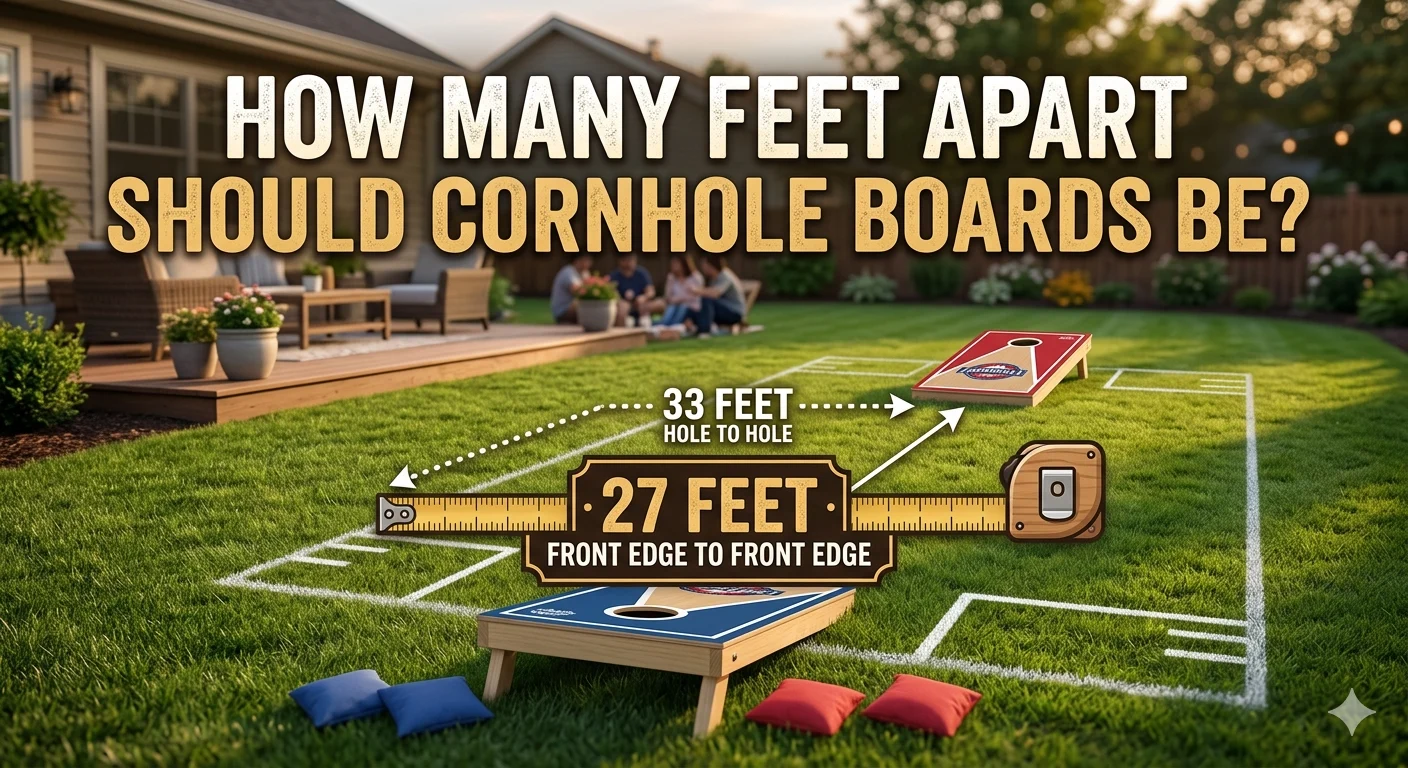
The official distance between cornhole boards is:
- 27 feet from front edge to front edge
- 33 feet from hole to hole
This measurement is used in professional and tournament play, including competitions organized by the American Cornhole League.
For most adults and experienced players, this is the standard distance that provides the best balance of skill and challenge.
Quick Distance Breakdown
| Measurement Type | Distance |
|---|---|
| Front edge to front edge | 27 feet |
| Hole to hole | 33 feet |
| Junior player distance | 12–15 feet |
| Casual backyard play | 20–27 feet |
Why Cornhole Board Distance Matters
Board spacing is more important than many people realize. If the boards are too close, the game becomes too easy. If they are too far apart, beginners may struggle to score.
Correct spacing helps with:
- Fair competition
- Accurate gameplay
- Better throwing rhythm
- Skill development
- Tournament consistency
- Safer play areas
Using the proper setup also makes the game more enjoyable for players of different skill levels.
Official Cornhole Setup Rules
Besides knowing how many feet apart cornhole boards should be, it is also important to understand the complete court setup.
Regulation Cornhole Board Dimensions
Official cornhole boards should measure:
| Feature | Official Size |
|---|---|
| Board length | 48 inches |
| Board width | 24 inches |
| Hole diameter | 6 inches |
| Front height | 3–4 inches |
| Back height | 12 inches |
These dimensions create the angled surface needed for proper gameplay.
Pitcher’s Box
Players stand beside the board while throwing bean bags. This area is called the pitcher’s box.
Each side typically allows:
- 3 feet width
- Safe standing space
- Clear throwing lanes
How to Measure Cornhole Board Distance Correctly
Many people measure incorrectly by guessing or measuring from the wrong points.
Here is the proper method.
Step-by-Step Setup
Step 1: Place the First Board
Set the first board on level ground.
Step 2: Measure from the Front Edge
Use a tape measure from the front edge of the board.
Step 3: Measure 27 Feet
Mark the location exactly 27 feet away.
Step 4: Place the Second Board
Position the second board at the marked spot.
Step 5: Double-Check Alignment
Make sure both boards face each other evenly.
This setup ensures accurate gameplay and official spacing.
Cornhole Distance for Different Age Groups
Not every player needs regulation tournament distance. Adjusting the spacing can make the game more fun and accessible.
Adults and Competitive Players
Recommended distance:
- 27 feet
Best for:
- Experienced players
- League games
- Tournaments
- Competitive backyard matches
Teenagers
Recommended distance:
- 21–24 feet
Best for:
- Intermediate players
- School events
- Family competitions
Kids and Beginners
Recommended distance:
- 12–15 feet
Best for:
- Young children
- Casual learning
- Easier scoring
- Family fun
Reducing the distance keeps the game enjoyable and prevents frustration.
Indoor vs Outdoor Cornhole Setup
The location of your game can affect spacing and setup quality.
Outdoor Setup
Outdoor games usually have enough room for regulation spacing.
Ideal surfaces include:
- Grass
- Concrete
- Patios
- Asphalt
However, uneven grass may slightly affect gameplay.
Indoor Setup
Indoor setups often require adjustments because of limited space.
Common indoor locations:
- Garages
- Basements
- Event halls
- Gyms
If space is tight, you can shorten the distance slightly while keeping gameplay balanced.
Cornhole Court Dimensions
A full cornhole court requires more than just the board spacing.
Recommended Court Size
| Court Element | Measurement |
|---|---|
| Width | 8–10 feet |
| Length | 40–45 feet |
| Clearance behind boards | 10 feet |
This allows enough room for movement and spectators.
Common Mistakes When Setting Up Cornhole Boards
Many players accidentally create poor gameplay conditions because of setup mistakes.
Measuring Hole to Hole Instead of Front Edge
Official rules use:
- 27 feet front edge to front edge
Not:
- 27 feet hole to hole
This is one of the most common errors.
Uneven Ground
Boards placed on slopes create unfair gameplay.
Always choose:
- Flat surfaces
- Stable ground
- Minimal bumps
Boards Too Close for Adults
Short distances reduce skill challenge and make games less competitive.
Poor Lighting
Night games require adequate lighting for visibility and safety.
Casual Cornhole vs Tournament Cornhole
There is a big difference between recreational and professional setups.
Casual Backyard Play
Features:
- Flexible spacing
- Relaxed rules
- Easier throwing distances
- Family-friendly gameplay
Typical spacing:
- 20–27 feet
Tournament Play
Features:
- Strict measurements
- Regulation boards
- Official scoring
- Competitive gameplay
Standard spacing:
- 27 feet
How Weather Affects Cornhole Distance
Outdoor conditions can impact gameplay significantly.
Wind
Strong wind makes long-distance throws harder. In windy conditions:
- Lower throws work better
- Heavy bags perform more consistently
Rain
Wet boards become slippery and dangerous. Moisture also affects bag movement.
Sunlight
Direct sunlight may create visibility issues during daytime games.
Whenever possible:
- Use shaded areas
- Keep boards dry
- Avoid slippery surfaces
Best Surface for Cornhole
The surface under the boards changes gameplay quality.
Grass
Pros:
- Soft landing area
- Comfortable environment
Cons:
- Uneven bounces
- Moisture problems
Concrete
Pros:
- Stable setup
- Smooth gameplay
Cons:
- Harder on players’ feet
- Louder impacts
Wooden Decks
Pros:
- Attractive setup
- Flat surface
Cons:
- Can become slippery
Concrete and flat patios usually provide the most reliable gameplay.
Expert Tips for the Perfect Cornhole Setup
Experienced players often use these setup techniques.
Use a Measuring Tape Every Time
Do not rely on visual estimates.
Keep Boards Straight
Misaligned boards affect throw accuracy.
Use Quality Bags
Regulation bags improve consistency.
Leave Space Around the Court
Players need room to throw comfortably.
Check Board Stability
Loose or wobbly boards create unfair conditions.
Cornhole Distance Chart
Here is a simple reference chart for different player types.
| Player Type | Recommended Distance |
|---|---|
| Young kids | 12 feet |
| Older kids | 15 feet |
| Beginners | 18–21 feet |
| Casual adults | 21–24 feet |
| Competitive adults | 27 feet |
| Tournament play | 27 feet |
How Cornhole Became Popular
Cornhole has grown rapidly over the last decade. It started mainly as a backyard and tailgating game, but now it has professional leagues, televised tournaments, and organized championships.
Its popularity comes from:
- Easy rules
- Social gameplay
- Low equipment cost
- Fun for all ages
- Indoor and outdoor flexibility
Today, cornhole is played at:
- Weddings
- Schools
- Corporate events
- Sports tailgates
- Community festivals
Benefits of Proper Cornhole Board Spacing
Using the correct distance provides several advantages.
Better Skill Development
Players improve accuracy and throwing control.
Fair Gameplay
Proper spacing creates balanced matches.
More Enjoyable Experience
Games feel smoother and more professional.
Tournament Readiness
Players become comfortable with official standards.
Frequently Asked Questions
How many feet apart should cornhole boards be officially?
Official cornhole boards should be 27 feet apart from front edge to front edge.
What is the distance from hole to hole in cornhole?
The distance from one hole to the other is 33 feet.
Can kids use shorter cornhole distances?
Yes. Kids usually play from 12 to 15 feet for easier gameplay.
Is 27 feet too far for beginners?
For some beginners, yes. Starting at 18–21 feet is often better.
Do professional cornhole tournaments use 27 feet?
Yes. Professional organizations use the regulation 27-foot distance.
Conclusion
If you are wondering how many feet apart should cornhole boards be, the official answer is 27 feet from front edge to front edge. This regulation distance creates fair and competitive gameplay for adults and tournament players.
However, casual games can use shorter distances depending on player age and skill level. Kids and beginners often enjoy the game more when the boards are placed closer together.
Whether you are setting up a backyard match, a family gathering, or a professional tournament, proper cornhole board spacing helps create a smoother, more enjoyable experience. Following official measurements, using stable surfaces, and adjusting distances for different players will help you get the most out of every game.