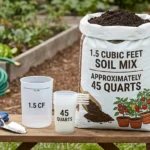

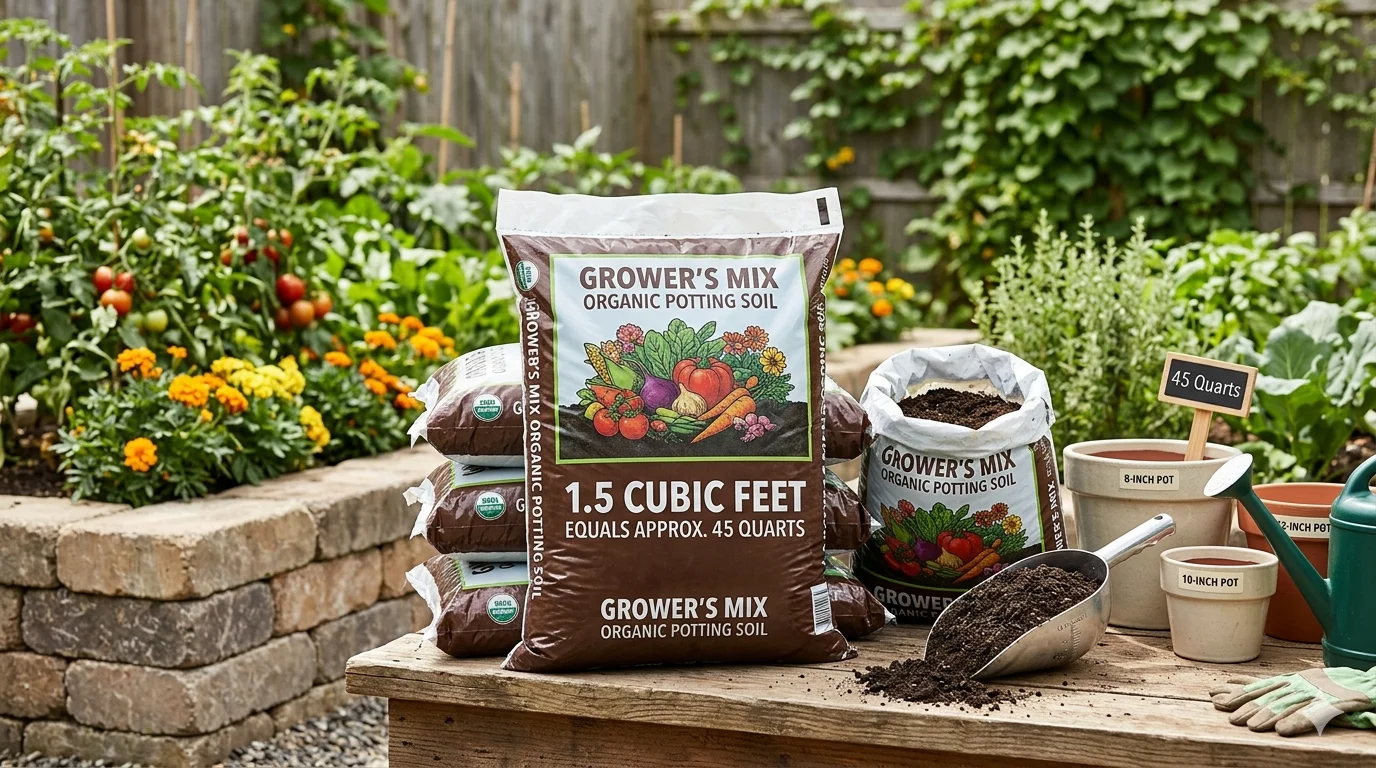
If you are planning a gardening project, filling raised beds, or buying potting mix, you may wonder: how many quarts is 1.5 cubic feet of soil?
The quick answer is simple:
1.5 cubic feet of soil equals approximately 44.88 quarts.
Most gardeners round this number to 45 quarts for convenience.
Knowing this conversion can help you buy the correct amount of soil, avoid wasting money, and complete gardening projects more efficiently. Whether you are planting flowers, vegetables, or indoor plants, understanding cubic feet to quarts conversions makes soil calculations much easier.
In this guide, you will learn how the conversion works, why soil measurements matter, practical gardening examples, and useful tips for buying the right amount of soil.
Understanding Soil Volume Measurements
Before converting soil measurements, it is important to understand the units used in gardening and landscaping.
What Is a Cubic Foot?
A cubic foot is a unit of volume measurement. It represents the space inside a cube that measures:
- 1 foot long
- 1 foot wide
- 1 foot high
Soil manufacturers commonly use cubic feet for larger soil bags because it is practical for outdoor gardening and landscaping projects.
Common soil bag sizes include:
| Soil Bag Size | Common Use |
|---|---|
| 0.5 cubic feet | Small planters |
| 1 cubic foot | Medium containers |
| 1.5 cubic feet | Raised beds and multiple pots |
| 2 cubic feet | Larger gardens |
What Is a Quart?
A quart is another unit of volume. It is smaller than a cubic foot and is commonly used for:
- Potting soil
- Indoor gardening
- Small containers
- Seed starting mix
Quarts are easier to understand when working with smaller planting projects.
How Many Quarts Is 1.5 Cubic Feet of Soil?
The standard conversion formula is:
- 1 cubic foot = approximately 29.92 quarts
To calculate 1.5 cubic feet:
- 1.5 × 29.92 = 44.88 quarts
So:
1.5 cubic feet of soil equals about 45 quarts
Most gardening stores round this figure up for easier labeling and calculations.
Quick Soil Conversion Chart
Here is a useful conversion chart for common soil bag sizes.
| Cubic Feet | Approximate Quarts |
|---|---|
| 0.25 cubic feet | 7.48 quarts |
| 0.5 cubic feet | 14.96 quarts |
| 1 cubic foot | 29.92 quarts |
| 1.5 cubic feet | 44.88 quarts |
| 2 cubic feet | 59.84 quarts |
| 3 cubic feet | 89.76 quarts |
This chart helps gardeners estimate how much soil they need without complicated calculations.
Why Soil Is Measured in Cubic Feet and Quarts
Different soil measurements exist because gardening projects vary in size.
Cubic Feet Are Common for:
- Raised garden beds
- Outdoor landscaping
- Large containers
- Vegetable gardens
Quarts Are Common for:
- Indoor plants
- Seed trays
- Small flower pots
- Succulent containers
For example, a large raised bed may require several cubic feet of soil, while a small indoor plant may only need a few quarts.
Practical Gardening Examples
Understanding how many quarts is 1.5 cubic feet of soil becomes very useful during real gardening projects.
Raised Garden Beds
Suppose you are filling a small raised bed for vegetables or herbs.
A raised bed measuring:
- 3 feet long
- 2 feet wide
- 4 inches deep
needs around 2 cubic feet of soil.
In this situation, one 1.5 cubic foot bag gets you close, but you may need a little extra soil to finish the project.
Flower Pots and Patio Containers
Large decorative containers often need:
- 15 to 25 quarts of potting mix
Since 1.5 cubic feet equals around 45 quarts, one bag can fill:
- Two large pots
- Several medium containers
- Many small planters
This helps gardeners estimate how many bags to purchase before shopping.
Indoor Plant Projects
Indoor plants usually require smaller amounts of soil.
| Plant Type | Approximate Soil Needed |
|---|---|
| Small succulent | 1–2 quarts |
| Medium houseplant | 4–8 quarts |
| Large indoor plant | 10–20 quarts |
A single 1.5 cubic foot bag can support many indoor plants before needing replacement soil.
How to Calculate Soil for Any Container
Learning basic soil calculations can save time and money.
Simple Formula for Rectangular Containers
Use this formula:
- Length × Width × Depth = Cubic Feet
Measure all dimensions in feet.
Example Calculation
Suppose a planter measures:
- 2 feet long
- 1 foot wide
- 0.5 feet deep
Calculation:
- 2 × 1 × 0.5 = 1 cubic foot
That means the planter requires approximately:
- 30 quarts of soil
Common Pot Sizes and Soil Needs
Different pot sizes require different soil amounts.
| Pot Diameter | Approximate Soil Needed |
|---|---|
| 8-inch pot | 3 quarts |
| 10-inch pot | 5 quarts |
| 12-inch pot | 8 quarts |
| 14-inch pot | 12 quarts |
| 16-inch pot | 18 quarts |
| 20-inch pot | 24+ quarts |
These numbers vary slightly depending on pot depth and shape.
Common Mistakes When Converting Soil Measurements
Many gardeners accidentally buy too much or too little soil because of simple conversion mistakes.
Confusing Dry and Liquid Measurements
Soil products usually use dry measurements, not liquid measurements.
Always check the label carefully before calculating.
Ignoring Soil Settling
Potting soil compresses after watering.
As soil settles, containers may need extra soil added later.
Many experienced gardeners buy about 10% extra soil for this reason.
Mixing Measurement Units
Some people mix:
- Inches
- Feet
- Gallons
- Quarts
without converting correctly.
Using one measurement system throughout the calculation prevents errors.
Forgetting Drainage Layers
If you place rocks or drainage material at the bottom of containers, you may need less soil than expected.
Tips for Buying the Right Amount of Soil
Buying soil seems simple, but planning ahead can save money and reduce waste.
Measure Before Shopping
Always measure your containers or garden beds before purchasing soil.
Important measurements include:
- Length
- Width
- Depth
Use Soil Conversion Charts
Conversion charts help you estimate soil quickly while shopping.
Saving a chart on your phone can be very helpful at garden centers.
Buy Slightly More Than Needed
It is better to have a little extra soil than run out in the middle of planting.
Extra soil can be used later for:
- Topping off pots
- Repotting plants
- Filling gaps after settling
Compare Soil Bag Prices
Larger bags are often cheaper per quart compared to smaller bags.
| Bag Type | Value |
|---|---|
| Small quart bags | Convenient but expensive |
| 1.5 cubic foot bags | Better overall value |
| Bulk soil | Cheapest for large gardens |
For medium-sized gardening projects, 1.5 cubic foot bags are often the best balance between cost and convenience.
Comparing Popular Soil Bag Sizes
Understanding common soil bag sizes helps simplify gardening calculations.
| Bag Size | Approximate Quarts | Best Use | |—|—| | 8-quart bag | 8 quarts | Small indoor plants | | 16-quart bag | 16 quarts | Medium pots | | 25-quart bag | 25 quarts | Patio containers | | 1 cubic foot bag | 30 quarts | Multiple containers | | 1.5 cubic feet bag | 45 quarts | Raised beds | | 2 cubic feet bag | 60 quarts | Larger landscaping projects |
A 1.5 cubic foot bag remains one of the most popular choices for home gardeners because it works well for both indoor and outdoor planting projects.
Expert Gardening Tips
Professional gardeners follow several practices that improve soil performance and reduce waste.
Choose Quality Potting Mix
Good-quality soil drains better and supports healthier root growth.
Look for ingredients such as:
- Compost
- Peat moss
- Coconut coir
- Perlite
These materials improve water retention and drainage.
Store Leftover Soil Properly
Opened soil bags should be sealed tightly to prevent:
- Mold
- Moisture damage
- Insects
- Drying out
Store soil in a cool, dry location whenever possible.
Refresh Old Potting Soil
Instead of throwing away old soil, many gardeners refresh it by mixing in:
- Compost
- Organic fertilizer
- Fresh potting mix
This improves soil structure and saves money over time.
Frequently Asked Questions
How many quarts are in 1 cubic foot of soil?
One cubic foot contains approximately 29.92 quarts of soil.
Is 1.5 cubic feet the same as 45 quarts?
Yes. Technically it equals 44.88 quarts, but most people round it to 45 quarts.
How much soil do I need for a raised garden bed?
Multiply the length, width, and depth of the bed in feet to calculate the required cubic feet.
Can 1.5 cubic feet fill multiple pots?
Yes. A 1.5 cubic foot bag can fill several medium pots or a few large planters.
Why do potting soil bags use cubic feet?
Cubic feet make it easier to measure larger gardening projects and compare soil quantities.
Conclusion
If you were wondering how many quarts is 1.5 cubic feet of soil, the answer is straightforward:
1.5 cubic feet of soil equals approximately 44.88 quarts, or about 45 quarts.
Understanding this conversion helps gardeners buy the correct amount of soil for containers, raised beds, and landscaping projects.
Whether you are planting flowers, vegetables, herbs, or indoor plants, knowing how to convert cubic feet to quarts can save money, reduce waste, and make gardening much easier.
With the right measurements and planning, you can confidently choose the perfect amount of soil for any gardening project.