

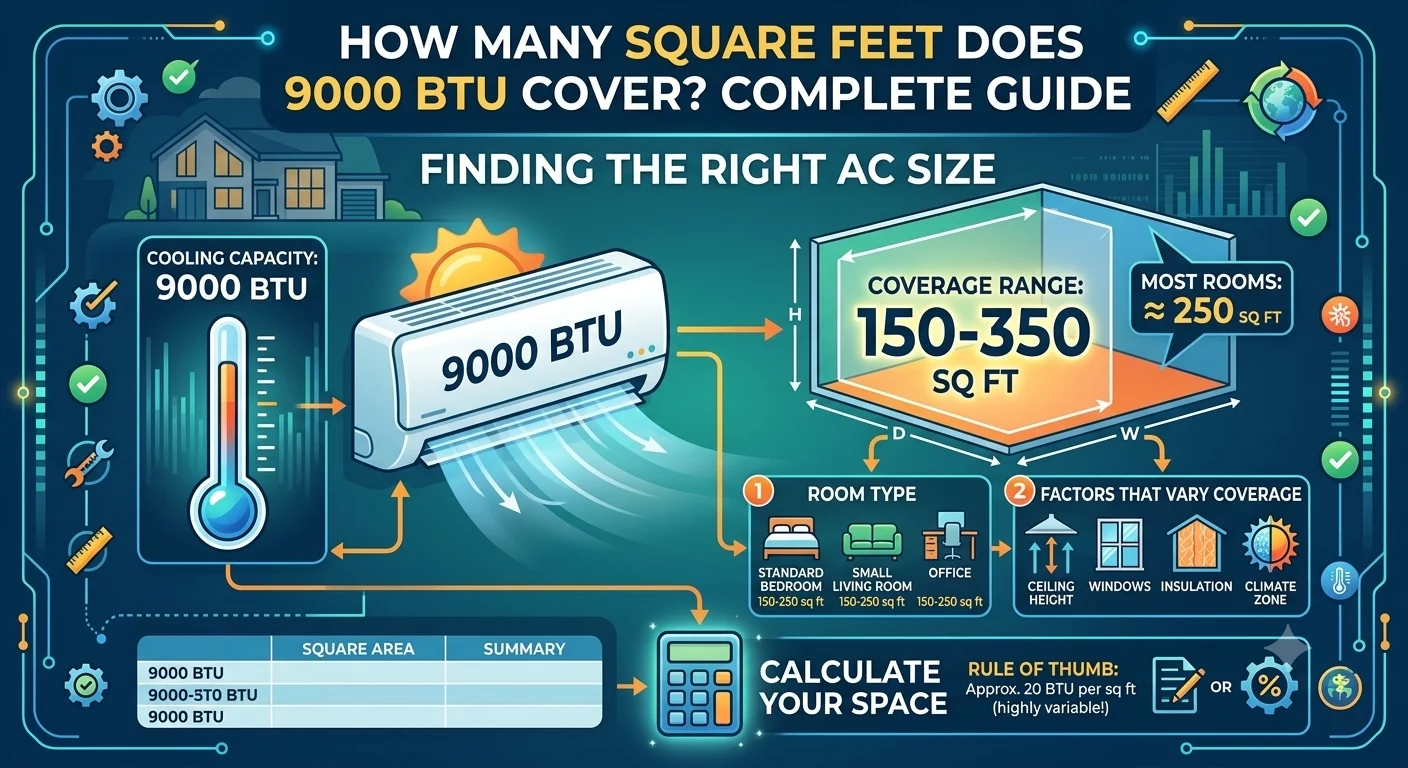
A 9,000 BTU air conditioner typically covers 300 to 400 square feet under normal conditions. The exact coverage depends on factors such as ceiling height, insulation, sunlight exposure, climate, and the number of people using the room. While 300–400 square feet is the standard recommendation, some well-insulated rooms may feel comfortable even at the upper end of that range.
Choosing the correct BTU rating is important because an oversized or undersized air conditioner can reduce comfort and increase energy costs. This guide explains exactly how many square feet 9,000 BTU covers, what affects cooling performance, and how to determine if a 9,000 BTU unit is right for your space.
What Does 9,000 BTU Mean?
BTU stands for British Thermal Unit, which measures the amount of heat an air conditioner can remove from a room every hour.
A 9,000 BTU AC removes approximately 9,000 BTUs of heat per hour, making it suitable for medium-sized rooms.
Manufacturers generally recommend this capacity for spaces measuring:
| BTU Rating | Recommended Room Size |
|---|---|
| 5,000 BTU | 100–150 sq ft |
| 6,000 BTU | 150–250 sq ft |
| 8,000 BTU | 250–350 sq ft |
| 9,000 BTU | 300–400 sq ft |
| 10,000 BTU | 350–450 sq ft |
| 12,000 BTU | 450–550 sq ft |
How Many Square Feet Does 9,000 BTU Cover?
A 9,000 BTU air conditioner covers approximately 300 to 400 square feet under average conditions.
For example:
- Medium bedroom
- Large home office
- Studio apartment
- Small living room
- Guest room
- Basement room
If your room falls within this size range, a 9,000 BTU unit usually provides efficient cooling while maintaining reasonable energy consumption.
Room Size Chart for a 9,000 BTU Air Conditioner
| Room Size | Is 9,000 BTU Suitable? |
|---|---|
| 150 sq ft | Yes (slightly oversized) |
| 200 sq ft | Yes |
| 250 sq ft | Yes |
| 300 sq ft | Ideal |
| 350 sq ft | Excellent |
| 400 sq ft | Good |
| 450 sq ft | Borderline |
| 500 sq ft | Usually too small |
Factors That Affect Coverage
The recommended square footage assumes average conditions. Several factors can increase or decrease the cooling area.
Ceiling Height
Standard recommendations assume an 8-foot ceiling.
If ceilings are:
- 9–10 feet high
- Vaulted
- Cathedral style
You may need a larger BTU rating because there is more air to cool.
Sunlight Exposure
Rooms with:
- Large windows
- South-facing exposure
- Direct afternoon sunlight
Require more cooling capacity than shaded rooms.
Insulation
Well-insulated homes keep cool air inside longer.
Poor insulation allows heat to enter, forcing the AC to work harder.
Number of Occupants
Each additional person produces body heat.
A room with four or five occupants often needs more cooling than one occupied by a single person.
Electronics
Heat-producing devices include:
- Computers
- TVs
- Gaming consoles
- Printers
- Kitchen appliances
These increase cooling requirements.
Climate
Hot and humid regions require more cooling power than mild climates.
Is 9,000 BTU Enough for Different Room Types?
Bedroom
A master bedroom measuring around 300 square feet is an excellent match for a 9,000 BTU unit.
Living Room
Small living rooms between 300 and 400 square feet can usually be cooled effectively.
Open-concept living spaces may require more BTUs.
Home Office
A medium-sized office with one computer works well with a 9,000 BTU air conditioner.
If multiple computers or equipment generate heat, consider a larger model.
Studio Apartment
Many studio apartments fall within the ideal cooling range.
However, open kitchens can increase the cooling load.
Quick BTU Calculation Formula
A common estimate is:
20 BTUs per square foot
Example:
300 square feet × 20 = 6,000 BTU
However, this formula is only a starting point.
Modern recommendations account for:
- Windows
- Climate
- Sun exposure
- Occupancy
- Ceiling height
That’s why many experts recommend around 9,000 BTUs for rooms approaching 400 square feet.
Examples of 9,000 BTU Coverage
Example 1
Room size: 320 square feet
Condition:
- Good insulation
- One window
- Average climate
Result:
A 9,000 BTU AC is an excellent choice.
Example 2
Room size: 390 square feet
Condition:
- Large windows
- Afternoon sun
Result:
A 9,000 BTU unit may work, but a slightly larger unit could perform better during extremely hot weather.
Example 3
Room size: 280 square feet
Condition:
- Poor insulation
- Two occupants
- Electronics
Result:
A 9,000 BTU air conditioner provides extra cooling capacity and should perform well.
What Happens If the AC Is Too Small?
An undersized air conditioner:
- Runs continuously
- Struggles to reach the desired temperature
- Uses more electricity
- Wears out faster
- Leaves humidity inside the room
What Happens If the AC Is Too Large?
Many people think bigger is always better, but that’s not true.
An oversized unit:
- Turns on and off frequently
- Doesn’t remove humidity effectively
- Creates uneven temperatures
- Uses unnecessary energy
- May shorten equipment life
Choosing the right BTU rating delivers the best balance between comfort and efficiency.
Energy Efficiency Matters Too
Two 9,000 BTU air conditioners may cool the same room but use different amounts of electricity.
Look for:
- High Energy Efficiency Ratio (EER)
- High Seasonal Energy Efficiency Ratio (SEER)
- ENERGY STAR certification
- Inverter technology
Efficient units reduce electricity bills while maintaining consistent temperatures.
9,000 BTU vs Other AC Sizes
| BTU | Square Feet Covered | Best For |
|---|---|---|
| 6,000 | 150–250 sq ft | Small bedrooms |
| 8,000 | 250–350 sq ft | Medium rooms |
| 9,000 | 300–400 sq ft | Medium to large rooms |
| 10,000 | 350–450 sq ft | Large bedrooms |
| 12,000 | 450–550 sq ft | Living rooms |
Tips for Getting the Best Cooling
To maximize your AC’s performance:
- Keep doors and windows closed.
- Seal air leaks around windows.
- Use curtains during sunny afternoons.
- Clean the air filter regularly.
- Avoid placing heat-producing appliances nearby.
- Use ceiling fans to circulate cool air.
- Schedule regular maintenance.
Common Mistakes When Choosing BTU Size
Buying Based Only on Room Area
Square footage is important, but so are insulation, sunlight, and occupancy.
Ignoring Ceiling Height
High ceilings increase the room’s air volume.
Overlooking Humidity
Humid environments often require more cooling power.
Choosing the Biggest Unit Available
Oversized units can reduce comfort and waste energy.
Skipping Maintenance
Dirty filters reduce airflow and cooling efficiency.
When Should You Choose More Than 9,000 BTU?
Consider upgrading if your room:
- Exceeds 400 square feet
- Has high ceilings
- Receives intense afternoon sunlight
- Has poor insulation
- Is occupied by several people
- Contains many electronics
- Connects to other open rooms
In these situations, a 10,000 or 12,000 BTU unit may provide better performance.
Frequently Asked Questions
How many square feet does a 9,000 BTU air conditioner cover?
A 9,000 BTU air conditioner typically cools 300 to 400 square feet, depending on insulation, sunlight, ceiling height, and climate.
Is 9,000 BTU enough for a 400-square-foot room?
Yes, under average conditions. If the room has high ceilings, poor insulation, or heavy sun exposure, you may need a larger unit.
Can a 9,000 BTU AC cool two rooms?
Usually not. A 9,000 BTU unit is designed for one enclosed room. Cooling multiple rooms reduces efficiency unless the spaces are very small and open.
Is 9,000 BTU good for a bedroom?
Yes. It is an excellent choice for medium to large bedrooms measuring approximately 300 to 400 square feet.
Does insulation affect how much area a 9,000 BTU AC can cool?
Absolutely. Good insulation allows a 9,000 BTU unit to cool closer to 400 square feet, while poor insulation reduces its effective coverage.
Conclusion
If you’re wondering how many square feet does 9000 BTU cover, the answer is approximately 300 to 400 square feet under typical conditions. This makes a 9,000 BTU air conditioner a great choice for medium-sized bedrooms, home offices, studio apartments, and living rooms.
However, room size is only one factor. Ceiling height, insulation, sunlight, occupancy, and climate all influence cooling performance. By considering these factors and selecting an energy-efficient model, you’ll enjoy better comfort, lower electricity costs, and longer-lasting performance from your air conditioner.