
When planning a construction, remodeling, or DIY project, one of the most common questions is: how many square feet in a sheet of plywood? Knowing the answer helps you estimate material costs, reduce waste, and purchase the correct number of sheets.
Plywood is one of the most widely used building materials because it is strong, versatile, and available in standardized sizes. Whether you’re building a subfloor, installing roof sheathing, constructing cabinets, or covering walls, understanding plywood coverage is essential.
In this guide, you’ll learn exactly how many square feet a sheet of plywood covers, how to calculate plywood area, common sheet sizes, practical examples, and expert tips for accurate project planning.
Understanding Plywood Sheet Dimensions
What Is Plywood?
Plywood is an engineered wood product made by bonding thin layers of wood veneer together. Each layer is placed with its grain running perpendicular to adjacent layers, creating strength and stability.
Plywood is commonly used for:
- Flooring
- Roofing
- Wall sheathing
- Furniture
- Cabinets
- Shelving
- DIY projects
While plywood comes in various thicknesses, the square footage depends on the sheet’s length and width rather than its thickness.
Standard Plywood Sizes
The most common plywood dimensions include:
| Size | Coverage |
|---|---|
| 2 × 4 ft | 8 sq ft |
| 4 × 8 ft | 32 sq ft |
| 4 × 10 ft | 40 sq ft |
| 5 × 5 ft | 25 sq ft |
| 4 × 12 ft | 48 sq ft |
Among these, the 4×8 sheet is the industry standard and the most widely available option.
How Many Square Feet in a Sheet of Plywood?
The answer depends on the dimensions of the plywood sheet.
4×8 Plywood Sheet
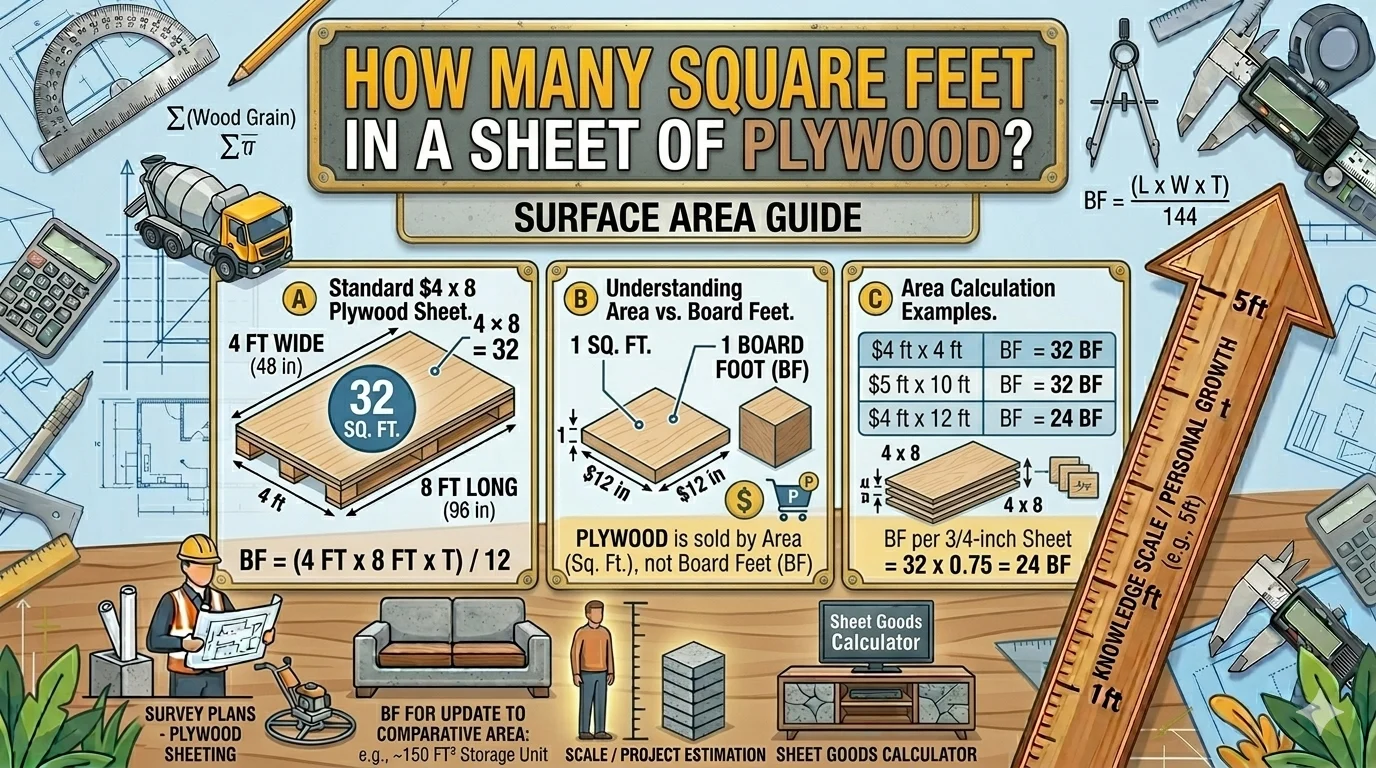
A standard plywood sheet measures:
- Width = 4 feet
- Length = 8 feet
To calculate square footage:
Square Feet = Length × Width
4 × 8 = 32
Therefore, a standard 4×8 sheet of plywood covers 32 square feet.
This size is commonly used for flooring, roofing, wall sheathing, and many woodworking projects.
Other Common Plywood Sizes
Not all plywood sheets are 4×8 feet. Some specialty sizes are available for specific projects.
| Plywood Size | Square Feet |
|---|---|
| 2 × 4 ft | 8 sq ft |
| 4 × 8 ft | 32 sq ft |
| 4 × 10 ft | 40 sq ft |
| 5 × 5 ft | 25 sq ft |
| 4 × 12 ft | 48 sq ft |
For most residential and commercial construction projects, builders assume one plywood sheet equals 32 square feet.
Plywood Coverage Chart
The chart below can help estimate material requirements quickly.
| Number of Sheets | Coverage |
|---|---|
| 1 Sheet | 32 sq ft |
| 2 Sheets | 64 sq ft |
| 3 Sheets | 96 sq ft |
| 4 Sheets | 128 sq ft |
| 5 Sheets | 160 sq ft |
| 10 Sheets | 320 sq ft |
| 15 Sheets | 480 sq ft |
| 20 Sheets | 640 sq ft |
This chart is useful when estimating flooring, roofing, and wall sheathing projects.
How to Calculate Square Feet of Plywood
Calculating plywood coverage is simple.
Formula
Square Feet = Length × Width
Both measurements should be in feet.
Example Calculation
Suppose a plywood sheet measures:
- Length = 8 feet
- Width = 4 feet
Calculation:
8 × 4 = 32 square feet
The sheet covers 32 square feet.
Metric Example
A standard plywood sheet often measures:
- 1.22 meters × 2.44 meters
Area:
1.22 × 2.44 = 2.98 square meters
Converting square meters to square feet:
2.98 × 10.764 = approximately 32 square feet
The result matches the standard plywood coverage.
Common Uses of Plywood Sheets
Plywood is one of the most versatile building materials available.
Flooring
Plywood is widely used as a subfloor beneath hardwood, laminate, vinyl, and carpet flooring.
For example:
Room Size:
12 ft × 16 ft = 192 sq ft
Plywood Needed:
192 ÷ 32 = 6 sheets
Adding 10% waste:
Approximately 7 sheets
Roofing
Roof decking often uses plywood sheets to provide structural support beneath shingles or metal roofing.
Example:
Roof Area = 960 sq ft
Plywood Required:
960 ÷ 32 = 30 sheets
With 10% waste:
33 sheets
Wall Sheathing
Plywood can strengthen exterior walls and improve structural stability.
Example:
Wall Area = 160 sq ft
Sheets Needed:
160 ÷ 32 = 5 sheets
Adding extra material for cuts is recommended.
Furniture and Cabinetry
Cabinet makers and furniture builders frequently use plywood because it offers excellent strength and dimensional stability.
Common projects include:
- Kitchen cabinets
- Bookshelves
- Workbenches
- Storage units
- Desks
How Many Sheets of Plywood Do You Need?
Determining the number of plywood sheets required involves four simple steps:
- Measure the total area.
- Calculate square footage.
- Divide by plywood coverage.
- Add a waste allowance.
Example 1: Small Shed Floor
Dimensions:
10 ft × 12 ft
Area:
120 sq ft
Sheets Required:
120 ÷ 32 = 3.75
Round up:
4 sheets
Recommended Purchase:
5 sheets with waste included
Example 2: Garage Floor
Dimensions:
20 ft × 24 ft
Area:
480 sq ft
Sheets Required:
480 ÷ 32 = 15
Add 10% waste:
16.5
Round up:
17 sheets
Example 3: Workshop Wall
Dimensions:
8 ft × 40 ft
Area:
320 sq ft
Sheets Required:
320 ÷ 32 = 10 sheets
Add waste:
11 sheets
Why You Should Include a Waste Factor
Many DIYers underestimate material requirements because they forget about waste.
Waste occurs due to:
- Trimming edges
- Door openings
- Window openings
- Installation mistakes
- Damaged sheets
- Complex room layouts
Recommended waste allowances:
| Project Type | Waste Allowance |
|---|---|
| Simple Layout | 5% |
| Standard Project | 10% |
| Complex Project | 15% |
Adding extra material helps prevent costly delays and additional trips to the store.
Common Mistakes When Calculating Plywood Coverage
Ignoring Waste
Failing to account for waste often results in material shortages.
Incorrect Measurements
Always measure carefully and verify dimensions before purchasing materials.
Forgetting to Round Up
You cannot purchase a fraction of a plywood sheet in most situations.
Always round up to the next whole sheet.
Confusing Thickness With Coverage
Thickness affects strength and weight, not surface area.
A 1/2-inch plywood sheet and a 3/4-inch plywood sheet with identical dimensions cover the same square footage.
Not Planning Cuts
A simple cutting plan can reduce waste and save money.
Expert Tips for Buying Plywood
Buy One Extra Sheet
Having an extra sheet available can prevent project delays.
Choose the Right Grade
Plywood grades vary based on appearance and quality.
- A Grade: Smooth finish
- B Grade: Minor repairs
- C Grade: Construction quality
- D Grade: Utility grade
Match Thickness to the Application
Common plywood thicknesses include:
- 1/4 inch
- 3/8 inch
- 1/2 inch
- 5/8 inch
- 3/4 inch
Different projects require different thicknesses.
Inspect Every Sheet
Before purchasing, check for:
- Warping
- Cracks
- Delamination
- Moisture damage
Plan Material Layout
Creating a layout plan before installation can reduce waste and improve efficiency.
Frequently Asked Questions
Is a sheet of plywood always 32 square feet?
No. A standard 4×8 sheet covers 32 square feet, but specialty sizes may cover more or less area.
How many square feet does a 4×8 sheet of plywood cover?
A 4×8 plywood sheet covers exactly 32 square feet.
How many sheets of plywood do I need for 500 square feet?
500 ÷ 32 = 15.63
You would need 16 sheets, plus additional material for waste.
Does plywood thickness affect square footage?
No. Thickness affects strength and weight, but not coverage area.
How much extra plywood should I buy?
Most professionals recommend purchasing 5–15% more material than calculated to account for waste and mistakes.
Conclusion
If you’re wondering how many square feet in a sheet of plywood, the standard answer is 32 square feet because the most common plywood size is 4 feet by 8 feet. Understanding plywood coverage helps homeowners, contractors, and DIY enthusiasts estimate material requirements accurately and avoid unnecessary expenses.
Whether you’re building a floor, roof, wall, shed, cabinet, or furniture project, calculating plywood square footage is straightforward. Simply multiply the sheet length by the width, divide your project area by the sheet coverage, and add a waste allowance for best results. By planning carefully and using accurate measurements, you can purchase the right amount of plywood and complete your project efficiently.