
When people start planning a roof repair or replacement, one of the most common questions they ask is: how many square feet in a square of roofing? This is a basic but very important concept in roofing because it affects material estimates, cost calculations, and overall project planning.
If you understand this single measurement correctly, you can easily estimate your roof size, compare contractor quotes, and avoid overpaying for materials. In this guide, you will learn everything in a simple, practical way with real examples.
What Is a Roofing Square?
Before understanding how many square feet in a square of roofing, it’s important to know what a “roofing square” actually means.
A roofing square is a standard unit used in the roofing industry to measure roof area and roofing materials.
Definition of Roofing Square
A roofing square is equal to:
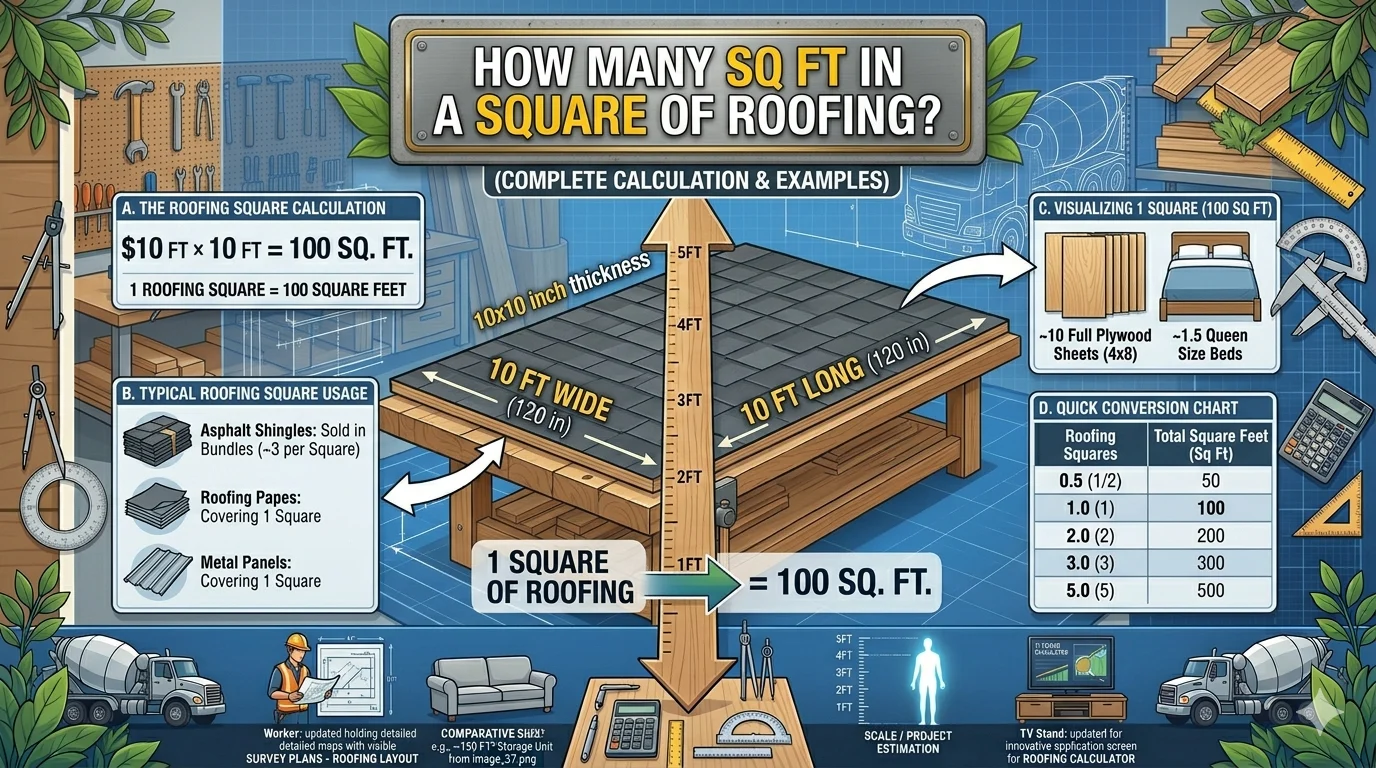
👉 1 square = 100 square feet of roof area
So instead of saying a roof is 2,000 square feet, roofing professionals often say it is 20 squares.
Why Roofing Uses Squares Instead of Square Feet
Roofing companies use “squares” instead of square feet because:
- It simplifies material ordering
- It reduces calculation errors
- It matches how shingles are packaged
- It makes communication easier between contractors
Think of it like buying eggs in dozens instead of counting each egg individually.
How Many Square Feet in a Square of Roofing?
Now to the main question:
👉 1 square of roofing = 100 square feet
This is a fixed industry standard used across roofing professionals.
Here’s a quick breakdown:
- 1 square = 100 sq ft
- 5 squares = 500 sq ft
- 10 squares = 1,000 sq ft
- 25 squares = 2,500 sq ft
This makes roofing calculations much faster and more standardized.
Why 100 Square Feet Is the Standard
The roofing industry uses 100 square feet as one “square” because:
- It simplifies large measurements
- It matches shingle manufacturing standards
- It helps contractors estimate quickly
- It reduces confusion in pricing and material orders
This standard has been used for decades and is accepted globally in roofing practices.
How to Calculate Roofing Squares
Once you understand how many square feet in a square of roofing, the next step is learning how to calculate your roof size.
Step-by-Step Process
Step 1: Measure your roof sections
Measure length and width of each roof section.
Step 2: Multiply length × width
This gives you square footage for each section.
Step 3: Add all sections together
Combine all areas for total roof size.
Step 4: Convert to squares
Divide total square feet by 100.
Formula
👉 Roofing Squares = Total Roof Area ÷ 100
Example
Let’s say your roof has two sections:
- Section 1: 1,200 sq ft
- Section 2: 800 sq ft
Total roof area = 2,000 sq ft
Now convert:
👉 2,000 ÷ 100 = 20 squares
So your roof size is 20 roofing squares.
Roofing Square vs Square Feet
Many beginners confuse these two terms, but they are different.
| Feature | Square Feet | Roofing Square |
|---|---|---|
| Unit type | Standard measurement | Roofing industry unit |
| Value | 1 sq ft = base unit | 1 square = 100 sq ft |
| Usage | Flooring, painting, real estate | Roofing materials |
| Purpose | General construction | Roofing estimation |
Roofing Material Estimation
Knowing how many square feet in a square of roofing helps you estimate materials correctly.
Shingles per Square
On average:
- 1 roofing square = 3 bundles of shingles
- Each bundle covers about 33.3 sq ft
So:
👉 1 square = 100 sq ft = 3 bundles
Waste Factor
Roofing always includes waste due to:
- Cutting shingles
- Overlapping materials
- Roof edges and valleys
- Installation errors
Recommended extra material:
- Simple roof: +10%
- Complex roof: +15% to 20%
Example: If you need 20 squares, order at least 22 squares.
Common Mistakes in Roofing Measurements
Here are mistakes people often make:
1. Ignoring Roof Slope
Steep roofs have more surface area than flat measurements show.
2. Not Adding Waste Factor
This leads to shortage of materials during installation.
3. Mixing Units
Confusing square feet with roofing squares leads to wrong estimates.
Expert Tips for Better Accuracy
To improve your roofing calculation:
- Always measure twice
- Round up, never down
- Use a pitch multiplier for sloped roofs
- Add extra material for safety
These small steps can save you a lot of money and stress.
Cost of Roofing Squares
Roofing contractors usually charge per square instead of per square foot.
Example Pricing
If cost per square = $300:
- 10 squares = $3,000
- 20 squares = $6,000
- 30 squares = $9,000
Why Squares Are Used for Pricing
- Easier for contractors to estimate
- Standard industry method
- Faster quoting process
Real-World Example
Let’s calculate a full roof:
- Total roof area: 2,400 sq ft
Step 1: Convert to squares
2,400 ÷ 100 = 24 squares
Step 2: Add waste (10%)
24 × 1.10 = 26.4 → round to 27 squares
Step 3: Material estimate
27 squares × 3 bundles = 81 bundles of shingles
Now you have a complete roofing estimate.
Benefits of Understanding Roofing Squares
Knowing how many square feet in a square of roofing helps you:
- Estimate roofing costs accurately
- Communicate better with contractors
- Avoid overpaying for materials
- Plan projects with confidence
- Compare quotes effectively
Common Roofing Terminology
Here are some useful terms:
- Roof pitch: The steepness of a roof
- Bundle: Pack of shingles
- Flashing: Metal used to prevent leaks
- Underlayment: Protective layer under shingles
- Square: 100 square feet of roofing
Conclusion
Understanding how many square feet in a square of roofing is essential for any roofing project. The standard rule is simple:
👉 1 roofing square = 100 square feet
Once you master this, you can easily calculate roof size, estimate materials, and understand contractor pricing without confusion.
This knowledge helps you make smarter decisions, avoid mistakes, and manage your roofing project more confidently and efficiently.