

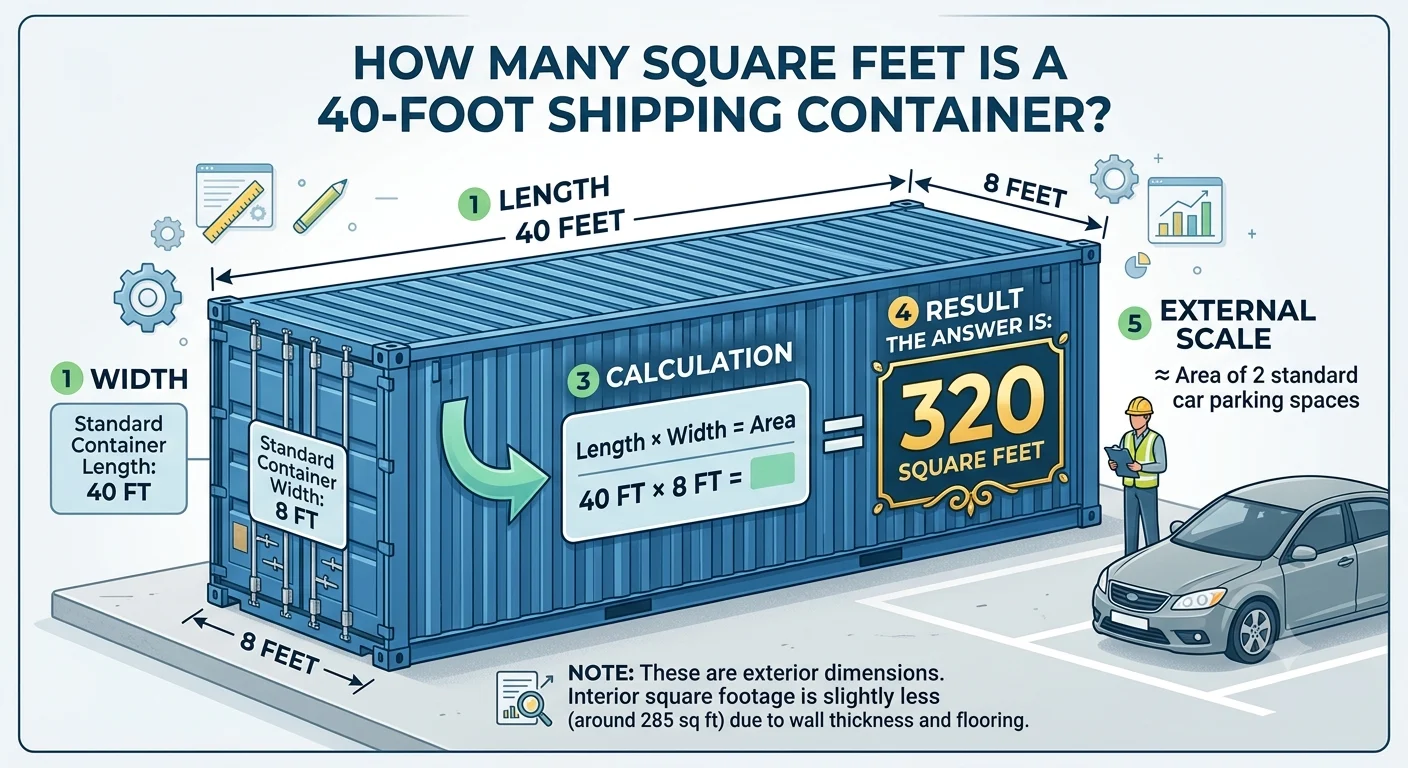
A 40 foot shipping container is one of the most widely used steel containers in global transport, storage, and construction projects. When people ask how many square feet is a 40 foot shipping container, they usually want to understand the actual usable space inside it for storage, business use, or even home conversion.
In simple terms, a standard 40ft shipping container has about 320 square feet of external floor space and around 305 square feet of usable internal space. However, the exact usable area depends on structure, insulation, and modifications.
Let’s break it down in a clear and practical way so you fully understand the real space you get.
Understanding a 40 Foot Shipping Container
A 40 foot shipping container is part of the ISO standard container system used worldwide for transporting goods by ship, truck, and train. These containers are built from heavy-duty steel to withstand extreme weather and long-distance travel.
Standard Dimensions of a 40ft Container
A typical 40ft container has:
- Length: 40 feet (12.19 meters)
- Width: 8 feet (2.44 meters)
- Height: 8.5 feet (standard) or 9.5 feet (high cube)
These are external measurements, meaning they include steel walls and structure.
External vs Internal Space
To understand square footage correctly, you must know the difference:
- External dimensions = total footprint of the container
- Internal dimensions = actual usable space inside
Because steel walls take up space, the interior is always slightly smaller.
How Many Square Feet Is a 40 Foot Shipping Container?
Now let’s directly answer the main question.
External Floor Area
External calculation is simple:
40 ft × 8 ft = 320 square feet
So, the container covers 320 sq ft of ground space.
Internal Usable Floor Area
Inside, the space is slightly reduced due to wall thickness:
- Internal length: ~39.5 ft
- Internal width: ~7.7 ft
So usable floor area becomes:
39.5 × 7.7 ≈ 304–305 square feet
👉 That means the usable space inside is about 305 sq ft.
Why This Difference Matters
This small difference matters more than people think, especially when:
- Designing a container home
- Planning storage layouts
- Installing furniture or shelves
- Calculating rental or construction space
Even a few square feet can affect how efficiently you use the space.
Comparison With Other Container Sizes
Understanding container sizes helps you choose the right one for your needs.
20ft vs 40ft Container
| Feature | 20ft Container | 40ft Container |
|---|---|---|
| Length | 20 ft | 40 ft |
| External Area | 160 sq ft | 320 sq ft |
| Internal Area | ~150 sq ft | ~305 sq ft |
| Use Case | Small storage | Homes, large storage |
A 40ft container gives almost double the space of a 20ft unit.
Standard vs High Cube Container
A high cube container increases height but not floor space:
- Standard height: 8.5 ft
- High cube height: 9.5 ft
This extra height is useful for:
- Vertical storage
- Loft beds in container homes
- Tall equipment storage
However, square footage remains the same.
Real-Life Uses of a 40 Foot Shipping Container
A 40ft container is not just for shipping goods. It has become a flexible space solution in many industries.
Storage Use
Businesses use it for:
- Warehouse overflow
- Equipment storage
- Agricultural tools
- Inventory management
With around 305 sq ft, it can store a large volume of goods safely.
Container Homes
One of the most popular modern uses is housing.
A 40ft container can be converted into:
- A small studio home
- A one-bedroom tiny house
- A compact vacation cabin
Typical layout example:
- Living area: 120 sq ft
- Bedroom: 100 sq ft
- Kitchen: 45 sq ft
- Bathroom: 40 sq ft
With smart planning, it becomes a fully functional small home.
Offices and Commercial Spaces
Many businesses convert 40ft containers into:
- Site offices
- Pop-up shops
- Cafes and kiosks
- Mobile service units
The size is ideal for small teams or customer-facing setups.
Factors That Affect Usable Space
Even though calculations show ~305 sq ft, actual usable space may feel smaller depending on modifications.
1. Insulation and Wall Panels
Insulation reduces interior width slightly but is essential for temperature control.
2. Flooring Systems
Raised floors or wooden flooring can reduce internal height.
3. Door and Entry Design
Container doors affect layout planning near entrances.
4. Structural Limitations
Steel ribs and reinforcements limit how walls can be modified.
Pros and Cons of a 40ft Shipping Container
Advantages
- Large storage capacity
- Strong and durable structure
- Weather resistant
- Easy to transport
- Cost-effective compared to buildings
Disadvantages
- Limited width (8 ft only)
- Requires insulation for comfort
- Rust maintenance needed
- Fixed rectangular shape limits design flexibility
Expert Tips Before Using a 40ft Container
If you are planning to use or buy one, keep these tips in mind:
- Always design based on internal dimensions
- Plan layout before installation
- Consider insulation early
- Inspect container condition before purchase
- Leave space for ventilation and movement
Good planning prevents space issues later.
Common Mistakes People Make
Many people misunderstand container space. Common mistakes include:
- Assuming 320 sq ft is fully usable
- Ignoring wall thickness
- Poor furniture planning
- Not considering insulation loss
- Overloading weight capacity
Avoiding these mistakes ensures better use of space and efficiency.
Quick Conversion Breakdown
| Measurement Type | Calculation | Square Feet |
|---|---|---|
| External Floor Area | 40 × 8 ft | 320 sq ft |
| Internal Usable Area | ~39.5 × 7.7 ft | ~305 sq ft |
| Space Difference | Structural loss | ~15 sq ft |
FAQs
1. How many square feet is a 40 foot shipping container?
A 40ft container has about 320 sq ft external space and around 305 sq ft usable internal space.
2. Can a 40ft shipping container be used as a home?
Yes, with insulation, plumbing, and proper design, it can be turned into a small home.
3. Is a 40ft container twice the size of a 20ft container?
Yes, it offers almost double the floor space of a 20ft container.
4. What is the internal width of a 40ft container?
The internal width is about 7.7 feet.
5. How much can a 40ft container hold?
It can store a large household or business inventory, depending on how it is organized.
Conclusion
Understanding how many square feet is a 40 foot shipping container is essential for storage planning, construction, and container home design. While the external footprint is 320 square feet, the real usable interior space is around 305 square feet due to structural steel walls.
This makes the 40ft container a highly practical and versatile solution for storage, business use, and modern housing. With proper planning, it can be transformed into a highly efficient and functional space that fits many real-world needs.