

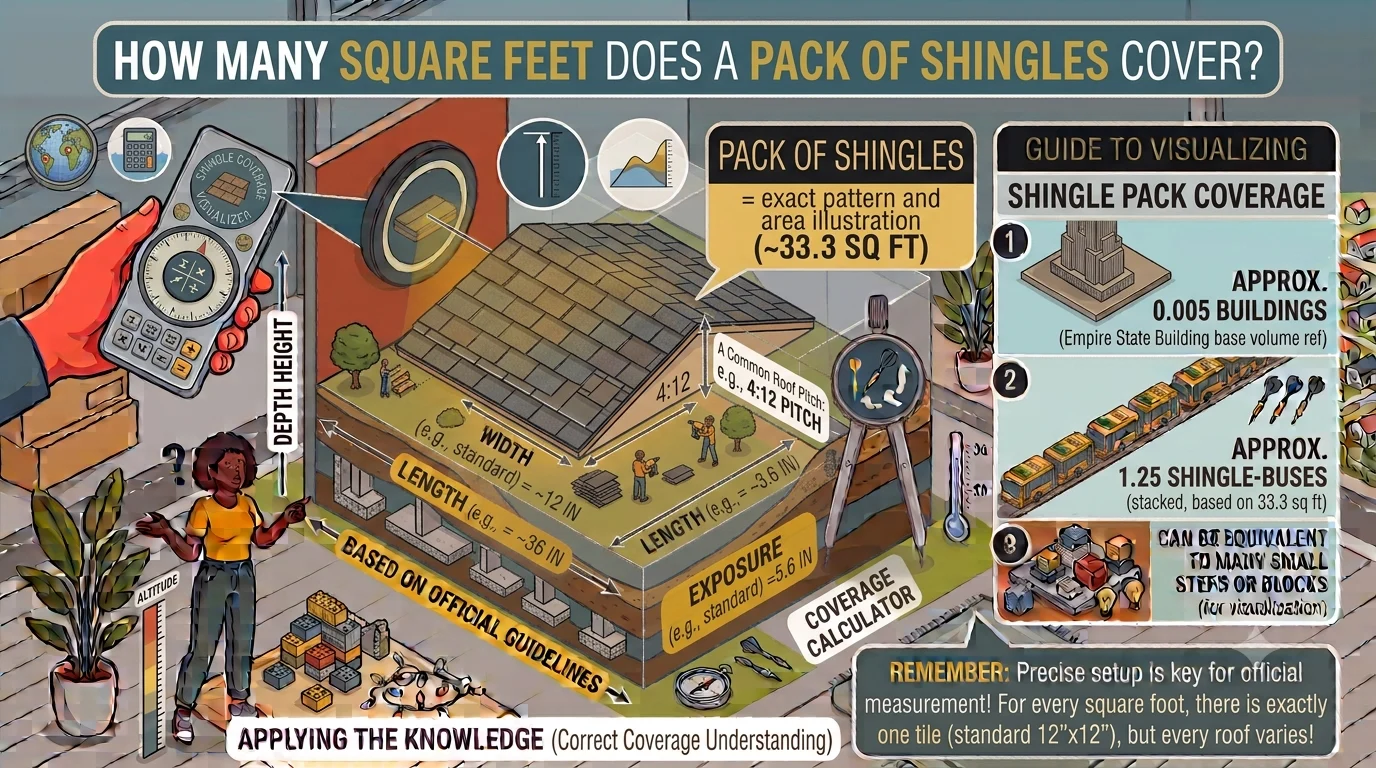
If you’re planning a roofing project, one of the first questions you’ll ask is how many square feet does a pack of shingles cover. Knowing the answer helps you estimate material costs, reduce waste, and avoid running out of shingles during installation.
For most standard asphalt roofing shingles, one pack (also called a bundle) covers about 33.3 square feet. Since three bundles equal one roofing square, they cover approximately 100 square feet of roof surface.
However, the exact coverage can vary depending on the manufacturer, shingle style, and roof design. In this guide, you’ll learn how shingle coverage works, how to estimate bundles accurately, and what factors can affect the total amount you’ll need.
Quick Answer
Most standard asphalt shingle bundles cover approximately 33.3 square feet.
Here’s a quick breakdown:
| Packs (Bundles) | Approximate Coverage |
|---|---|
| 1 Pack | 33.3 sq ft |
| 2 Packs | 66.6 sq ft |
| 3 Packs | 100 sq ft (1 Roofing Square) |
| 6 Packs | 200 sq ft |
| 9 Packs | 300 sq ft |
Always check the manufacturer’s packaging because some premium or specialty shingles may have slightly different coverage.
What Is a Pack (Bundle) of Shingles?
Roofing shingles are typically sold in bundles, often called packs, instead of full roofing squares. This makes them easier to transport, lift, and install.
A standard bundle usually weighs between 50 and 80 pounds, depending on the material and style. Most asphalt shingles are packaged so that three bundles cover one roofing square, making estimating materials much easier.
How Many Square Feet Does a Pack of Shingles Cover?
For most standard asphalt shingles, one pack covers approximately 33.3 square feet.
That means:
- 3 packs cover about 100 square feet.
- 15 packs cover about 500 square feet.
- 30 packs cover about 1,000 square feet.
- 60 packs cover about 2,000 square feet.
Architectural shingles often have similar coverage, although thicker premium products may require additional bundles.
Understanding Roofing Squares
Roofers use a measurement called a roofing square instead of discussing every project in square feet.
One roofing square always equals:
100 square feet of roof area.
Since one bundle covers roughly 33.3 square feet:
- 3 bundles = 1 roofing square
- 6 bundles = 2 roofing squares
- 30 bundles = 10 roofing squares
This system makes estimating roofing materials faster and more accurate.
Shingle Coverage Chart
Use this chart as a quick reference when planning your roofing project.
| Roof Size | Roofing Squares | Bundles Needed |
|---|---|---|
| 100 sq ft | 1 | 3 |
| 300 sq ft | 3 | 9 |
| 500 sq ft | 5 | 15 |
| 750 sq ft | 7.5 | 23 |
| 1,000 sq ft | 10 | 30 |
| 1,500 sq ft | 15 | 45 |
| 2,000 sq ft | 20 | 60 |
| 2,500 sq ft | 25 | 75 |
| 3,000 sq ft | 30 | 90 |
These estimates are based on standard asphalt shingles.
How to Calculate How Many Packs of Shingles You Need
Calculating roofing materials is easier than many homeowners expect.
Step 1: Measure Your Roof
Measure the length and width of each roof section.
Multiply the measurements to find the square footage.
For example:
- Length = 40 feet
- Width = 30 feet
40 × 30 = 1,200 square feet
If your roof has multiple sections, calculate each separately and add them together.
Step 2: Convert Square Feet to Roofing Squares
Divide the total roof area by 100.
Example:
1,200 ÷ 100 = 12 roofing squares
Step 3: Calculate the Number of Bundles
Multiply the number of roofing squares by three.
Example:
12 × 3 = 36 bundles
Step 4: Add Extra for Waste
Roofing projects always produce some waste because shingles need to be cut around:
- Valleys
- Hips
- Chimneys
- Skylights
- Roof edges
Professional roofers generally recommend adding:
- 5% for simple roofs
- 10% for average roofs
- 15% or more for complex roof designs
For a 1,200-square-foot roof requiring 36 bundles, adding 10% means purchasing about 40 bundles.
Real-World Examples
Example 1: Small Garage Roof
Roof area: 400 square feet
400 ÷ 100 = 4 roofing squares
4 × 3 = 12 bundles
Example 2: Medium Home
Roof area: 1,500 square feet
1,500 ÷ 100 = 15 roofing squares
15 × 3 = 45 bundles
Adding 10% waste brings the total to about 50 bundles.
Example 3: Large House
Roof area: 2,400 square feet
2,400 ÷ 100 = 24 roofing squares
24 × 3 = 72 bundles
Including waste, you’ll likely need 76–80 bundles, depending on the roof’s complexity.
Factors That Affect Shingle Coverage
Although one pack typically covers about 33.3 square feet, several factors can change the actual number of bundles required.
Roof Pitch
Steeper roofs have more surface area than they appear to have when viewed from above.
The steeper the roof, the more shingles you’ll need.
Roof Design
Complex roofs with:
- Multiple valleys
- Dormers
- Skylights
- Hips
- Chimneys
require extra cutting, which increases waste.
Shingle Type
Three-tab shingles usually follow the standard three-bundles-per-square rule.
Architectural and luxury shingles may require different quantities depending on the manufacturer.
Manufacturer Specifications
Every manufacturer provides coverage information on the bundle packaging.
Always use the manufacturer’s stated coverage instead of relying on general estimates.
Types of Roofing Shingles
Three-Tab Shingles
These are the most common and affordable roofing shingles.
Benefits include:
- Lower cost
- Lightweight design
- Easy installation
- Standard coverage of about 33.3 square feet per bundle
Architectural Shingles
Architectural shingles are thicker and more durable.
Advantages include:
- Better appearance
- Improved wind resistance
- Longer lifespan
- Similar coverage in many cases
Luxury Shingles
Luxury shingles provide the highest-end appearance.
They often:
- Weigh more
- Cost more
- May require more bundles for the same roof area
Benefits of Calculating Shingle Coverage Correctly
Accurate estimates help you:
- Stay within your budget
- Reduce material waste
- Avoid unnecessary trips to the supplier
- Complete the project faster
- Prevent color differences from purchasing different production batches
- Keep extra shingles available for future repairs
Good planning also reduces project delays.
Common Mistakes to Avoid
Many DIY roofers make simple estimating mistakes.
Avoid these common errors:
- Forgetting to include waste
- Measuring only the home’s floor area instead of the roof
- Ignoring roof pitch
- Assuming every bundle covers exactly the same area
- Buying too few bundles
- Not checking manufacturer recommendations
Taking careful measurements before purchasing materials can save both time and money.
Expert Tips
Professional roofing contractors recommend the following:
- Measure every roof section separately.
- Double-check all calculations before ordering materials.
- Purchase all bundles at the same time to ensure consistent color.
- Keep one or two extra bundles for future repairs.
- Follow the manufacturer’s installation instructions carefully.
- If your roof has many valleys or dormers, increase your waste allowance.
These simple practices help ensure a smoother installation and better long-term results.
Frequently Asked Questions
How many square feet does one pack of shingles cover?
A standard pack of asphalt shingles covers approximately 33.3 square feet.
How many packs make one roofing square?
Three packs equal one roofing square, which covers 100 square feet.
Do architectural shingles cover the same area?
Many architectural shingles provide similar coverage, but some premium products require additional bundles. Always check the manufacturer’s specifications.
Should I buy extra bundles?
Yes. Most roofing professionals recommend purchasing 5% to 15% extra to account for waste, cuts, and future repairs.
How many bundles are needed for a 2,000-square-foot roof?
A 2,000-square-foot roof typically requires 60 bundles, plus additional bundles for waste depending on the roof’s design and complexity.
Conclusion
Knowing how many square feet does a pack of shingles cover is essential for planning any roofing project. In most cases, one standard bundle covers approximately 33.3 square feet, and three bundles equal one roofing square, covering 100 square feet.
By measuring your roof accurately, converting the total area into roofing squares, and adding an appropriate waste factor, you can confidently estimate the number of bundles you’ll need. Whether you’re replacing a small garage roof or installing shingles on a large home, careful planning helps reduce costs, minimize waste, and ensure your project is completed without unnecessary delays.