

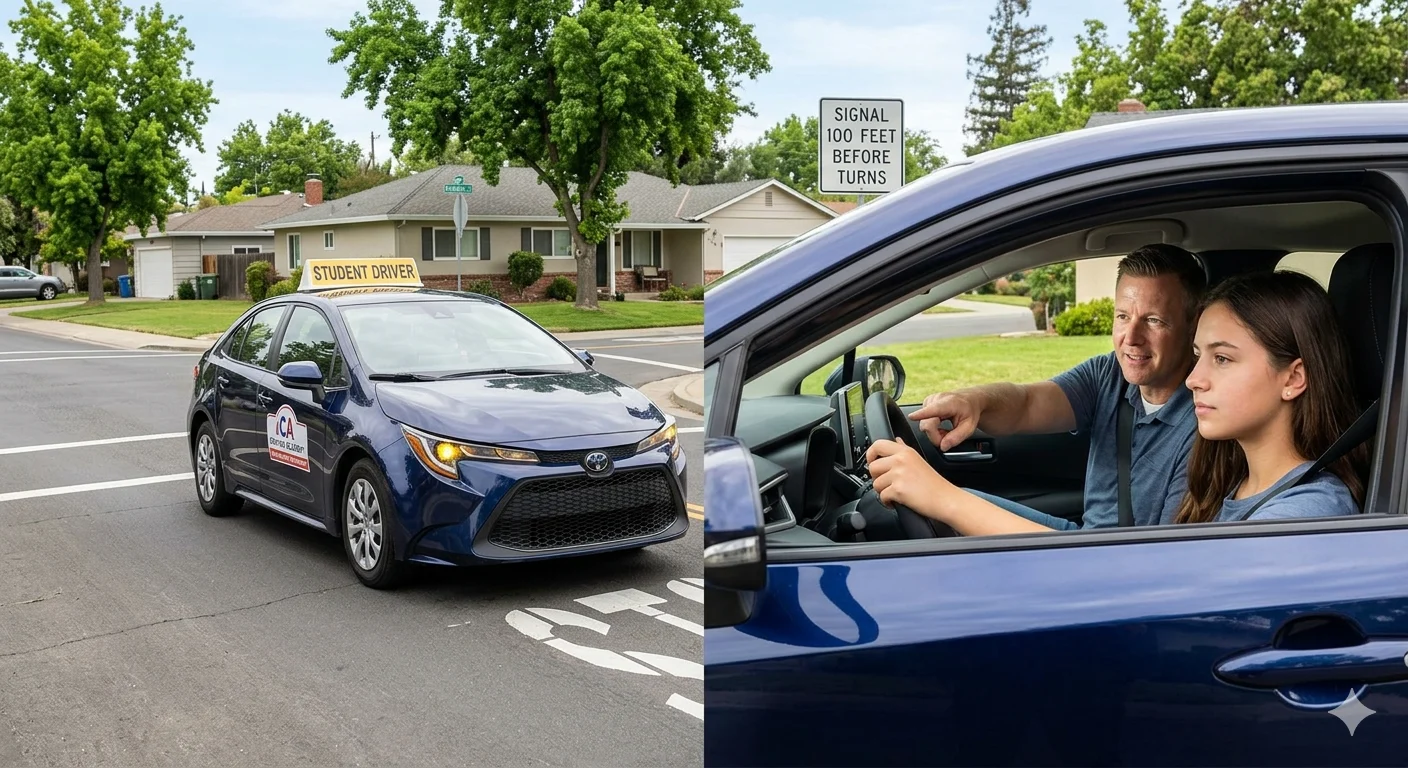
Using your turn signal is one of the most important parts of safe driving. Many drivers ask, “how many feet before turn signal in California?” because signaling correctly helps prevent accidents, avoids traffic tickets, and keeps traffic flowing smoothly.
In California, drivers are legally required to signal continuously during the last 100 feet before making a turn. This rule applies to both left and right turns. Drivers must also use signals before changing lanes to alert nearby vehicles.
Understanding California’s signaling laws is important for new drivers, DMV test preparation, and experienced drivers who want to stay safe on the road. In this guide, you will learn California’s turn signal requirements, lane change rules, penalties, safety tips, and common mistakes drivers should avoid.
California Turn Signal Law Explained
California traffic laws require drivers to communicate their intentions clearly before turning or changing lanes.
What California Law Says
Under California Vehicle Code Section 22108, a driver must signal continuously during the last 100 feet traveled before turning.
This applies to:
- Left turns
- Right turns
- Turning into driveways
- Turning at intersections
The purpose of this law is to give other drivers enough time to react safely.
Required Signal Distance
Here is a quick overview of California signaling requirements:
| Driving Action | Required Signal Distance |
| Left turn | At least 100 feet |
| Right turn | At least 100 feet |
| Lane change | Long enough to warn others |
| Freeway merge | Several seconds before moving |
Although lane changes do not always have a specific foot requirement, drivers must signal early enough to provide reasonable warning.
How Many Feet Before Turn Signal in California for Turns?
The answer is simple: drivers should signal at least 100 feet before turning.
However, understanding how this works in real driving situations is helpful.
Right Turns
Before making a right turn:
- Check mirrors
- Activate your signal at least 100 feet before the turn
- Slow down gradually
- Complete the turn safely
Signaling too late may not give drivers behind you enough time to react.
Example
At 25 mph, 100 feet is approximately:
- About 5–6 car lengths
- Roughly the length of several houses
This gives nearby drivers enough warning.
Left Turns
Left turns are often more dangerous because they usually involve crossing traffic.
Before making a left turn:
- Signal early
- Move into the correct lane
- Watch for pedestrians and cyclists
- Yield when necessary
Early signaling helps prevent sudden braking and confusion.
Turning at Intersections
Intersections are high-risk areas because many vehicles and pedestrians meet there.
Using turn signals correctly:
- Improves traffic flow
- Prevents rear-end collisions
- Helps pedestrians understand your intentions
Always signal before slowing down for a turn.
Signal Distance for Lane Changes in California
Many drivers focus only on turning, but signaling before lane changes is equally important.
Proper Lane Change Procedure
Before changing lanes:
- Check mirrors
- Check blind spots
- Turn on your signal
- Wait briefly
- Move safely into the next lane
The signal should stay on long enough for nearby drivers to notice.
Freeway and Highway Signaling
On highways, vehicles move at higher speeds, so early signaling is critical.
Experts recommend:
- Signaling for at least 3–5 seconds before changing lanes
- Giving extra warning in heavy traffic
- Avoiding sudden lane changes
Late signaling on freeways can easily cause accidents.
Why Signaling Early Matters
Some drivers underestimate the importance of turn signals, but signaling early improves safety for everyone.
Safety Benefits
Turn signals:
- Reduce confusion
- Prevent accidents
- Improve communication
- Help traffic move smoothly
Driving safely depends on predictable behavior.
Preventing Collisions
Many crashes happen because drivers:
- Turn suddenly
- Change lanes without warning
- Brake unexpectedly
A turn signal gives others time to:
- Slow down
- Adjust speed
- Maintain safe distance
Even a few extra seconds can prevent serious accidents.
Helping Pedestrians and Cyclists
Turn signals are also important for:
- Pedestrians
- Cyclists
- Motorcyclists
People walking or biking rely on your signal to know where you are going.
This is especially important in:
- School zones
- Urban areas
- Bike lanes
- Parking lots
Common Turn Signal Mistakes Drivers Make
Even experienced drivers sometimes use signals incorrectly.
Here are the most common mistakes.
Signaling Too Late
Some drivers signal only moments before turning.
This gives other drivers little time to react and defeats the purpose of signaling.
A good rule is:
- Signal first
- Brake second
Forgetting to Turn Off Signals
Leaving your turn signal on accidentally can confuse nearby drivers.
Although modern cars usually cancel signals automatically, drivers should still check dashboard indicators.
Not Signaling During Lane Changes
Many people only signal for turns and forget lane changes.
This can lead to:
- Side-swipe accidents
- Road rage situations
- Traffic violations
Always signal before moving into another lane.
California Turn Signal Penalties and Fines
Failing to use turn signals properly can lead to penalties.
Traffic Tickets
Police officers may issue citations for:
- Failing to signal
- Unsafe lane changes
- Improper turns
Traffic fines in California can exceed $200 after fees are added.
Insurance Consequences
Traffic violations may increase your insurance rates.
Insurance companies often consider signaling violations signs of unsafe driving.
Points on Driving Record
Some violations may place points on your driving record.
Too many points can result in:
- Higher insurance costs
- DMV warnings
- License suspension
Safe driving habits help protect your record.
Tips to Remember Proper Signal Timing
Developing good driving habits makes signaling easier.
Easy Ways to Estimate 100 Feet
Most drivers cannot measure distance exactly while driving.
Here are simple estimates:
- About 5–6 car lengths
- Around one-third of a city block
- Several parked cars in a row
Practice helps improve distance judgment.
Defensive Driving Habits
Safe drivers:
- Plan turns early
- Avoid sudden lane changes
- Check mirrors regularly
- Stay calm in traffic
Using turn signals consistently improves road safety.
California DMV Test and Turn Signal Rules
Turn signals are extremely important during the California driving test.
What DMV Examiners Watch For
Driving examiners pay attention to:
- Proper signal timing
- Lane change signals
- Mirror checks
- Safe turning
Failing to signal correctly may result in point deductions.
Common Driving Test Mistakes
New drivers often:
- Forget to signal
- Signal too late
- Leave signals on
- Change lanes without warning
Practicing regularly helps drivers pass the DMV test more easily.
Comparing California Signal Laws With Other States
California’s 100-foot signaling rule is common in many states.
| State | Required Signal Distance |
| California | 100 feet |
| Florida | 100 feet |
| Texas | 100 feet |
| New York | 100 feet |
| Oregon | 100 feet |
Although distances vary slightly in some places, the goal is always to warn other drivers early.
FAQs
1. How many feet before turn signal in California is required?
California law requires drivers to signal continuously during the last 100 feet before turning.
2. Do you need to signal before changing lanes in California?
Yes. Drivers must signal before changing lanes and provide enough warning for nearby traffic.
3. Can you get a ticket for not signaling in California?
Yes. Police officers can issue citations for failing to signal properly.
4. How long should you signal on the freeway?
Experts recommend signaling for at least 3–5 seconds before changing lanes on highways or freeways.
5. Is signaling required in parking lots?
Even when not legally required in some private lots, signaling is still recommended for safety.
Conclusion
Understanding how many feet before turn signal in California is important for every driver. California law requires drivers to signal at least 100 feet before turning to help prevent accidents and improve road safety.
Whether you are turning at an intersection, entering a driveway, or changing lanes on a freeway, proper signaling gives other drivers time to react safely. It also helps you avoid tickets, insurance increases, and DMV test mistakes.
Building strong signaling habits makes you a safer, more responsible driver and improves the experience for everyone on the road.
Discover MoreArticles
How many cubic feet for half a cow
How many cubic feet in 5 gallons