
If you are planning a roof replacement, estimating materials, or talking to a roofing contractor, you have probably heard the term “roof square.” Many homeowners are confused by this roofing measurement at first. The good news is that it is actually very simple.
A roof square is a standard unit used in the roofing industry to measure roof size. Understanding how many square feet in a roof square can help you estimate roofing materials, labor costs, and project budgets more accurately.
Whether you are installing asphalt shingles, metal roofing, or another roofing material, learning roof square measurements is essential. This guide explains everything in easy language, including calculations, examples, conversion charts, and expert tips.
What Is a Roof Square?
A roof square is a roofing measurement unit used by contractors and builders. Instead of measuring roofing projects only in square feet, roofers often measure roofs in “squares.”
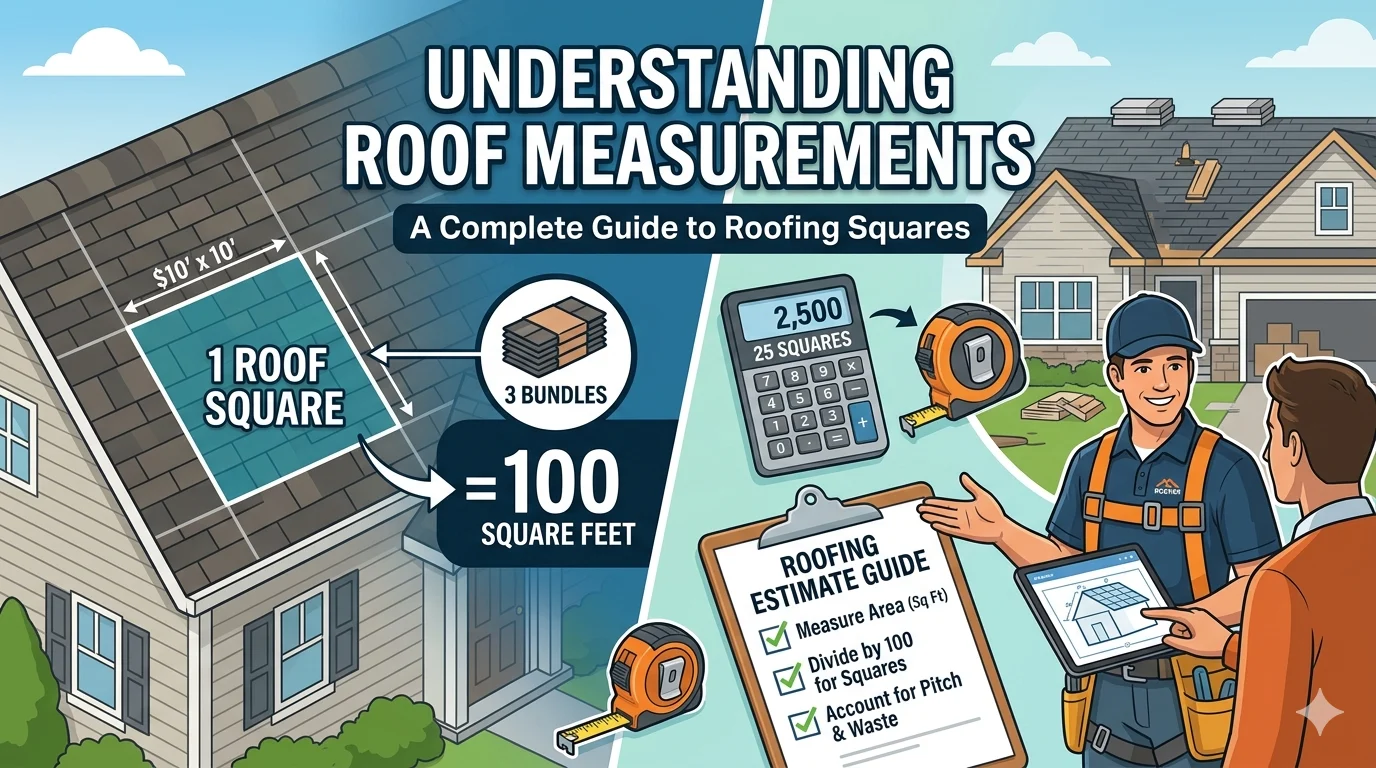
One roofing square equals:
This measurement helps simplify roofing estimates and material calculations.
For example:
- A 1,000 square foot roof equals 10 roof squares
- A 2,500 square foot roof equals 25 roof squares
- A 3,000 square foot roof equals 30 roof squares
Roofers use this system because roofing materials are commonly packaged and sold by the square.
How Many Square Feet Are in a Roof Square?
The direct answer is simple:
This standard applies across the roofing industry in the United States and many other countries.
Standard Roofing Measurement
The roofing square measurement has been used for decades because it makes large roofing projects easier to calculate.
Instead of saying:
- “My roof is 2,700 square feet”
Roofers usually say:
- “My roof is 27 squares”
This shorter method improves communication between contractors, suppliers, and homeowners.
Why Roofers Use Roof Squares
Roof squares help contractors:
- Estimate shingles faster
- Order accurate material quantities
- Calculate labor costs
- Reduce waste
- Simplify roofing bids
It also helps suppliers package roofing materials more efficiently.
Roof Square vs Square Feet
Many people think roof squares and square feet are the same thing, but they are slightly different.
| Measurement | Meaning |
| Square Foot | A unit of area equal to 12 inches × 12 inches |
| Roof Square | Equal to 100 square feet of roof area |
Key Differences
Square feet are general area measurements used in homes, flooring, walls, and land.
Roof squares are specialized roofing measurements.
For example:
| Roof Squares | Square Feet |
| 1 square | 100 sq ft |
| 5 squares | 500 sq ft |
| 10 squares | 1,000 sq ft |
| 20 squares | 2,000 sq ft |
Simple Conversion Chart
To convert roof squares into square feet:
To convert square feet into roof squares:
How to Calculate Roof Squares
Measuring roof squares is easier than many people think.
Step-by-Step Formula
First, measure the total roof area in square feet.
Then divide by 100.
The formula looks like this:
Example 1
Suppose your roof measures 2,000 square feet.
Calculation:
Your roof equals 20 roofing squares.
Example 2
A roof measures 1,450 square feet.
Calculation:
Most contractors round up to allow extra materials.
Why Roof Pitch Matters
Roof measurements become more complicated when roof pitch is involved.
Roof pitch refers to the steepness or slope of a roof.
A steep roof has more surface area than a flat roof with the same house dimensions.
Flat Roofs
Flat roofs are easier to calculate because the roof area is close to the home’s floor dimensions.
For example:
- A 1,500 sq ft flat roof home usually has about 15 roof squares.
Steep Roofs
Steep roofs require additional calculations because the slope increases total surface area.
A house with:
- 1,500 sq ft floor area
- steep roof pitch
may actually require:
- 1,700–2,000 sq ft of roofing materials.
This is why professional roofing estimates often include pitch multipliers.
Roofing Materials Per Roof Square
Understanding roofing squares also helps estimate materials.
Shingles
Most asphalt shingles are packaged so that:
- 3 bundles of shingles cover 1 roof square.
That means:
| Roof Squares | Shingle Bundles Needed |
| 10 squares | 30 bundles |
| 20 squares | 60 bundles |
| 30 squares | 90 bundles |
Some premium shingles may require more bundles.
Underlayment
Roofing underlayment is also measured by roof squares.
One roll usually covers:
- 2 to 4 roofing squares
depending on the product.
Roofing Nails
A typical roof square may require:
- 320 to 480 roofing nails
depending on local building codes and roofing material.
Average Roof Sizes and Roof Squares
Here are common roof sizes for residential homes.
| Home Size | Approximate Roof Squares |
| 1,000 sq ft home | 10–12 squares |
| 1,500 sq ft home | 15–18 squares |
| 2,000 sq ft home | 20–24 squares |
| 2,500 sq ft home | 25–30 squares |
| 3,000 sq ft home | 30–36 squares |
The actual roof size depends on:
- Roof pitch
- Garage areas
- Overhangs
- Multiple roof levels
- Dormers and valleys
Common Mistakes When Measuring a Roof
Many DIY homeowners make mistakes when calculating roofing squares.
Ignoring Roof Pitch
One of the biggest mistakes is measuring only the home’s floor area without considering roof slope.
Forgetting Waste Materials
Roofing projects usually require extra materials for:
- Cuts
- Edges
- Valleys
- Mistakes
Most contractors add:
- 10% to 15% extra material.
Measuring Incorrectly
Using rough estimates instead of accurate measurements can cause expensive shortages.
Always double-check dimensions before ordering materials.
Not Including Roof Features
Features such as skylights, chimneys, and dormers can affect roofing calculations.
Expert Tips for Accurate Roofing Estimates
Professional roofers follow several best practices.
Use Roof Measurement Tools
Digital roof measurement software and drone tools improve accuracy.
Add Waste Factor
Always include extra material.
Typical waste percentages:
| Roof Type | Waste Factor |
| Simple roof | 10% |
| Moderate roof | 12% |
| Complex roof | 15% or more |
Consider Local Weather
Areas with strong wind or snow may require additional roofing materials.
Hire a Professional
DIY calculations are useful, but professional roofers provide the most accurate estimates.
Roof Square Conversion Table
This chart makes roofing calculations easier.
| Roof Squares | Square Feet |
| 1 | 100 |
| 2 | 200 |
| 5 | 500 |
| 8 | 800 |
| 10 | 1,000 |
| 12 | 1,200 |
| 15 | 1,500 |
| 20 | 2,000 |
| 25 | 2,500 |
| 30 | 3,000 |
| 40 | 4,000 |
Practical Example of a Roofing Estimate
Imagine you are replacing the roof on a home with:
- Roof area: 2,400 square feet
- Moderate roof pitch
Step 1:
Convert square feet into roof squares.
Step 2:
Add 10% waste factor.
Step 3:
Round up to 27 roof squares.
This helps ensure enough materials are available.
Benefits of Understanding Roof Squares
Knowing roofing measurements gives homeowners several advantages.
Better Budget Planning
You can estimate roofing costs more accurately.
Easier Contractor Communication
Understanding roofing terminology helps you discuss projects confidently.
Reduced Material Waste
Proper calculations prevent overbuying or underbuying materials.
Smarter DIY Decisions
If you plan a DIY roofing project, accurate measurements are essential.
FAQs
How many square feet are in one roof square?
One roof square equals 100 square feet of roof area.
Why do roofers use roof squares?
Roof squares simplify roofing measurements, material calculations, and project estimates.
How many bundles of shingles are in a roof square?
Most asphalt shingle roofs require 3 bundles per roof square.
Does roof pitch affect roof squares?
Yes. Steeper roofs have more surface area and usually require more roofing materials.
Can I calculate roof squares myself?
Yes. Measure total roof square footage and divide by 100. However, professionals provide more accurate estimates for complex roofs.
Conclusion
Understanding how many square feet in a roof square is essential for roofing projects, material estimates, and budgeting. In roofing, one roof square always equals 100 square feet. This standard measurement helps contractors and homeowners calculate roofing materials quickly and accurately.
Whether you are replacing shingles, estimating costs, or planning a DIY roofing project, knowing how roof squares work can save time, money, and frustration. Always remember to account for roof pitch, waste materials, and roof complexity when calculating roofing squares.